

 English
  Deutsch
  Español
  Français
  Italiano
  Português
  Svenska
  Suomi
Suomi  Dansk
Dansk  Norsk bokmål
  العربية
  עברית
עברית  Polski
  Türkçe
  Русский
  Uzbek
Uzbek  Azərbaycan
  Tiếng Việt
  ไทย
ไทย  한국어
한국어  日本語
日本語  简体中文
简体中文 AC/DC oplaadstations, adapters, draagbare laders en commerciële oplaadnetwerken.
How to Launch a White-Label EV Charger Brand Without Building Everything In-House
vrijdag, 17 april 2026
Launching an EV charger brand looks simple from a distance. Pick a housing, add a logo, publish a product page, and start talking to distributors or installers. In practice, the real bottleneck is not branding. It is deciding which layers of the offer must be yours and which layers should come from an experienced manufacturing
- Published in EV-laadoplossingen
How to Reduce Platform Lock-In Risk When Choosing an EV Charging Vendor
vrijdag, 17 april 2026
The easiest EV charging proposal to approve is often the hardest to unwind later. A vendor offers bundled hardware, backend software, payment tools, commissioning, and support under one commercial package. The first site goes live quickly, the dashboard looks clean, and procurement moves on. The problem usually appears during expansion, not installation. A fleet operator
- Published in EV-laadoplossingen
Solar Plus EV Charging: When the Combination Actually Makes Financial Sense for Commercial Sites
vrijdag, 17 april 2026
Putting solar next to EV charging sounds like an obvious win. Generate electricity on-site, send it to the chargers, reduce grid purchases, and improve the sustainability profile of the property. In practice, the economics are not that automatic. The projects that work are usually not the ones built around a clean-energy narrative alone. They are
- Published in EV-laadoplossingen
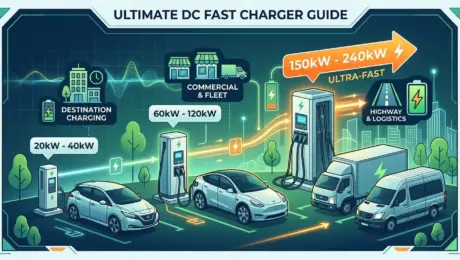
De Ultieme Gids voor DC Snelladers: 20kW tot 240kW Uitgelegd
donderdag, 16 april 2026
De snelle versnelling van de wereldwijde adoptie van elektrische voertuigen (EV’s) heeft het gesprek verschoven van of we laadinfrastructuur nodig hebben naar hoe snel we die kunnen uitrollen. Voor laadpuntoperators (CPO’s), wagenparkbeheerders en ontwikkelaars van commercieel vastgoed is het selecteren van de juiste hardware een cruciale zakelijke beslissing. In het hart van deze uitrolstrategie staat
- Published in EV-laadoplossingen
OEM vs. ODM EV Chargers: Which Partnership Model Fits Your Market Strategy?
donderdag, 16 april 2026
Many EV charging companies assume the branding decision comes late. In practice, it shows up much earlier. A distributor entering a new region, a fleet-focused solutions provider, or a charging-network planner building a private-label offer often has to decide whether to launch on an existing charger platform or invest in a product strategy with more
- Published in EV-laadoplossingen
Standardization vs. Flexibility: How Multi-Site Owners Should Choose EV Charger Platforms
donderdag, 16 april 2026
The portfolio problem usually appears after the first few successful installs. A company adds chargers at one site, proves demand, and then tries to repeat the model across ten, twenty, or fifty locations. That is where friction starts. One site may have long-dwell employee parking and stable utility capacity. Another may be a retail property
- Published in EV-laadoplossingen
EV Charger Warranty Terms Explained for Commercial Buyers
woensdag, 15 april 2026
Many commercial buyers feel comfortable once they see a two-year or three-year charger warranty on a quotation. That confidence often disappears during the first service event. A failed module may be covered, but the technician visit is not. Remote troubleshooting may be required before any claim is approved. The warranty may start at shipment instead
- Published in EV-laadoplossingen
Remote Monitoring KPIs Every EV Charging Network Operator Should Track
woensdag, 15 april 2026
A charging network rarely loses trust because one charger throws one fault. Trust erodes when operators discover recurring issues too late, cannot tell which alarms actually threaten service, or rely on dashboard totals that look healthy while drivers still fail to start sessions. That is why remote monitoring should be built around operational KPIs, not
- Published in EV-laadoplossingen
How to Compare EV Charging Vendors on Serviceability, Not Just Price
maandag, 13 april 2026
The lowest bid can look attractive during procurement and still become the most expensive choice six months later. One failed connector, one unavailable power module, or one backend issue that nobody owns can turn a reasonably priced charger into a recurring operating problem. That is why serious EV infrastructure buyers should compare vendors on serviceability,
- Published in EV-laadoplossingen
Procurement Teams’ Checklist for Comparing EV Charger Suppliers
maandag, 13 april 2026
Procurement teams are often asked to compare EV charger suppliers under time pressure, with multiple quotes that look similar on the surface but are built around very different assumptions. One supplier may be pricing hardware only. Another may bundle software, commissioning, and remote support. A third may look cheapest until long lead times, weak documentation,
- Published in EV-laadoplossingen
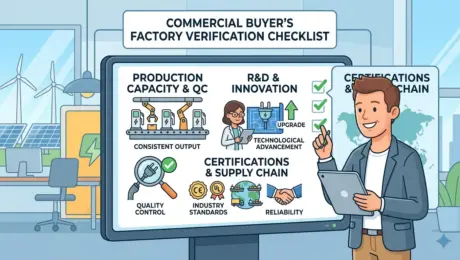
What Commercial Buyers Should Verify Before Approving an EV Charger Factory Partner
zondag, 12 april 2026
A charger sample can pass a demo and still become a procurement problem six months later. Commercial buyers usually discover the gap only after rollout begins: the pilot firmware does not match the production batch, spare-parts coverage is unclear, certification paperwork does not fit the destination market, or the supplier can build 20 units well
- Published in EV-laadoplossingen
Cybersecurity in EV Charging Networks: A Practical Guide for Operators and Buyers
zondag, 12 april 2026
A charging site can have the right utility plan, the right charger mix, and a sound business case and still underperform if cybersecurity is treated as an afterthought. Once chargers depend on cloud software, payment systems, roaming connections, and remote support, the network stops being only an electrical asset. It becomes an operational technology environment
- Published in EV-laadoplossingen
Charger Uptime SLAs: What EV Infrastructure Buyers Should Ask Before Signing With a Vendor
zondag, 12 april 2026
A charger can appear online in a dashboard and still fail the real-world test that matters: can a driver start a session, receive expected power, and leave on schedule? That gap is why uptime SLAs deserve closer scrutiny before procurement teams commit to a vendor. For infrastructure buyers, fleet operators, site hosts, and channel partners,
- Published in EV-laadoplossingen
Demand Charges and EV Charging Economics: What Commercial Site Hosts Need to Understand
zaterdag, 11 april 2026
An EV charging project can look attractive in a procurement spreadsheet and still underperform once the first full utility bill arrives. For many commercial site hosts, the surprise is not total energy consumption. It is the monthly peak created when several vehicles charge at once, when fast charging overlaps with building demand, or when charger
- Published in EV-laadoplossingen
Supply Chain Risk in EV Charger Manufacturing: What Distributors Should Ask Suppliers
vrijdag, 10 april 2026
A distributor does not need a factory shutdown to feel supply chain risk. A delayed controller board, a substituted power component, a missing certification file, or a firmware mismatch can be enough to stall shipments, miss tender deadlines, and push channel partners into difficult conversations with installers, site hosts, and fleet customers. That is why
- Published in EV-laadoplossingen
How OEM Buyers Should Evaluate Firmware, App, and Platform Ownership in EV Charging
donderdag, 09 april 2026
The first white-label EV charging project often looks like a hardware decision. The buyer compares enclosure design, power class, connector mix, certifications, and unit cost, then assumes the rest can be settled during implementation. In practice, the harder risk appears after the chargers are commissioned. Who approves firmware changes when a field issue affects charging
- Published in EV-laadoplossingen
EV Fleet Charging Redundancy Planning: Avoiding Single Points of Failure
donderdag, 09 april 2026
A fleet depot can install ten charging connectors and still behave like a single-charger site if every session depends on one transformer upgrade, one communications path, one software platform, or one maintenance response window. That is the real redundancy problem in fleet charging: not the number of plugs, but the number of independent ways the
- Published in EV-laadoplossingen
Roaming, Billing, and Settlement: What Scaling EV Charging Networks Need to Get Right Early
donderdag, 09 april 2026
Most charging networks do not run into serious roaming and settlement pain on day one. The trouble starts later, when more drivers arrive through third-party apps, more partner agreements go live, and tariff logic becomes harder to explain across sites, regions, and user groups. At that point, roaming is no longer just a commercial growth
- Published in EV-laadoplossingen
How to Plan EV Charging Capacity for Future Expansion Without Overspending Today
woensdag, 08 april 2026
The hardest EV charging decision is usually not whether demand will grow. It is how much of that future demand you should pay for right now. Many site hosts, fleet operators, property owners, and charging-network planners know expansion is coming. More EVs will enter the fleet. Tenant expectations will change. Utilization will climb. The mistake
- Published in EV-laadoplossingen
Preventive vs. Predictive Maintenance for EV Charging Networks
dinsdag, 07 april 2026
An EV charging network can have solid hardware, good locations, and strong demand and still underperform if the maintenance model is wrong. One operator may service chargers on a fixed schedule and keep costs predictable. Another may rely on telemetry, alarm patterns, and session history to intervene before faults turn into outages. Both approaches can
- Published in EV-laadoplossingen
How Hotels Can Structure Guest EV Charging Without Adding Operational Friction
dinsdag, 07 april 2026
A hotel rarely struggles with guest EV charging because the chargers are too visible. The friction usually appears somewhere else: the front desk becomes a manual access gate, premium parking spaces turn into queue disputes, staff have no rule for idle vehicles, and finance teams cannot explain who should pay for the electricity. If the
- Published in EV-laadoplossingen
How to Build Smart Charging Policies for Multi-Site EV Portfolios
zondag, 05 april 2026
Scaling EV charging across multiple sites is usually less about buying more chargers and more about deciding how charging behavior will be controlled. One office location may need fair employee access. A depot may need guaranteed departure readiness. A multifamily property may need overnight load sharing. A retail site may care more about turnover, guest
- Published in EV-laadoplossingen
Open vs. Closed Charging Platforms: Which Model Creates Less Long-Term Risk for EV Infrastructure Buyers?
zaterdag, 04 april 2026
The platform decision rarely feels dangerous at the start of an EV charging rollout. A first site goes live, users can authenticate, sessions appear on a dashboard, and the deployment looks stable enough. The real risk usually shows up later, when a second hardware vendor enters the picture, when a property group wants portfolio-wide reporting,
- Published in EV-laadoplossingen
Opportunity Charging vs. Overnight Charging: Which Fleet Charging Strategy Scales Better?
zaterdag, 04 april 2026
For fleet operators, the real charging question is rarely how fast a charger can deliver energy on paper. It is whether the charging model fits vehicle dwell time, route pressure, site power limits, and expansion plans without creating a new operational bottleneck. That is why the debate between opportunity charging and overnight charging matters. One
- Published in EV-laadoplossingen
AC vs. DC Charging for Fleet Depots: A Practical TCO Framework
zaterdag, 04 april 2026
When a fleet depot begins electrifying at scale, the first expensive mistake is usually not buying the wrong charger model. It is using the wrong economic lens. A site can look efficient on paper and still lock the operator into avoidable utility upgrades, idle charging capacity, route disruption, and expansion rework. That is why AC-versus-DC
- Published in EV-laadoplossingen
EV Charging Pricing Models for Site Hosts: Flat Fee, Energy-Based, Session-Based, or Hybrid?
woensdag, 01 april 2026
For most site hosts, the difficult pricing question is not whether drivers should pay. It is how the price structure should support the job the charging site is supposed to do. A workplace charger meant to improve tenant value should not usually be priced the same way as a highway fast-charging site, a mixed-use retail
- Published in EV-laadoplossingen
How to Write a Better RFP for a Commercial EV Charging Project
woensdag, 01 april 2026
Many commercial EV charging projects go off track before vendors even respond. The problem is usually not a lack of interest from suppliers. It is that the RFP asks for charger pricing before it defines the operational reality that the charging system needs to support. An RFP that says “quote ten chargers” may feel efficient,
- Published in EV-laadoplossingen
EV Charger Commissioning Checklists for Large Commercial Projects
woensdag, 01 april 2026
Large commercial EV charging projects rarely fail because the charger model was completely wrong. More often, they fail at handover. The chargers are installed, the switchgear is energized, and the software account is live, but the site still is not truly ready for users, operators, or finance teams. That is why commissioning matters. On a
- Published in EV-laadoplossingen
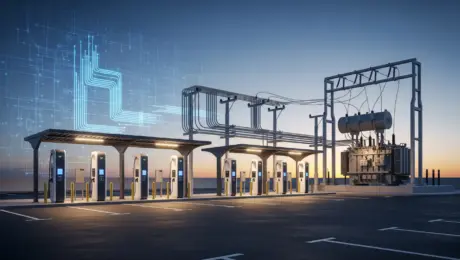
Utilities en EV-laden: Hoe netcapaciteit, interconnectie en vraagkosten te plannen
dinsdag, 31 maart 2026
Veel EV-laadprojecten lijken eenvoudig totdat de nutsbedrijfbeoordeling begint. Een locatie kan sterke vraag van bestuurders hebben, beschikbare parkeerruimte en intern budgetgoedkeuring, maar de werkelijke levertijd wordt vaak bepaald door transformatorcapaciteit, service-upgrade-eisen, interconnectievolgorde en piekvraag-economie. Voor commerciële vastgoedeigenaren, wagenparkbeheerders, ontwikkelaars en laadpuntoperators is nutsbedrijfsplanning geen laatste inkoopstap. Het is een van de vroegste beslissingen die bepaalt
- Published in EV-laadoplossingen
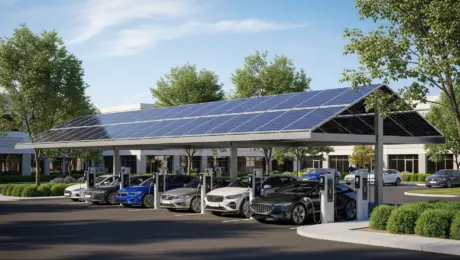
Zonneparkeerplaatsen voor EV-laden: Kosten, voordelen en locatieplanning voor commerciële eigendommen
dinsdag, 31 maart 2026
Zonneparkeerplaatsen zijn niet langer beperkt tot duurzaamheidsprojecten voor de show. Voor commerciële vastgoedeigenaren, wagenparkbeheerders, horecagroepen, campussen en gemengde ontwikkelaars worden ze een praktische manier om parkeerinfrastructuur, opwekking ter plaatse en EV-laden te combineren tot één langetermijnactiva. Dat gezegd hebbende, een zonneparkeerplaats is niet zomaar een EV-lader met panelen erbovenop gemonteerd. Het is een gecombineerd structureel,
- Published in EV-laadoplossingen