

 Deutsch
  Español
  Français
  Italiano
  Português
  Svenska
  Suomi
Suomi  Dansk
Dansk  Norsk bokmål
  Nederlands
  العربية
  עברית
עברית  Polski
  Türkçe
  Русский
  Uzbek
Uzbek  Azərbaycan
  Tiếng Việt
  ไทย
ไทย  한국어
한국어  日本語
日本語  简体中文
简体中文 Bridge rectifiers, diodes, inverters, voltage modules, and underlying circuit design.
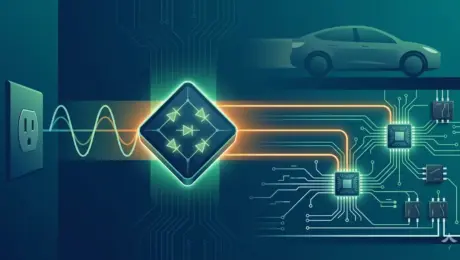
How KBP and KBL Bridge Rectifiers Power Level 1 EV Charger Designs
Thursday, 25 December 2025
As the electric vehicle (EV) market continues its exponential global growth, the demand for reliable, scalable, and safe charging infrastructure has never been higher. While ultra-fast DC chargers dominate public highways, Level 1 and Level 2 AC chargers remain the foundational backbone of residential and workplace charging. For B2B manufacturers and developers of EV Supply
- Published in Power Semiconductors
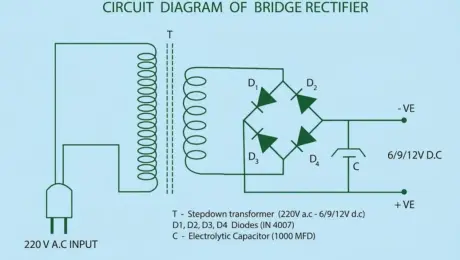
How a Bridge Rectifier Circuit Works: Step-by-Step Explanation
Thursday, 25 December 2025
Electric vehicle infrastructure depends on reliable AC-to-DC conversion at multiple levels. Grid power arrives as alternating current, but control electronics, DC bus sections, battery-facing stages, and many internal charger subsystems depend on direct current. One of the most fundamental circuits behind that conversion is the bridge rectifier. For engineers, charger OEMs, semiconductor buyers, and infrastructure
- Published in Power Semiconductors

How to Test a Bridge Rectifier with a Multimeter
Wednesday, 24 December 2025
In the landscape of EV infrastructure and power electronics, the bridge rectifier is a fundamental component. Whether integrated into a high-performance DC charging station or a compact residential AC wallbox, its role is critical: converting alternating current (AC) from the grid into the stable direct current (DC) required by sensitive power modules. For maintenance engineers,
- Published in Power Semiconductors

Mastering Power Stability: How to Calculate the Smoothing Capacitor Value for a Rectifier Circuit
Thursday, 18 December 2025
Stable DC output is one of the quiet requirements behind reliable EV infrastructure. Operators usually notice charging speed, uptime, software visibility, and service responsiveness. Underneath all of that, however, power quality decisions in the conversion stage often determine whether a charger performs consistently or turns into a recurring field issue. One of the most important
- Published in Power Semiconductors
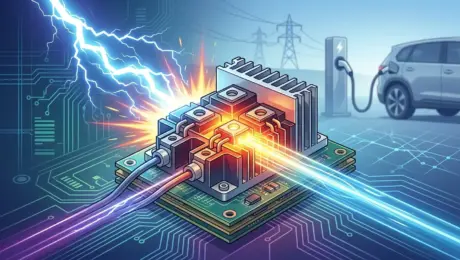
The Critical Role of High Surge Current Capability in Power Bridges for EV Infrastructure
Wednesday, 17 December 2025
The global transition to electric mobility relies heavily on the reliability of the charging infrastructure that supports it. While software platforms and sleek external designs often dominate the conversation, the true workhorses of any EV charging station operate quietly under the hood. At the heart of this power conversion process are power semiconductor components, specifically
- Published in Power Semiconductors
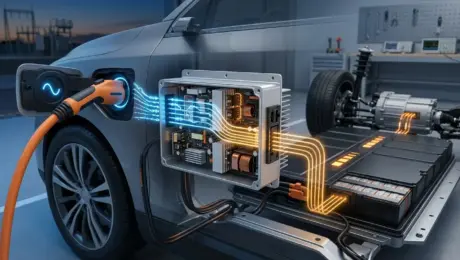
AC to DC Conversion in EVs: The Role of the On-Board Charger (OBC)
Tuesday, 09 December 2025
As the global transition to electric mobility accelerates, the demand for efficient, reliable charging infrastructure has never been higher. Yet, while high-profile charging stations get most of the spotlight, a critical piece of power electronics quietly works behind the scenes inside every electric vehicle (EV): the On-Board Charger (OBC). Understanding the role of the OBC—and
- Published in Power Semiconductors
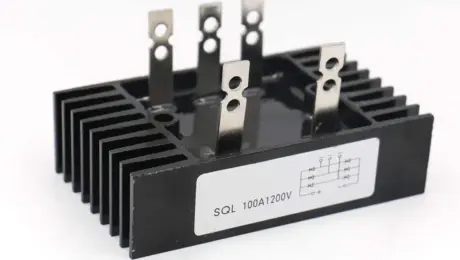
Troubleshooting a 3-Phase Uncontrolled Bridge Rectifier in EV Infrastructure
Tuesday, 09 December 2025
When a commercial EV charger starts derating, tripping protection, or dropping offline under load, the rectifier stage is one of the first places experienced engineers investigate. In high-power charging systems, a 3-phase uncontrolled bridge rectifier is the front door of AC-to-DC conversion. If that stage becomes unstable, the rest of the power chain inherits the
- Published in Power Semiconductors
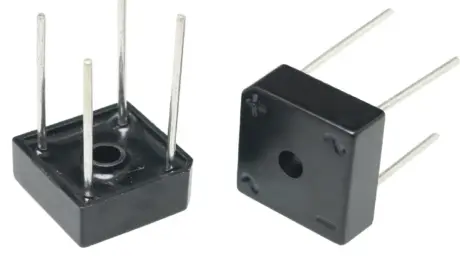
How Bridge Rectifiers Drive EV Charging Infrastructure
Sunday, 07 December 2025
In EV charging, software platforms, payment flows, and user interfaces get most of the attention. The harder commercial question is what keeps power moving reliably from the grid to the battery. That answer starts with the conversion stage, and one of the most important components in that stage is the bridge rectifier. For CPOs, fleet
- Published in Power Semiconductors
- 1
- 2