
 Deutsch
  Español
  Français
  Italiano
  Português
  Svenska
  Suomi
Suomi  Dansk
Dansk  Norsk bokmål
  Nederlands
  العربية
  עברית
עברית  Polski
  Türkçe
  Русский
  Uzbek
Uzbek  Azərbaycan
  Tiếng Việt
  ไทย
ไทย  한국어
한국어  日本語
日本語  简体中文
简体中文 
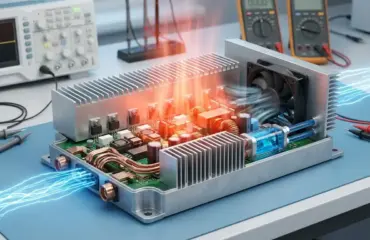
As the global transition to electric mobility accelerates, the demand for efficient, reliable charging infrastructure has never been higher. Yet, while high-profile charging stations get most of the spotlight, a critical piece of power electronics quietly works behind the scenes inside every electric vehicle (EV): the On-Board Charger (OBC).
Understanding the role of the OBC—and how it handles AC to DC power conversion—is essential for automotive engineers, fleet operators, and infrastructure developers looking to optimize energy delivery and battery health.
What is an On-Board Charger (OBC)?
Batteries store energy as Direct Current (DC), but the electrical power grid transmits energy as Alternating Current (AC). When you plug an EV into a standard wall outlet or a dedicated AC smart charger, the vehicle receives AC power. Because the battery cannot accept AC power directly, it must be converted into DC power.
This is exactly where the On-Board Charger comes in.
The OBC is a power electronics device integrated directly into the electric vehicle. Its primary responsibility is to accept AC power from the charging station, convert it into a highly regulated DC voltage, and safely feed that power into the vehicle’s high-voltage battery pack.
The AC to DC Conversion Process: Step-by-Step
The internal architecture of an OBC is a marvel of modern power electronics. To ensure maximum efficiency and battery safety, the conversion process involves several highly controlled stages:
- Input Filtering: As AC power enters the OBC from the charging station, electromagnetic interference (EMI) filters smooth out the current, protecting both the grid and the vehicle from electrical noise and voltage spikes.
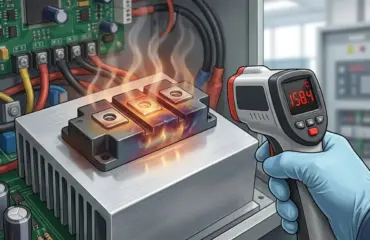
- Rectification: The core conversion happens here. The AC voltage is passed through a rectifier circuit—often utilizing robust bridge rectifiers—which flips the negative half-cycles of the AC wave to create a pulsating DC output.
- Power Factor Correction (PFC): Because pulsating DC is inefficient and puts stress on the grid, an active PFC circuit smooths the current further, aligning it with the voltage to ensure near-100% efficiency in power draw from the grid.
- DC-DC Conversion: Finally, the regulated DC power is isolated and scaled to match the specific voltage requirements of the EV’s battery pack (commonly 400V or 800V architectures) before being stored.
Key Takeaway: The efficiency of an OBC directly impacts charging times and energy losses. Advanced OBCs are increasingly utilizing silicon carbide (SiC) components to achieve efficiency rates exceeding 95%.
OBC vs. Off-Board DC Fast Chargers: What’s the Difference?
A common point of confusion in the EV industry is the difference between AC charging and DC charging. The defining factor is where the AC to DC conversion takes place.
When utilizing high-power DC fast charging stations, the massive AC to DC conversion occurs externally inside the charging station itself. The station then feeds DC power directly into the vehicle’s battery, completely bypassing the vehicle’s internal OBC.
Here is a quick breakdown of how the two methods compare:
| Feature | AC Charging (Using OBC) | DC Fast Charging (Bypassing OBC) |
|---|---|---|
| Conversion Location | Inside the vehicle (OBC) | Inside the charging station |
| Typical Power Output | 3.6 kW to 22 kW | 50 kW to 350+ kW |
| Charging Speed | Hours (Overnight/Workplace) | Minutes (Highway corridors) |
| Hardware Footprint | Small, lightweight wallboxes | Large, heavy-duty cabinet installations |
| Use Case | Home, office, long-duration parking | Highway travel, rapid fleet turnaround |
The Future of OBC Technology
As EV battery capacities grow, OBCs are evolving to handle higher power loads and more complex energy management tasks:
- Bi-directional Charging (V2G/V2H): Next-generation OBCs are being designed to allow power to flow in both directions. This enables Vehicle-to-Grid (V2G) and Vehicle-to-Home (V2H) applications, turning EVs into mobile energy storage units that can power a house or stabilize the local grid during peak demand.
- Higher Power Density: Manufacturers are pushing to fit 11 kW and 22 kW charging capabilities into smaller, lighter enclosures to save vehicle weight and improve driving range.
- Integration with Powertrains: To save space, some OEMs are combining the OBC, the DC-DC converter, and the traction inverter into a single, highly integrated power delivery unit.
Powering the Ecosystem with PandaExo
Whether the power conversion happens inside the vehicle via an OBC or at the grid level via a rapid transit station, reliable hardware is the backbone of the EV revolution.
At PandaExo, we understand the intricate relationship between the vehicle’s onboard electronics and external charging infrastructure. Backed by our deep heritage in power semiconductors and a state-of-the-art 28,000-square-meter manufacturing base, we engineer EV chargers that deliver uncompromising performance, safety, and grid harmony.
From smart AC wallboxes designed to interface seamlessly with modern OBCs, to ultra-fast DC charging hubs that deliver direct power with factory-direct precision, PandaExo provides end-to-end hardware and software solutions for global fleet operators and infrastructure developers.
Ready to upgrade your EV charging network? Explore our full range of high-performance hardware and customized OEM/ODM services in the PandaExo shop today, and let’s build the future of mobility together.