
 Deutsch
  Español
  Français
  Italiano
  Português
  Svenska
  Suomi
Suomi  Dansk
Dansk  Norsk bokmål
  Nederlands
  العربية
  עברית
עברית  Polski
  Türkçe
  Русский
  Uzbek
Uzbek  Azərbaycan
  Tiếng Việt
  ไทย
ไทย  한국어
한국어  日本語
日本語  简体中文
简体中文 
The rapid adoption of electric vehicles (EVs) is fundamentally reshaping global transportation. However, the commercial success of this transition relies heavily on a robust and highly efficient charging infrastructure. For fleet operators, commercial real estate developers, and charging network providers, the speed, reliability, and cost-effectiveness of energy delivery are paramount. At the core of this energy delivery system is a fundamental engineering process: converting the alternating current (AC) supplied by the electrical grid into the direct current (DC) required to charge an EV battery. Understanding the mechanics of this power conversion is essential for businesses looking to invest in scalable, high-performance charging solutions.
The Grid vs. The Battery: Why Conversion is Necessary
The global electrical grid transmits power using Alternating Current (AC) because it is highly efficient for traveling long distances. However, batteries—including the lithium-ion packs found in electric vehicles—can only store energy as Direct Current (DC). Because of this mismatch, power must be converted from AC to DC before it can enter the vehicle’s battery. Where and how this conversion takes place defines the two primary categories of EV charging:
- AC Charging: The charging station delivers AC power directly to the vehicle. The vehicle’s internal onboard charger handles the heavy lifting of converting the AC power to DC. Because onboard chargers are constrained by size and weight limits within the vehicle, their power output is generally lower. This makes commercial AC Chargers ideal for long-duration parking, such as workplaces, hotels, or overnight fleet depots.
- DC Fast Charging: The conversion from AC to DC happens outside the vehicle, within the charging station itself. By bypassing the vehicle’s onboard limitations, these chargers deliver high-voltage DC power directly to the battery, enabling dramatically faster charging speeds.
The Mechanics of AC to DC Power Conversion
Transforming grid power into safe, rapid, and precise energy for an EV battery is a complex process managed by advanced power electronics. In high-power commercial stations, this conversion generally occurs in three distinct stages:
1. Rectification
The first stage involves passing the incoming AC power through a rectifier circuit. This circuit utilizes core semiconductor components, such as bridge rectifiers, to flip the negative cycles of the AC waveform. The result is a pulsating, unidirectional DC output. The quality and thermal tolerance of these semiconductors dictate the overall durability of the charger. 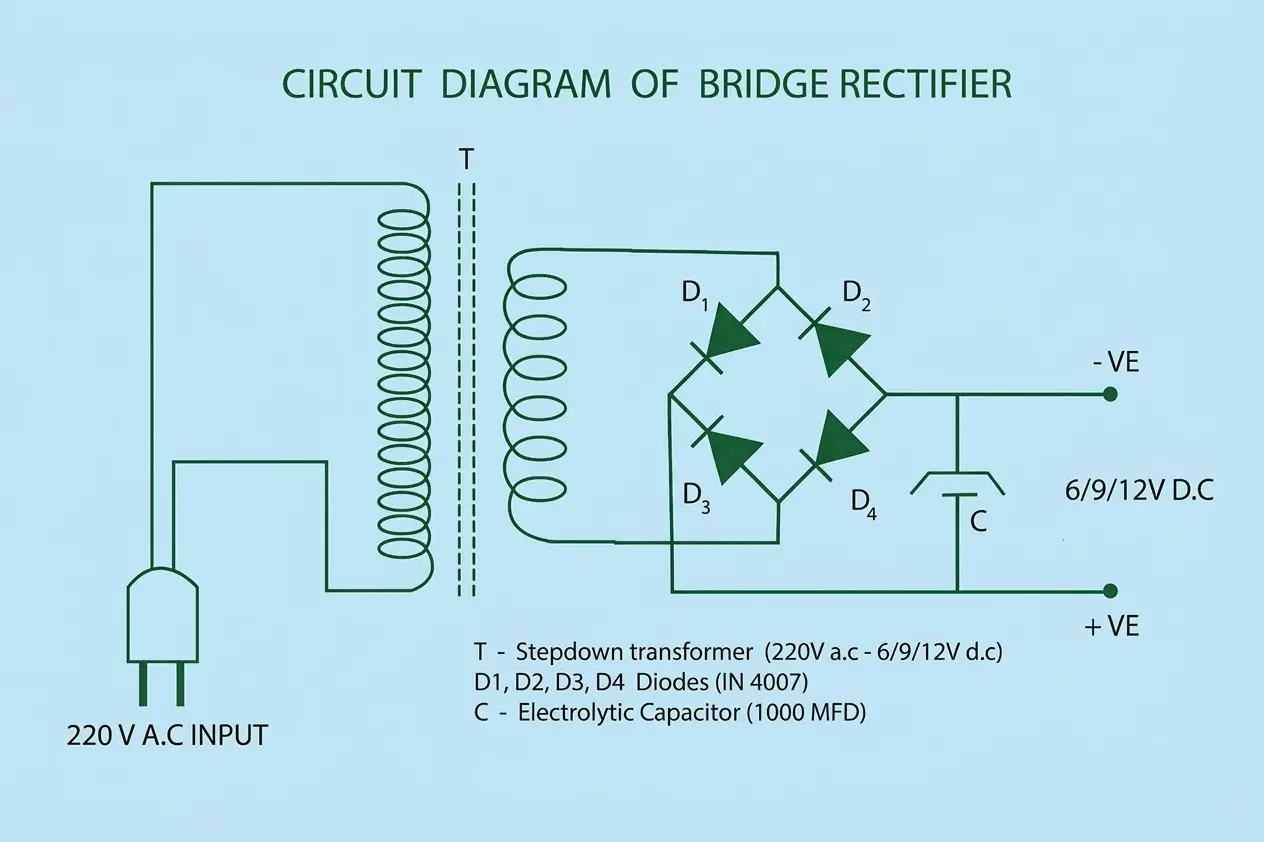
2. Power Factor Correction (PFC)
Pulsating DC power is not yet suitable for an EV battery and can create harmonic distortion on the local electrical grid. The PFC stage uses active electronic components to smooth out the waveform, aligning the voltage and current. This maximizes grid efficiency, reduces energy waste, and ensures compliance with utility standards.
3. DC-DC Conversion and Isolation
Finally, the smoothed DC power enters a DC-DC converter. EV batteries operate at varying voltage levels (commonly 400V or 800V architectures). This stage actively steps the voltage up or down to precisely match the specific requirements of the connected vehicle in real-time. High-frequency transformers are also utilized here to provide galvanic isolation, ensuring absolute safety between the public grid and the vehicle.
Why High-Efficiency Conversion Matters for B2B Infrastructure
Investing in DC Fast Charging stations is a significant capital expenditure. The quality of the power conversion architecture directly impacts your return on investment through several operational factors:
- Thermal Management: Inefficient conversion generates excess heat. High-quality power modules reduce thermal loss, lowering cooling requirements and extending the lifespan of the station.
- Operating Costs: Chargers with superior Power Factor Correction pull power more cleanly from the grid, avoiding utility penalty fees and minimizing wasted electricity.
- Charging Uptime: Commercial environments demand relentless reliability. Chargers built with industrial-grade power semiconductors experience fewer component failures, maximizing station uptime and revenue generation.
The PandaExo Advantage in Power Electronics
Delivering high-performance power conversion at scale requires specialized engineering. PandaExo stands at the forefront of this industry, operating a 28,000-square-meter advanced manufacturing base. Backed by a deep heritage in power semiconductors, PandaExo engineers fully integrated, smart energy management platforms. From core components to fully assembled, customized OEM/ODM charging stations, our factory-direct scale ensures precision and reliability at every stage of the manufacturing process. Whether you are scaling a regional fast-charging network or outfitting a commercial facility, partnering with a manufacturer that controls the technology from the silicon level up provides an unmatched competitive edge.