
 Deutsch
  Español
  Français
  Italiano
  Português
  Svenska
  Suomi
Suomi  Dansk
Dansk  Norsk bokmål
  Nederlands
  العربية
  עברית
עברית  Polski
  Türkçe
  Русский
  Uzbek
Uzbek  Azərbaycan
  Tiếng Việt
  ไทย
ไทย  한국어
한국어  日本語
日本語  简体中文
简体中文 
The rapid evolution of electric mobility demands not just more power, but smarter power. While massive battery packs and high-performance motors capture the headlines, the unsung hero of the modern electric vehicle (EV) architecture is the DC-DC converter. For fleet operators, infrastructure developers, and automotive engineers, understanding how these components manage energy distribution is critical.
This guide explores the vital role of the DC-DC converter, how it interacts with external charging infrastructure, and why advanced power electronics are essential for the future of mobility.
What is an EV DC-DC Converter?
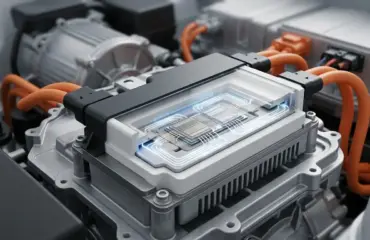
Inside every EV sits a high-voltage (HV) battery pack, typically operating at 400V or 800V. However, the vehicle’s auxiliary systems—infotainment displays, lighting, power steering, and advanced driver-assistance systems (ADAS)—operate on low-voltage (LV) networks, usually 12V or 48V.
The DC-DC converter acts as the bridge between these systems. It safely and efficiently steps down the high voltage from the main battery pack to power these essential subsystems, effectively replacing the traditional alternator found in internal combustion engine (ICE) vehicles.
Core Functions and Capabilities
- Voltage Step-Down: Ensures continuous, stable power delivery from the traction battery to the 12V/48V auxiliary systems.
- Galvanic Isolation: Protects sensitive low-voltage electronics and passengers from high-voltage surges or faults.
- Bi-directional Flow: In advanced vehicle architectures, modern converters allow power to flow both ways, supporting grid-to-vehicle (G2V) or vehicle-to-load (V2L) applications.
Synergy with EV Charging Infrastructure
The efficiency of an EV’s internal power electronics is deeply intertwined with how it receives power from external sources. When an EV connects to the grid, the power flow must be seamless, reliable, and intelligent.
For commercial fleets prioritizing rapid turnaround times, high-power DC charging stations bypass the vehicle’s onboard charger to deliver energy directly to the high-voltage battery. Once stored, the internal DC-DC converter takes over, distributing that energy to the auxiliary systems so that cabin climate control and vital vehicle diagnostics remain operational without interrupting the fast-charging process.
Conversely, for overnight or workplace charging scenarios, intelligent AC smart charging solutions provide a steady, reliable flow of alternating current. The vehicle converts this to DC, which is then managed and distributed throughout the vehicle’s architecture. To support this growing ecosystem, developers and facility managers need a comprehensive understanding of broad EV charging infrastructure to ensure compatibility, safety, and maximum efficiency.
The Role of Power Semiconductors in Conversion
The performance of any DC-DC converter—or any external EV charging station—relies heavily on the quality of its internal electronics. High-efficiency power conversion depends on robust semiconductor components.
Whether stepping down voltage inside the vehicle or rectifying AC to DC within a heavy-duty commercial charger, core components like bridge rectifiers and high-frequency switching transistors are critical for minimizing thermal losses and maximizing energy throughput.
Key Performance Metrics for Converters
- High Efficiency: Modern units aim for greater than 95% efficiency to reduce energy waste and preserve the vehicle’s driving range.
- Thermal Management: Advanced liquid or passive cooling systems prevent components from overheating during sustained power draws.
- Power Density: Compact, lightweight designs reduce the overall vehicle weight, contributing to better handling and performance.
High-Voltage vs. Low-Voltage Systems in EVs
To understand the specific role of the DC-DC converter, it helps to compare the two distinct power domains within a modern EV:
| Feature | High-Voltage (HV) Traction System | Low-Voltage (LV) Auxiliary System | The DC-DC Converter’s Role |
|---|---|---|---|
| Typical Voltage | 400V – 800V DC | 12V – 48V DC | Steps down 400V/800V to 12V/48V. |
| Primary Function | Powers the electric motors (propulsion) and stores energy from regenerative braking. | Powers lighting, infotainment, wipers, ADAS, and internal computers. | Acts as the gateway, ensuring the LV system has a continuous power supply. |
| Energy Source | External Charging Stations (AC/DC) | The High-Voltage Battery | Draws from the HV battery to feed the LV network. |
Powering the Future with PandaExo
As electric vehicle architectures move toward higher voltages and greater software integration, the demands placed on internal and external power electronics will only increase. Whether dealing with high-speed charging infrastructure or managing internal vehicle subsystems, efficient power conversion remains a fundamental challenge and opportunity for the automotive industry.
At PandaExo, our expertise spans across the entire electric mobility ecosystem. Drawing on a deep heritage in power semiconductors, our 28,000-square-meter advanced manufacturing facility engineers smart energy management platforms and high-performance EV charging solutions with factory-direct scale and precision.
Ready to power the future of your fleet or EV infrastructure project? Explore our comprehensive range of customized OEM/ODM services and hardware at our full product catalog today.