
 Deutsch
  Español
  Français
  Italiano
  Português
  Svenska
  Suomi
Suomi  Dansk
Dansk  Norsk bokmål
  Nederlands
  العربية
  עברית
עברית  Polski
  Türkçe
  Русский
  Uzbek
Uzbek  Azərbaycan
  Tiếng Việt
  ไทย
ไทย  한국어
한국어  日本語
日本語  简体中文
简体中文 
As the electric vehicle (EV) market accelerates globally, the demand for high-performance, rapid energy delivery systems has never been greater. However, dealing with high voltages and sustained currents inherently involves managing significant thermal output. In the B2B landscape of power electronics and EV infrastructure, hardware reliability is synonymous with fire safety.
At the center of electronic component safety is the UL 94 standard—and more specifically, the coveted UL 94V-0 rating. But what exactly does this rating mean, and why is it a non-negotiable requirement for OEMs and infrastructure operators?
This comprehensive guide breaks down the UL 94V-0 standard, how it is tested, and why prioritizing self-extinguishing materials is critical for the longevity and safety of smart EV charging solutions.
What is the UL 94 Standard?
Created by Underwriters Laboratories (UL), the UL 94 standard defines the flammability of plastic materials used for parts in devices and appliances. It measures a material’s tendency to either extinguish or spread a flame once it has been ignited.
For engineers and hardware sourcing managers, specifying UL 94-compliant plastics ensures that in the event of a short circuit, thermal runaway, or external fire, the enclosure and internal components will not act as fuel.
The standard is divided into several classifications based on the orientation of the test specimen (horizontal or vertical) and the material’s reaction to a calibrated flame.
Breaking Down the UL 94 Ratings
Understanding the difference between the classifications is vital for material selection. The vertical burn tests (V-ratings) are the most stringent and are typically required for advanced power electronics.
| Rating | Orientation | Maximum Burn Time (per application) | Flaming Drips Allowed? | General Application Context |
|---|---|---|---|---|
| HB | Horizontal | Slow burn rate | Yes | Low-voltage, low-heat consumer goods. |
| V-2 | Vertical | < 30 seconds | Yes | Basic electronics with low risk of ignition. |
| V-1 | Vertical | < 30 seconds | No | Devices requiring moderate fire resistance. |
| V-0 | Vertical | < 10 seconds | No | High-power electronics, EV chargers, semiconductors. |
The V-0 Advantage: To achieve a UL 94V-0 rating, the material must stop burning within 10 seconds after the ignition source is removed. Crucially, it must not produce any flaming drips that could ignite materials below it, effectively halting the spread of fire.
Why UL 94V-0 is Non-Negotiable in EV Charging
In the EV charging sector, continuous high-power loads generate immense heat. Operating at factory-direct scale, companies must prioritize V-0 rated materials across their entire product architecture.
1. High-Power Thermal Stresses
When deploying heavy-duty DC Charging stations, the system is tasked with converting massive amounts of AC power from the grid into DC power for the vehicle’s battery. This rapid energy delivery creates high thermal stresses on cables, connectors, and internal housing. UL 94V-0 materials act as a vital failsafe, ensuring that temperature spikes do not lead to catastrophic fires.
2. Reliable Everyday Operation
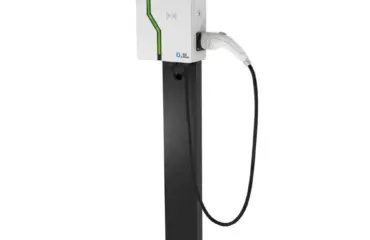
Even in high-volume, residential or commercial AC Charging environments, wallboxes are often exposed to varying environmental conditions and prolonged charging sessions. V-0 rated enclosures guarantee that these reliable charging points remain safe in garages, parking lots, and public spaces, protecting both property and personnel.
3. Semiconductor and Board-Level Safety
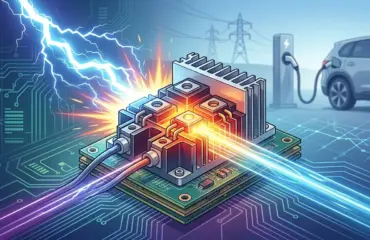
EV infrastructure is only as robust as its core components. Deep within the energy management platforms, power semiconductors manage the flow of electricity. For example, bridge rectifiers play a crucial role in power conversion. If an internal fault occurs at the board level, the surrounding plastic packaging and PCB materials must be V-0 rated to instantly suppress potential ignition.
PandaExo: Engineered for Uncompromising Safety
With a 28,000-square-meter advanced manufacturing base and a deep heritage in power semiconductors, PandaExo approaches hardware engineering with precision and strict compliance.
Our factory-direct model allows us to control the quality of every material used, from custom OEM/ODM designs to our standardized smart energy management platforms. By integrating UL 94V-0 certified materials into our hardware, we deliver solutions that meet the rigorous safety standards of international markets.
Key benefits of PandaExo’s engineering approach:
- Thermal Resiliency: Materials chosen specifically for their ability to withstand the harsh environments of rapid energy delivery.
- Regulatory Compliance: Seamlessly meet global safety standards, making international deployment faster and easier.
- End-to-End Quality: From the raw semiconductors to the outer shell of the charging station, safety is baked into the manufacturing process.
Build Your Network with Confidence
When investing in EV infrastructure, the materials protecting your technology are just as important as the technology itself. Ensure your networks are built to last and designed to protect.
Ready to upgrade your infrastructure with safety-certified, high-performance technology? Explore our full catalog of smart EV chargers.