
 Deutsch
  Español
  Français
  Italiano
  Português
  Svenska
  Suomi
Suomi  Dansk
Dansk  Norsk bokmål
  Nederlands
  العربية
  עברית
עברית  Polski
  Türkçe
  Русский
  Uzbek
Uzbek  Azərbaycan
  Tiếng Việt
  ไทย
ไทย  한국어
한국어  日本語
日本語  简体中文
简体中文 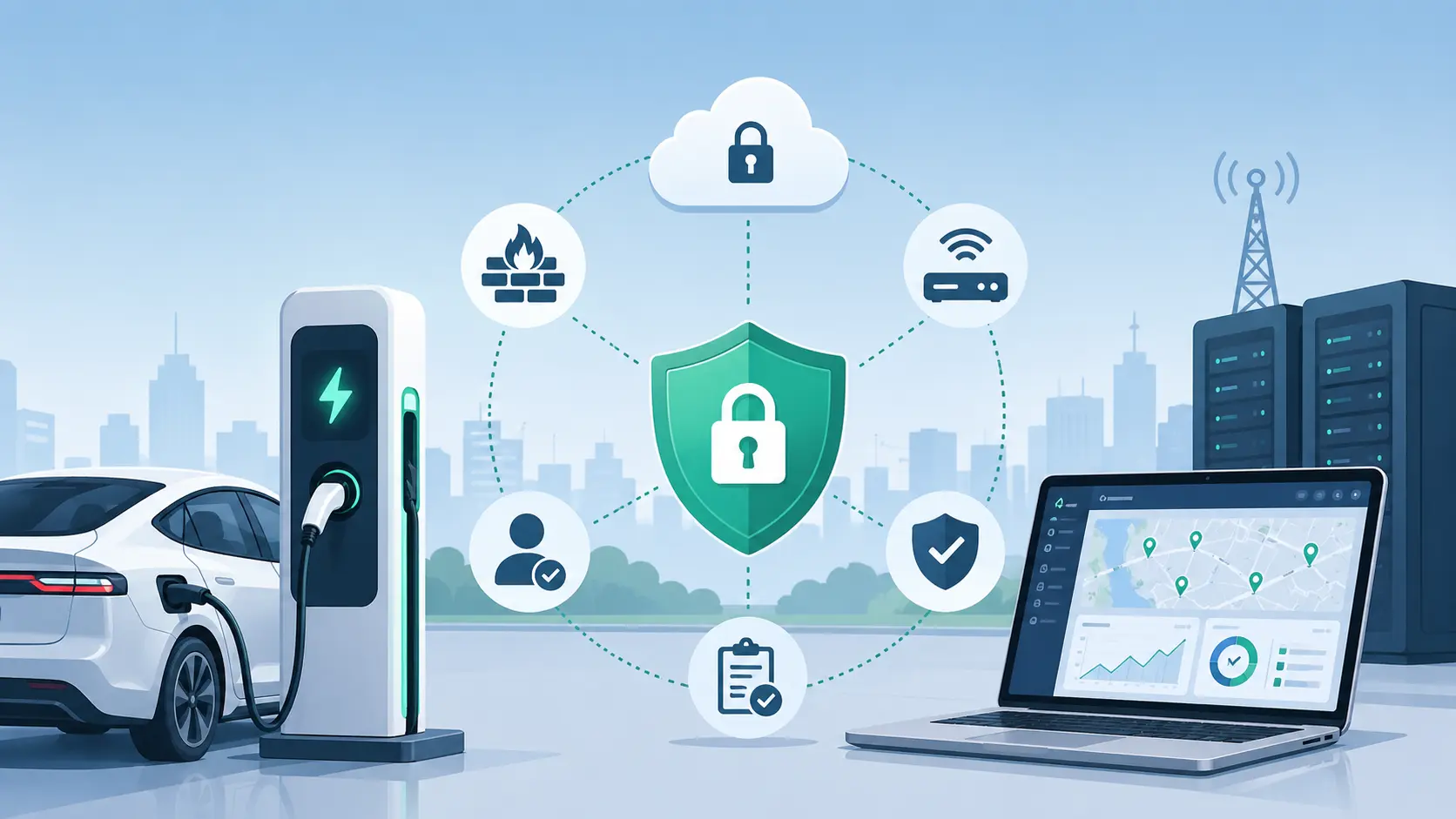
A charging site can have the right utility plan, the right charger mix, and a sound business case and still underperform if cybersecurity is treated as an afterthought. Once chargers depend on cloud software, payment systems, roaming connections, and remote support, the network stops being only an electrical asset. It becomes an operational technology environment with real exposure to downtime, control failures, and data risk.
For operators and buyers, the practical question is not whether EV charging networks can be attacked. It is which failures matter most to the business: remote lockouts, stalled firmware rollouts, broken payment flows, false availability data, exposed user records, or slow recovery after one platform dependency fails. The best security programs are built around uptime, accountability, and recoverability rather than abstract compliance language.
Why Cybersecurity Is an Operations Decision
In EV charging, cybersecurity is not only an IT issue. It directly affects charger availability, fleet readiness, site profitability, and vendor governance.
A compromised admin account can disable chargers just as effectively as a hardware fault. A poorly controlled software release can create portfolio-wide disruption faster than a local electrical issue. Weak integration controls can interrupt roaming, billing, or session authorization even when the charger itself is healthy.
Site type changes the business impact. A workplace AC charging site may tolerate some service degradation more easily than a fleet depot or a commercial DC fast charging location where lost charging hours immediately reduce vehicle throughput or revenue. That is why security decisions should be tied to site criticality, not managed as a generic IT checklist.
Where the Real Attack Surface Sits
Most EV charging cybersecurity risk comes from the control layer around the charger, not only from the charger cabinet itself.
| Risk Area | Typical Weakness | Operational Consequence | Buyer Question |
|---|---|---|---|
| Charger controller and local configuration | Default credentials, weak local services, unmanaged configuration changes | Charger misconfiguration, unavailable connectors, unsafe local troubleshooting practices | How are defaults removed and configuration changes approved? |
| Site network | Flat LAN design, poor segregation from guest or corporate systems | Harder containment, broader outage scope, higher recovery complexity | Are chargers segmented from corporate IT, POS, cameras, and guest Wi-Fi? |
| Cloud and charger management platform | Overprivileged accounts, weak MFA, unclear audit trails | Unauthorized remote commands, tariff changes, or device control | Is MFA mandatory and are privileged actions logged by user and timestamp? |
| Protocols and third-party integrations | Weak handling of OCPP, OCPI, roaming, or payment dependencies | Session failure, settlement disruption, interoperability problems | Which interfaces are exposed and how are credentials, tokens, and certificates rotated? |
| Firmware and update pipeline | Weak release governance, poor rollback planning, broad push permissions | Multi-site outages, incompatibility, slow restoration | How are updates tested, approved, staged, and rolled back? |
| Data and reporting | Incomplete export rights, unclear retention, weak log access | Poor forensics, vendor dependency, harder migration and dispute resolution | Who owns logs, device history, user data, and configuration records? |
This table matters because the charging network is only as resilient as its weakest operational dependency. Buyers who focus only on charger enclosure ratings or power levels can miss the control surfaces that create the largest business risk later.
Open Protocols Improve Flexibility but Demand Better Governance
Many operators want open, interoperable environments because they reduce lock-in and support wider ecosystem participation. That is usually the right strategic direction, but open does not mean self-securing.
Buyers should understand what OCPP means for commercial EV stations because protocol support is not only an interoperability feature. It is also a governance question involving authentication, command control, version management, certificate handling, and responsibility boundaries between charger vendor, backend provider, and operator.
An open environment can improve long-term bargaining power and make multi-vendor portfolios easier to evolve. It can also create a wider integration surface if partner controls, credential rotation, and change ownership are vague.
That is why buyers should evaluate open charging networks with the same discipline they apply to uptime or procurement terms. Flexibility is valuable, but only when the operator still has clear visibility into who can issue commands, who owns incident response, and how changes are validated before they affect live sites.
Remote Access and Firmware Are High-Leverage Risks
Remote support is one of the biggest advantages in modern charging networks. It lowers truck rolls, speeds diagnosis, and makes portfolio-wide management more practical. It also creates one of the highest-value attack paths if identity controls and change governance are weak.
Operators should assume that any account able to change charger configuration, user access, pricing logic, or firmware state is a high-impact control point. Shared support logins, incomplete role separation, or unclear approval rules make it far too easy for one mistake or one compromised credential to affect multiple sites.
The same logic applies to patching and releases. PandaExo’s article on firmware update strategy for operators is useful here because it frames updates as uptime protection rather than background maintenance. The best operating model uses staged deployment, maintenance windows, rollback discipline, and post-release alarm monitoring instead of broad, one-shot changes across the entire estate.
There is a real tradeoff here. Faster remote access and centralized release control improve operating efficiency, but they also increase the importance of role-based permissions, approval workflows, and strong audit logging. Buyers should not reject remote capabilities. They should insist that those capabilities are governed like critical infrastructure controls.
Build Security Around Recoverability, Not Perfect Prevention
No operator can eliminate every cyber risk. The more practical goal is to reduce blast radius, detect issues early, and recover quickly when something goes wrong.
- Segment the environment.
Keep chargers, payment devices, admin interfaces, and corporate systems on clearly separated network paths where possible. Good segmentation makes containment easier and stops a local issue from becoming a portfolio-wide operational event. - Harden identity and access.
Require named accounts, MFA for privileged roles, and least-privilege access for both internal teams and third-party support. If a vendor still relies on shared credentials for critical actions, that is a commercial and operational red flag. - Govern every material change.
Configuration edits, pricing changes, firmware pushes, whitelists, and remote restarts should all be traceable. The goal is not bureaucracy. It is making sure operators can answer who changed what, when, and why after an incident. - Monitor both health and security signals.
A cyber issue may first appear as failed session starts, abnormal offline patterns, repeated authentication errors, or unexplained connector behavior. Monitoring should connect network events to charger performance, not treat them as separate worlds. - Control third-party dependencies contractually.
Payment providers, roaming partners, software platforms, service teams, and communications providers all influence risk. Contracts should define access boundaries, escalation responsibilities, and log availability instead of assuming cooperation will be automatic during an incident. - Practice manual and degraded-mode operations.
Operators should know what happens if cloud management is impaired, if one site loses communications, or if a release must be rolled back quickly. Recovery planning is especially important for fleet depots and commercial DC locations where service interruption affects schedules and site economics immediately.
Procurement Red Flags Buyers Should Catch Early
Security maturity usually becomes visible before deployment if buyers ask the right questions.
| Area | Strong Sign | Red Flag |
|---|---|---|
| Identity management | Named admin accounts, MFA, clear role separation | Shared support logins or weak privileged access controls |
| Update governance | Staged rollout, approval workflow, rollback capability | Broad push rights with little operator visibility |
| Logging and forensics | Exportable logs, device history, configuration audit trail | Operator cannot retrieve records without vendor mediation |
| Network architecture guidance | Clear segmentation and communications recommendations | Charger is expected to sit on a general-purpose business LAN |
| Incident ownership | Defined responsibility across hardware, platform, and integrations | Finger-pointing risk between multiple vendors |
| Data ownership | Contractual clarity on retention, export, and migration support | Backend provider effectively controls operational history |
A buyer does not need every vendor to look identical, but every vendor should be able to explain how security controls map to operating continuity. If answers stay generic, the risk usually shows up later during troubleshooting, platform migration, or a real incident.
This becomes even more important when a site changes partners or a portfolio moves platforms. A formal EV charger data handover checklist should be part of procurement review because incomplete access to logs, certificates, configuration history, and user records makes both forensics and transition far harder than they should be.
Security Priorities Change by Site Type
Not every charging site needs the same security emphasis. Priorities should reflect how the site creates value and what downtime actually costs.
| Site Type | Highest Security Priority | Why It Leads |
|---|---|---|
| Workplace and long-dwell AC charging | Access control, user privacy, simple recovery process | Service disruption is usually tolerable for short periods, but poor governance can scale across many users and properties |
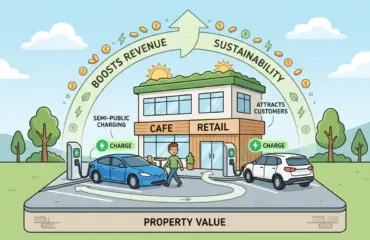
| Semi-public retail, hotel, or mixed-use charging | Payment integrity, role separation, remote monitoring | Customer-facing failures damage trust, settlement accuracy, and perceived site quality |
| Fleet depot charging | Uptime, change control, segmentation, manual fallback | Charging failure affects dispatch readiness and can create immediate operational disruption |
| High-power commercial DC charging | Remote access discipline, patch governance, communications resilience, incident escalation | High utilization and short dwell expectations increase the cost of both downtime and slow recovery |
This is why a single corporate security policy is not enough on its own. Operators need common control standards, but they also need site-level response priorities that reflect business consequences.
When teams start formalizing those workflows, PandaExo’s article on EV charging network uptime strategy is a useful companion reference because detection, triage, and escalation are what determine whether a cyber problem becomes a short operational event or a prolonged outage.
Questions to Put in Front of Vendors and Partners
These questions usually expose whether a supplier has a real operating model or only a surface-level security narrative.
- Is MFA mandatory for every privileged user, including third-party service personnel?
- Can the operator audit remote restarts, configuration edits, firmware pushes, and pricing changes by named user?
- How are OCPP, OCPI, roaming, and payment integrations authenticated, and how are certificates or tokens rotated?
- What network segregation model is recommended between chargers, backend connectivity, payment systems, and corporate IT?
- What is the rollback plan if a release causes instability across multiple chargers?
- Which logs, configuration files, and device history records can the operator export without opening a dispute?
- Who leads incident response when the charger, backend, telecom path, and payment provider all influence the event?
- What degraded-mode or manual fallback procedures exist if cloud control is partially unavailable?
The quality of the answers matters as much as the answers themselves. Mature partners respond with workflows, evidence, and boundary definitions. Weak partners respond with broad assurances and little operational detail.
Practical Summary
Cybersecurity in EV charging networks is not a side topic for IT teams to review after procurement. It is part of how operators protect uptime, how buyers protect future flexibility, and how portfolios avoid avoidable recovery delays when something goes wrong.
The practical approach is straightforward. Map the attack surface beyond the charger hardware. Treat remote access, firmware governance, and third-party integrations as high-impact control points. Match security priorities to site criticality. Require clear data ownership, auditability, and incident responsibility in contracts. Build recovery playbooks that assume some failures will happen and make sure the business can keep operating when they do.
For operators and buyers, that mindset usually produces better results than chasing the most dramatic security claims. In EV charging, strong cybersecurity is less about sounding strict and more about making the network controllable, visible, and recoverable over its full operating life.