
 Deutsch
  Español
  Français
  Italiano
  Português
  Svenska
  Suomi
Suomi  Dansk
Dansk  Norsk bokmål
  Nederlands
  العربية
  עברית
עברית  Polski
  Türkçe
  Русский
  Uzbek
Uzbek  Azərbaycan
  Tiếng Việt
  ไทย
ไทย  한국어
한국어  日本語
日本語  简体中文
简体中文 
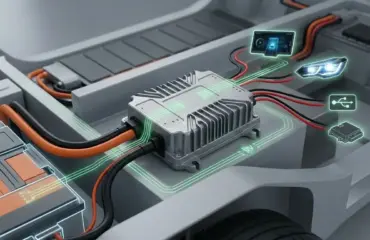
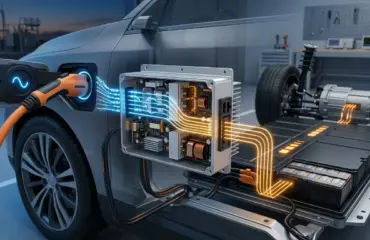
The global transition to electric mobility relies heavily on the reliability of the charging infrastructure that supports it. While software platforms and sleek external designs often dominate the conversation, the true workhorses of any EV charging station operate quietly under the hood. At the heart of this power conversion process are power semiconductor components, specifically bridge rectifiers.
For Charge Point Operators (CPOs) and Original Equipment Manufacturers (OEMs), understanding the technical specifications of these components is vital. Among the most critical metrics is high surge current capability. This article explores what surge current is, why it is a non-negotiable factor in power bridge selection, and how it directly impacts the profitability and lifespan of EV charging networks.
What is High Surge Current Capability?
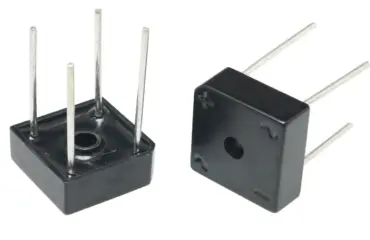
A power bridge, or bridge rectifier, is responsible for converting alternating current (AC) from the grid into direct current (DC). This is a foundational step before power is routed to a vehicle’s battery.
While rectifiers are rated for a standard continuous forward current, they must also be equipped to handle sudden, massive spikes in electrical current. These spikes are known as surge currents. High surge current capability refers to a component’s ability to withstand these temporary overcurrent events without suffering thermal breakdown or catastrophic failure.
Surge currents typically last for only a few milliseconds (often measured as a half-sine wave of 8.3ms or 10ms), but the thermal stress they place on semiconductor junctions is immense. If a power bridge cannot absorb and dissipate this brief burst of energy, the entire charging station can fail.
Why Surge Current Matters in EV Charging Stations
In the demanding environment of EV infrastructure, electrical anomalies are a question of “when,” not “if.” High surge current capability serves as the primary defense mechanism against several common operational hazards.
Grid Fluctuations and Lightning Strikes
Charging stations are directly tethered to the electrical grid, leaving them vulnerable to external voltage and current spikes. Nearby lightning strikes, sudden load shedding, or grid switching events can send massive transient currents down the line. A rectifier with a high surge rating acts as a robust gatekeeper, surviving the spike and allowing downstream protective devices time to react.
Inrush Currents During Start-Up
When an EV charger is first powered on, or when a charging session is initiated, the station’s internal capacitors require immediate charging. This creates an enormous initial draw of power known as inrush current. This phenomenon is especially pronounced in high-power DC chargers, where the internal capacitor banks are substantial. Without high surge current capability, this routine start-up process could routinely destroy the power bridge.
Short-Circuit Fault Tolerances
In the event of a downstream fault or temporary short circuit, the power bridge will experience a dramatic current spike before the system’s fuses or circuit breakers can trip. A high surge rating ensures that the bridge rectifier survives this critical window, preventing a replaceable fuse issue from becoming an expensive, board-level hardware failure.
Continuous vs. Surge Current: A Quick Comparison
Understanding the distinction between continuous and surge ratings is crucial for proper component sourcing.
| Feature | Continuous Current | Surge Current |
|---|---|---|
| Definition | The maximum steady-state current the device can handle indefinitely. | The maximum temporary spike in current the device can handle. |
| Duration | Continuous (Hours/Days) | Milliseconds (e.g., 8.3ms to 10ms) |
| Primary Risk | Long-term thermal degradation | Immediate catastrophic junction failure |
| EV Application | Dictates the overall power output of the charger. | Dictates the charger’s resilience to anomalies and start-up inrush. |
How High Surge Capability Benefits CPOs and OEMs
Sourcing bridge rectifiers with superior surge current ratings translates directly into tangible business advantages:
- Maximized Uptime: Hardware that survives transient spikes keeps charging stations online, ensuring a seamless experience for EV drivers and consistent revenue generation for operators.
- Reduced Maintenance Costs: Preventing board-level failures drastically cuts down on expensive technician dispatch costs and replacement part expenditures.
- Enhanced Brand Reputation: Reliable hardware builds trust. Whether you are deploying AC chargers for residential use or ultra-fast public stations, durability protects your brand equity in a competitive market.
- Simplified Engineering: High surge ratings provide engineers with a wider safety margin during the design phase, simplifying the integration of protective circuitry.
PandaExo: Manufacturing Excellence in Power Electronics
At PandaExo, we understand that building world-class EV infrastructure starts at the semiconductor level. We leverage a deep heritage in power semiconductors to engineer and manufacture components that meet the rigorous demands of modern energy systems.
Operating a state-of-the-art 28,000-square-meter manufacturing base, PandaExo provides factory-direct scale and precision. By controlling the manufacturing process from core semiconductor components up to complete smart energy platforms, we ensure that every unit—from individual power bridges to fully assembled smart EV chargers—delivers uncompromising reliability and high surge current resilience.
Whether you are an OEM seeking robust internal components or a network operator looking for complete charging solutions, PandaExo offers the engineering pedigree and manufacturing scale to power your network confidently.
Ready to elevate the reliability of your EV infrastructure? Explore our full range of hardware to discover how PandaExo’s factory-direct solutions and advanced semiconductor technologies can optimize your next project.