
 Deutsch
  Español
  Français
  Italiano
  Português
  Svenska
  Suomi
Suomi  Dansk
Dansk  Norsk bokmål
  Nederlands
  العربية
  עברית
עברית  Polski
  Türkçe
  Русский
  Uzbek
Uzbek  Azərbaycan
  Tiếng Việt
  ไทย
ไทย  한국어
한국어  日本語
日本語  简体中文
简体中文 
In EV charging, software platforms, payment flows, and user interfaces get most of the attention. The harder commercial question is what keeps power moving reliably from the grid to the battery. That answer starts with the conversion stage, and one of the most important components in that stage is the bridge rectifier.
For CPOs, fleet operators, OEM buyers, and charging infrastructure developers, the rectifier is not just an electronics detail. It influences efficiency, thermal behavior, hardware life, and charger uptime. If the rectification stage is weak, the charging system may still look complete on paper, but it becomes more expensive to operate in the field.
Why Bridge Rectifiers Matter in EV Charging
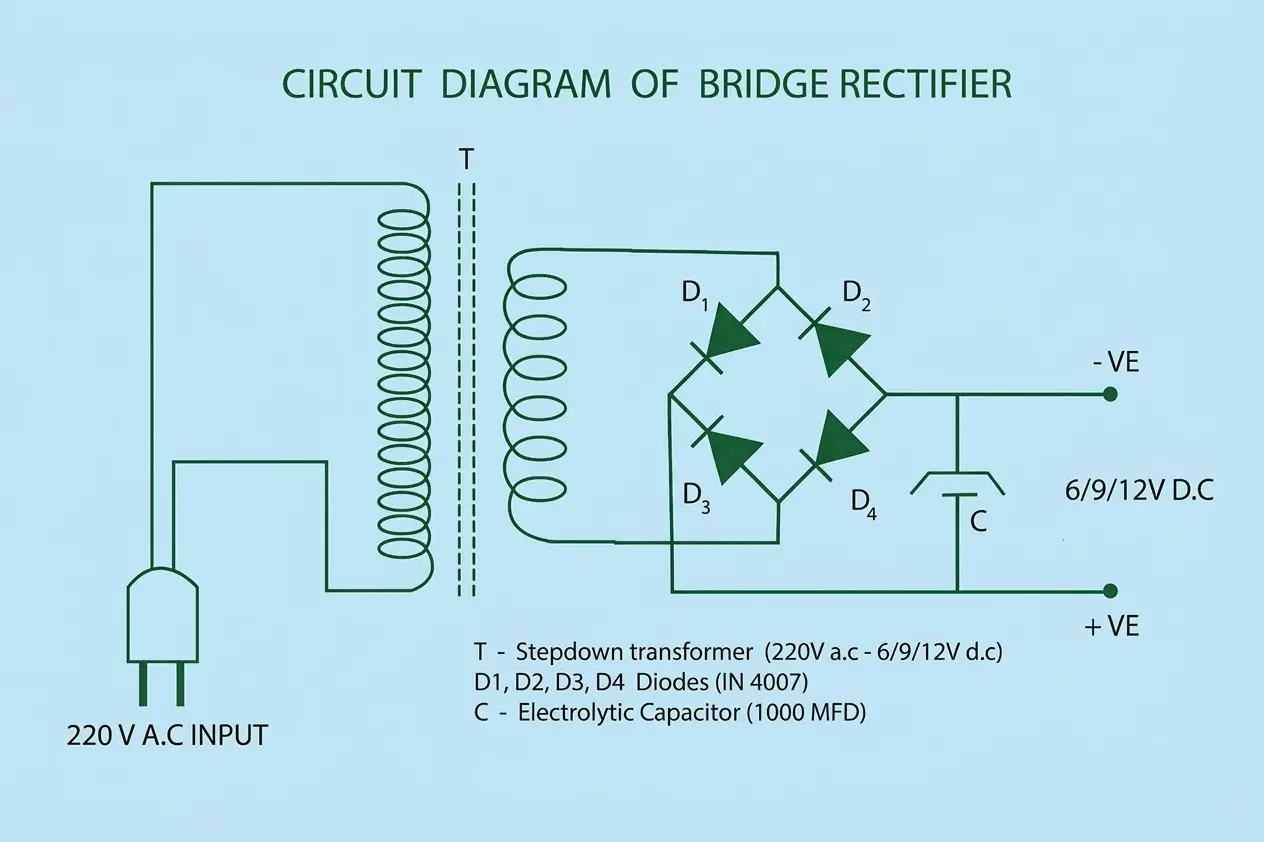
The grid delivers AC power, but EV batteries store energy as DC. Somewhere in the charging chain, that conversion must happen cleanly and consistently. A bridge rectifier handles that transition by routing alternating current through a diode arrangement that produces pulsating DC for the next stage of power processing.
This makes the rectifier one of the quiet enablers of charging performance. It does not decide the user interface or the cable type, but it directly affects whether the charger can support stable downstream conversion, manageable heat, and dependable long-duration operation.
The role of the bridge rectifier becomes easier to evaluate when viewed through a charger operator’s lens.
| Rectifier Role | Engineering Function | Business Impact |
|---|---|---|
| AC-to-DC conversion | Converts incoming AC into usable DC for later stages | Supports consistent power delivery and charger availability |
| Full-wave energy use | Captures both halves of the AC waveform instead of wasting half the cycle | Improves utilization of incoming power |
| Current path control | Directs conduction through the correct diode pairs | Reduces instability that can stress the rest of the power chain |
| Foundation for downstream regulation | Feeds the DC bus before filtering, control, and battery delivery | Affects system efficiency, heat load, and long-term reliability |
If the conversion stage underperforms, the rest of the charger has to compensate. PandaExo’s overview of AC-to-DC power conversion in commercial EV chargers is a useful reference for teams that want the broader system context.
What a Bridge Rectifier Actually Does
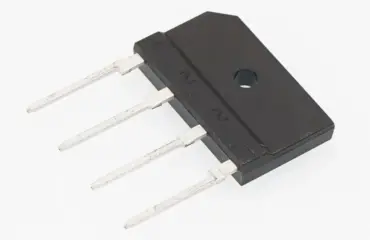
At a basic level, a bridge rectifier uses four or more diodes, depending on circuit design, to redirect the AC waveform into a one-direction output. In EV charging applications, this is part of the early conversion chain that prepares power for regulation and delivery.
For commercial buyers, the more useful takeaway is not the textbook definition. It is this: better rectification means cleaner DC, lower ripple, less wasted heat, and less stress on other components. Those are all operating conditions that show up later in service cost and uptime performance.
Why Conversion Quality Matters More Than the Diagram
Two chargers may look similar in enclosure size, connector count, or nominal power rating. What separates them in real deployment is often the quality of the power electronics inside.
When rectification quality is poor, operators may see problems such as:
- Excess heat inside the charger cabinet
- More stress on capacitors and downstream conversion stages
- Lower real-world efficiency than expected
- Higher fault frequency under sustained use
- Reduced hardware life in hot or high-demand environments
That is why semiconductor quality is not a procurement footnote. It is a lifecycle issue.
Where Rectification Happens in AC and DC Charging Architectures
The role of the bridge rectifier changes depending on the charging model. The most important difference is whether the AC-to-DC conversion happens inside the vehicle or inside the station.
AC Charging: Rectification Happens in the Vehicle
In AC charging applications, the station mainly delivers AC power to the vehicle. The car’s onboard charger then performs the rectification and regulates the power for the battery. This architecture is well suited to workplaces, residential sites, mixed-use parking, and other use cases where charging speed is important but extreme power density is not the primary objective.
Because the vehicle carries the onboard rectifier, power is constrained by what the vehicle can package, cool, and manage economically.
DC Charging: Rectification Happens in the Station
In DC fast charging systems, the conversion stage is moved out of the vehicle and into the charging station. This allows the charger to use larger power modules, more robust cooling systems, and industrial-grade conversion hardware that can support much higher charging throughput.
That architectural shift is one reason DC chargers can support demanding public, fleet, and corridor applications. It also means the station’s rectifier quality becomes a direct determinant of site performance.
The comparison below shows why this distinction matters commercially.
| Category | AC Charging Architecture | DC Charging Architecture |
|---|---|---|
| Where rectification happens | Inside the vehicle’s onboard charger | Inside the charging station |
| Typical deployment fit | Homes, workplaces, destination sites, overnight parking | Highway sites, fleet depots, public rapid charging hubs |
| Power envelope | Lower, vehicle-limited charging power | Higher, station-managed charging power |
| Thermal burden | Managed within vehicle packaging limits | Managed by industrial cooling and station design |
| Buyer priority | Reliable daily charging with manageable install cost | High throughput, faster turnaround, and commercial uptime |
For many B2B buyers, the real decision is not AC versus DC in the abstract. It is whether the site needs low-complexity daily charging or faster, higher-utilization infrastructure that can support more aggressive duty cycles.
Why Rectifier Quality Affects Uptime and ROI
Power electronics quality becomes visible when chargers are exposed to repeated daily load, variable climates, and long maintenance intervals. A bridge rectifier that runs hotter, wastes more energy, or degrades faster does not fail only at the component level. It raises the total cost of operating the site.
The most common consequences include:
| Weakness in the Rectification Stage | What It Can Cause in the Field | Why It Matters Commercially |
|---|---|---|
| Higher forward losses | More internal heat generation | Reduced efficiency and greater cooling demand |
| Poor thermal dissipation | Hotspots and component aging | Shorter maintenance intervals and greater risk of downtime |
| Lower component consistency | Uneven electrical performance | Harder troubleshooting and less predictable charger behavior |
| Weak material quality | Early degradation under cycling | Lower long-term ROI for the charging asset |
This is one reason power-electronics sourcing should be aligned with expected site duty, not just nominal price.
What Buyers Should Evaluate Beyond Charger Power Rating
When buyers compare EV charging hardware, rated power is often the headline figure. It should not be the only one. The rectifier stage sits close to the core of actual power delivery, so it deserves more attention during technical review.
Key evaluation questions include:
- Is the rectification stage suited to the intended duty cycle and site environment?
- How is heat managed under sustained charging conditions?
- What semiconductor quality controls support consistency at scale?
- Is the charger architecture appropriate for current demand and future vehicle power levels?
- Can the supplier support OEM or ODM adaptation when project requirements differ by market?
These questions matter even more for organizations scaling multi-site deployments or planning future expansion into higher-power charging formats.
Why PandaExo’s Semiconductor Background Is Relevant
PandaExo’s positioning in this category is not only about selling finished chargers. The company also brings deep experience in power semiconductors, which matters because charger reliability begins well before the final enclosure is assembled.
That background supports several buyer-facing advantages:
- Better attention to thermal performance in the conversion stage
- Stronger control over semiconductor quality and manufacturing consistency
- Greater confidence in scaling hardware programs across multiple deployment types
- More flexibility for OEM and ODM charging projects that need adaptation by market or channel
PandaExo’s EV charger portfolio reflects that broader view of infrastructure design, where the charging product and the core power electronics are treated as part of the same reliability equation.
For teams reviewing component-level reliability in more detail, PandaExo’s article on why thermal management is the core of EV power module reliability is a practical follow-on read.
Bridge Rectifiers as a Strategic Infrastructure Decision
Bridge rectifiers are easy to overlook because drivers never see them. Operators and OEM partners should think differently. In real charging infrastructure, they help determine whether a charger runs cleanly, manages heat effectively, and continues performing after repeated commercial use.
As charging demand increases and higher-capacity vehicles become more common, the quality of the power conversion chain becomes a stronger commercial differentiator. That makes rectifier quality part of infrastructure strategy, not just electronics design.
Final Takeaway
Bridge rectifiers sit at the point where grid power becomes battery-ready energy. In AC charging, they matter inside the vehicle. In DC charging, they matter inside the station. In both cases, they influence efficiency, thermal stability, service life, and operating cost.
For buyers building or scaling EV charging infrastructure, understanding the rectification stage leads to better hardware decisions and fewer long-term surprises. If you are evaluating charging systems with stronger power-electronics foundations, contact the PandaExo team to discuss infrastructure built for dependable commercial performance.