
 Deutsch
  Español
  Français
  Italiano
  Português
  Svenska
  Suomi
Suomi  Dansk
Dansk  Norsk bokmål
  Nederlands
  العربية
  עברית
עברית  Polski
  Türkçe
  Русский
  Uzbek
Uzbek  Azərbaycan
  Tiếng Việt
  ไทย
ไทย  한국어
한국어  日本語
日本語  简体中文
简体中文 
The automotive industry is undergoing a massive electrical transformation. As electric vehicles (EVs) and mild-hybrid systems demand more power for advanced driver-assistance systems (ADAS), steer-by-wire, and active suspension, OEMs are rapidly adopting 48V electrical architectures. However, a significant engineering challenge remains: a vast ecosystem of legacy automotive accessories—from infotainment screens and LED lighting to standard HVAC controls—still operates on traditional 12V power.
Bridging this gap safely and efficiently requires high-performance 48V to 12V DC-DC converters. For fleet operators, automotive engineers, and aftermarket system integrators, understanding how to deploy these converters is critical to ensuring vehicle safety, optimizing power distribution, and protecting sensitive electronics.
In this article, we explore the shift to 48V systems, the technical considerations for safely stepping down voltage, and how robust power electronics form the backbone of the modern EV ecosystem.
Why the Shift to a 48V Architecture?
Historically, the standard 12V automotive battery has been sufficient to power basic accessories. But as vehicles become “computers on wheels,” the 12V limit—typically around 3kW of peak power—has become a bottleneck. Upgrading to a 48V primary network offers several distinct B2B and engineering advantages:
- Quadrupled Power Capacity: A 48V system safely delivers up to four times the power of a 12V system at the same current level, easily supporting high-demand components like electric turbochargers and advanced cooling pumps.
- Significant Weight Reduction: Because higher voltage requires less current to deliver the same power, engineers can utilize thinner, lighter wiring harnesses. This directly translates to reduced vehicle weight and improved EV range.
- Enhanced Efficiency: 48V architectures minimize resistive power losses (I^2R losses) during transmission across the vehicle’s electrical network.
The Critical Role of the 48V to 12V DC Converter
Despite the advantages of 48V, redesigning every single vehicle accessory to operate natively at 48V is not yet economically viable. A 48V to 12V step-down (buck) converter is essential to power legacy 12V components from the new 48V bus.
To upgrade EV accessories safely, engineers must prioritize converters that deliver clean, stable power while protecting against voltage spikes, short circuits, and electromagnetic interference (EMI).
Key Technical Considerations for Safe Upgrades
When integrating a converter into an EV power system, evaluating the following engineering specifications is paramount:
- Galvanic Isolation vs. Non-Isolated Topologies: Depending on the application and safety requirements, choosing the right isolation level protects sensitive 12V components from 48V ground faults.
- Thermal Management: Power conversion generates heat. Look for converters with high-efficiency ratings (typically >94%) and robust thermal dissipation designs, such as aluminum housings with built-in heat sinks or liquid cooling interfaces.
- EMI and EMC Compliance: Switching regulators in DC-DC converters generate high-frequency noise. Proper shielding and compliance with automotive EMC standards (like CISPR 25) are mandatory to prevent interference with vehicle communications and infotainment.
- Transient Voltage Protection: The converter must withstand harsh load dumps and voltage transients on the 48V line without passing dangerous spikes downstream to 12V accessories.
Comparing Converter Topologies
| Feature | Non-Isolated 48V to 12V Converters | Isolated 48V to 12V Converters |
|---|---|---|
| Safety/Protection | Basic; no physical separation between circuits. | High; physical barrier prevents fault propagation. |
| Efficiency | Generally higher (up to 98%). | Slightly lower due to transformer losses (~93-95%). |
| Size & Weight | More compact and lightweight. | Larger and heavier due to isolation transformers. |
| Cost | More cost-effective. | Higher upfront cost. |
| Ideal Use Case | Low-risk accessories (e.g., cabin lighting, basic audio). | Critical/sensitive systems (e.g., ECUs, medical transport gear). |
Power Semiconductors: The Heart of Reliable Conversion
Whether you are stepping down voltage onboard a vehicle or converting AC grid power to DC power for external charging, the reliability of the system comes down to its core power semiconductor components.
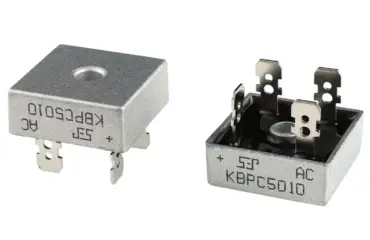
Efficient power conversion relies heavily on high-quality switching components, synchronous rectifiers, and robust thermal designs. For instance, in broader power conversion applications, reliable bridge rectifiers and advanced semiconductors are fundamental to ensuring that energy is routed safely and with minimal loss. At PandaExo, our deep heritage in power semiconductors allows us to understand power management at a microscopic level, translating that expertise into macro-level infrastructure reliability.
Beyond the Vehicle: The Broader EV Power Ecosystem
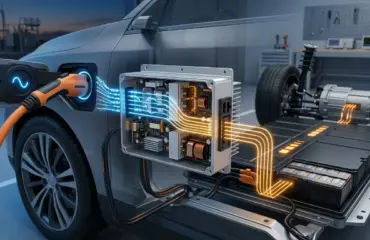
The efficient management of power onboard an EV goes hand-in-hand with how the vehicle receives power from the grid. A vehicle with a highly optimized 48V architecture still requires intelligent, high-performance charging infrastructure to stay on the road.
As a global leader in EV charging solutions, PandaExo provides the crucial off-board infrastructure that complements advanced onboard electronics:
- Rapid Energy Delivery: For commercial fleets and highway charging hubs, the rapid energy delivery required by DC Fast Charging stations ensures vehicles are powered up and back in service with minimal downtime.
- Intelligent Destination Charging: For workplace and residential applications, reliable charging points like our AC smart chargers offer scalable, grid-friendly energy management.
Partner with a Global Manufacturing Leader
Upgrading EV systems safely—whether managing onboard 48V-to-12V conversions or scaling a nationwide charging network—requires hardware you can trust. Backed by a 28,000-square-meter advanced manufacturing base and a comprehensive software platform, PandaExo offers unparalleled factory-direct scale, precision, and customized OEM/ODM services.
Ready to build the future of electric mobility? Explore our complete catalog of factory-direct hardware to discover how PandaExo can accelerate your next project.