
 Deutsch
  Español
  Français
  Italiano
  Português
  Svenska
  Suomi
Suomi  Dansk
Dansk  Norsk bokmål
  Nederlands
  العربية
  עברית
עברית  Polski
  Türkçe
  Русский
  Uzbek
Uzbek  Azərbaycan
  Tiếng Việt
  ไทย
ไทย  한국어
한국어  日本語
日本語  简体中文
简体中文 
In smart EV chargers, the attention usually goes to charging power, connector standards, and software visibility. But the control board only performs as well as its auxiliary power stage. If the low-power AC-to-DC section is unstable, the charger can suffer from communication faults, thermal stress, erratic control behavior, or avoidable field failures.
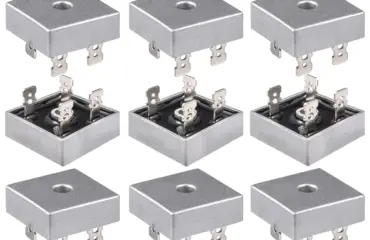
That is why PCB layout around miniature bridge rectifiers deserves more attention than it often gets. In compact charger electronics, KBP series devices are a practical choice for converting AC input into the DC rail needed by controllers, displays, relays, sensors, and support circuitry. The component is small, but layout mistakes around it can create outsized reliability problems.
This guide explains where KBP series bridge rectifiers fit in EV charger design, which layout decisions matter most, and how hardware teams can turn a working schematic into a board that is manufacturable, safe, and durable in real deployment conditions.
Why KBP Rectifiers Matter in Smart Charger Boards
KBP series bridge rectifiers are typically used in auxiliary power sections rather than the main high-power charging path. That makes them easy to underestimate. In practice, they often support the part of the charger that handles logic, connectivity, sensing, and user interaction. If that support rail becomes unstable, the charger can fail long before the main power architecture is ever fully utilized.
The table below shows why these components matter in commercial EV charging electronics.
| Board-Level Role | What the Rectifier Supports | What Poor Layout Can Cause |
|---|---|---|
| AC-to-DC conversion for auxiliary supply | Controller boards, HMI, communications, sensors, relays | Unstable low-voltage rails, reset events, or control faults |
| Thermal load concentration in compact area | Reliable operation in small enclosures | Hotspots, premature aging, and intermittent failures |
| Interface between mains-side input and low-voltage circuitry | Electrical isolation strategy and safety spacing | Creepage violations, arcing risk, and certification problems |
| High-frequency switching and recovery behavior nearby | EMC performance of the charger PCB | Radiated noise, control interference, and compliance failures |
This is especially relevant for AC charging products, where compact control assemblies and cost-sensitive layouts are common, but the same design discipline also supports larger DC charging systems that depend on stable control and monitoring electronics.
What Makes KBP Layout Different From a Generic Power Section
A KBP rectifier may look straightforward on a schematic, but its layout has to balance four constraints at once:
- Thermal dissipation in a compact footprint
- High-voltage spacing and insulation reliability
- EMI behavior around diode switching and return paths
- Manufacturability under realistic cost and assembly rules
The design problem is not just electrical. It is electro-thermal, mechanical, and compliance-driven. That is why layout decisions around even a small bridge rectifier can influence the long-term reliability of the whole charger controller.
1. Treat the PCB as Part of the Thermal Design
Many KBP implementations do not use a dedicated heatsink. In those cases, the PCB becomes the primary thermal path. If the board does not spread heat effectively, the rectifier junction temperature rises faster than the rest of the design team expects.
The most common layout mistake is leaving the device on narrow traces or minimal copper islands. That may pass basic bring-up, but it often performs poorly in enclosed chargers exposed to elevated ambient temperatures.
Use the board to move heat away from the package:
- Connect output nodes to meaningful copper areas where appropriate
- Increase copper thickness when current density and thermal load justify it
- Use thermal vias to spread heat into inner or bottom layers on multilayer boards
- Avoid crowding temperature-sensitive components directly beside the rectifier
- Verify heat flow in the context of enclosure airflow, not just bench conditions
| Thermal Design Choice | Why It Helps | Typical Risk If Ignored |
|---|---|---|
| Large copper pours on rectifier-connected nodes | Spreads heat laterally across the PCB | Localized overheating near pins and pads |
| Thermal vias into other layers | Improves vertical heat transfer | Top-layer heat buildup and thermal cycling stress |
| Separation from sensitive ICs | Reduces heat transfer into control electronics | Sensor drift, MCU instability, or reduced component life |
| Validation under enclosure conditions | Reflects actual charger operating environment | Good lab behavior but poor field reliability |
Thermal margin is not a cosmetic improvement. It directly influences service life, especially in chargers deployed in sealed or outdoor enclosures. PandaExo’s article on why thermal management is the core of EV power module reliability is a useful companion for teams standardizing thermal review practices.
2. Design Creepage and Clearance Early, Not After Routing
Because the rectifier sits near mains-side circuitry, spacing rules should be part of the first placement review. Waiting until the board is nearly complete usually forces awkward routing compromises or late mechanical edits.
In EV charger electronics, humidity, dust, vibration, and outdoor contamination can all reduce effective insulation reliability over time. Spacing that appears acceptable in a CAD view may be insufficient once environmental reality is considered.
Focus on these design checks early:
- Distance through air between high-voltage conductors
- Surface creepage across the PCB between AC and DC nodes
- Board contamination risk based on the charger environment
- Pollution degree, insulation system, and target certification requirements
- Whether an isolation slot is needed to extend effective creepage distance
| Safety Layout Question | Why It Matters | Practical PCB Action |
|---|---|---|
| Are AC input and DC output nodes too close? | Reduces insulation margin | Reposition parts and widen spacing before detailed routing |
| Does board surface creepage meet the application need? | Prevents tracking across FR4 in harsh environments | Increase spacing or add isolation slots |
| Is the charger intended for dusty or humid deployment? | Environmental stress reduces margin over time | Design with higher practical spacing discipline |
| Is certification considered only at the end? | Late fixes are expensive and disruptive | Review spacing strategy during placement, not only during compliance prep |
This is one of the clearest examples of where PCB layout decisions affect business outcomes. A charger that has to be re-spun for spacing corrections delays deployment, retesting, and production ramp.
3. Keep the Rectifier-Filter Loop Tight for Better EMC Performance
Rectification is electrically noisy. Diode switching and reverse recovery can inject high-frequency energy into the surrounding layout, especially if the current loop between the rectifier and the bulk capacitor is physically large.
In smart chargers, this noise does not stay isolated. It can couple into microcontroller rails, communication lines, measurement circuits, and touch-display subsystems. The result may be unstable behavior that looks like firmware trouble but is actually layout-driven noise.
Good EMC-oriented placement usually includes:
- Keeping the rectifier close to the associated bulk capacitor
- Minimizing loop area between AC input, bridge, and capacitor return path
- Avoiding long, thin power loops that behave like antennas
- Reserving footprints for snubbers if ringing appears during validation
- Using a continuous reference plane strategy where the design allows it
| EMC Layout Priority | Benefit | Failure Mode If Neglected |
|---|---|---|
| Short rectifier-to-capacitor path | Reduces loop inductance and noise radiation | Ringing, radiated noise, and unstable support rails |
| Controlled return path | Improves signal integrity and noise containment | Unexpected coupling into control circuitry |
| Snubber footprint options | Gives flexibility during EMC tuning | Board respin if test results show ringing problems |
| Thoughtful plane strategy | Helps shield and stabilize noisy zones | Higher risk of failed CE or FCC emissions testing |
For teams building connected chargers, this matters because EMC issues can delay certification and make debugging disproportionately expensive. A board that passes functional testing but fails emissions testing is not production-ready.
4. Size Traces for Real RMS Stress, Not Optimistic Averages
One common mistake in auxiliary power design is underestimating current stress because the average DC load looks modest. Rectified waveforms are not the same as smooth DC, and the trace heating behavior can be worse than the nameplate load suggests.
That means AC input and DC output traces around the rectifier should be sized from realistic current and temperature assumptions, not just schematic simplicity.
Good practice includes:
- Calculating trace width from accepted PCB current-carrying guidance
- Accounting for expected ambient rise inside the charger enclosure
- Avoiding sharp corners and unnecessary constrictions in power paths
- Checking pad geometry and annular support for assembly robustness
- Reviewing whether copper weight is aligned with both electrical and thermal goals
| Routing Choice | Recommended Direction | Why It Matters |
|---|---|---|
| Trace width | Size from realistic RMS current and allowable temperature rise | Prevents overheating and reliability drift |
| Corners in power traces | Prefer 45-degree routing or smooth transitions | Reduces current crowding and fabrication weakness |
| Neck-down sections near pads | Minimize where possible | Avoids local hot spots and resistive loss |
| Copper weight selection | Match current, heat, and cost targets deliberately | Supports both electrical margin and manufacturability |
This is where engineering rigor protects both field reliability and procurement efficiency. A board that barely survives pilot deployment often becomes expensive once deployed at scale.
A Practical Placement Checklist for KBP-Based Charger Boards
Before finalizing the layout, teams should verify that the rectifier section has been reviewed as a complete operating zone rather than just a part footprint.
| Review Area | Key Question |
|---|---|
| Placement | Is the rectifier positioned logically relative to AC input, fuse path, and bulk capacitor? |
| Thermal path | Is there enough copper and via support for real enclosure conditions? |
| Safety spacing | Do creepage and clearance support the intended voltage and environment? |
| EMC behavior | Is the high-current loop tight and well referenced? |
| Trace current | Are widths sized for realistic waveform stress and temperature rise? |
| Manufacturing | Are hole sizes, pad shapes, and clearances suitable for repeatable assembly? |
| Validation readiness | Have snubber options, test points, and measurement access been considered? |
This kind of checklist is valuable for OEM and ODM teams because it turns layout review into a repeatable process instead of an experience-based guess.
From Component Selection to Charger-Scale Reliability
Good layout cannot rescue a poor component, and a strong component cannot fully compensate for weak layout. Reliable smart chargers need both.
That is where PandaExo’s broader value becomes relevant. The company combines power semiconductor depth with large-scale EV charger manufacturing, which helps buyers move from isolated component decisions to complete hardware strategy. Whether the need is discrete component sourcing, charger platform development, or factory-backed OEM and ODM delivery, the goal is the same: reduce avoidable risk between prototype and field deployment.
If your project also touches charger architecture beyond the auxiliary supply, PandaExo’s article on AC-to-DC conversion in EVs and the role of the onboard charger is another relevant reference.
Final Takeaway
KBP series bridge rectifiers may be small, but they sit in a part of the EV charger PCB where thermal behavior, safety spacing, EMC performance, and manufacturing quality all intersect. If that section is laid out casually, the charger may still function in the lab while accumulating future reliability problems.
The strongest boards are designed with the rectifier as part of a complete operating system: heat path, spacing rules, noise control, and current handling all reviewed together. If you are sourcing components or building smart charging hardware for commercial deployment, PandaExo can help bridge the gap between board-level design discipline and full EV charger solutions built for scale.