

 Deutsch
  Español
  Français
  Italiano
  Português
  Svenska
  Suomi
Suomi  Dansk
Dansk  Norsk bokmål
  Nederlands
  العربية
  עברית
עברית  Polski
  Türkçe
  Русский
  Uzbek
Uzbek  Azərbaycan
  Tiếng Việt
  ไทย
ไทย  한국어
한국어  日本語
日本語  简体中文
简体中文 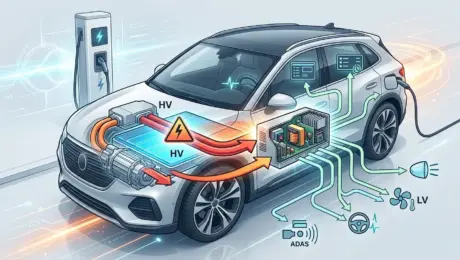
Understanding DC-DC Converters in Modern Electric Vehicles: The Heart of Power Management
Tuesday, 20 January 2026
The rapid evolution of electric mobility demands not just more power, but smarter power. While massive battery packs and high-performance motors capture the headlines, the unsung hero of the modern electric vehicle (EV) architecture is the DC-DC converter. For fleet operators, infrastructure developers, and automotive engineers, understanding how these components manage energy distribution is critical.
- Published in Power Semiconductors
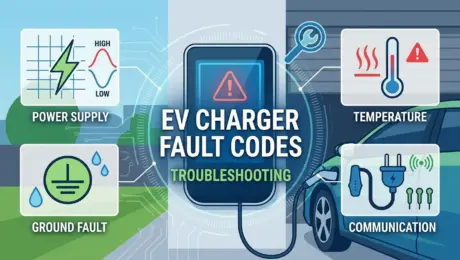
Demystifying Home EV Charger Fault Codes: A Comprehensive Troubleshooting Guide
Tuesday, 20 January 2026
As the global transition to electric mobility accelerates, the demand for reliable residential EV charging infrastructure has skyrocketed. For distributors, fleet operators, and certified installation professionals, ensuring that end-users experience seamless charging is paramount. When a charging station faults, it not only frustrates the EV owner but can also lead to costly support tickets and
- Published in EV Charging Solutions
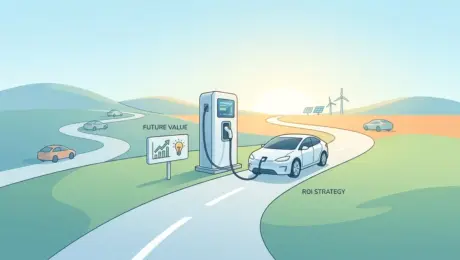
How to Evaluate EV Charging ROI When Utilization Is Still Low
Tuesday, 20 January 2026
A charging site that sees only a handful of sessions per day can look weak on paper. That is exactly when many site hosts, fleet planners, and property owners make the wrong decision: they judge the asset against mature-station utilization before driver adoption, tenant awareness, fleet transition, or local charging habits have had time to
- Published in EV Charging Solutions

How to Charge Your EV on a Road Trip Without Public Stations?
Monday, 19 January 2026
For EV drivers and fleet operators, long-distance travel relies heavily on public charging networks. However, traversing remote corridors, exploring national parks, or navigating rural routes can sometimes mean encountering “charging deserts”—areas where commercial stations are sparse or non-existent. While range anxiety is a common concern, a deep understanding of alternative charging methods and the underlying
- Published in EV Charging Solutions
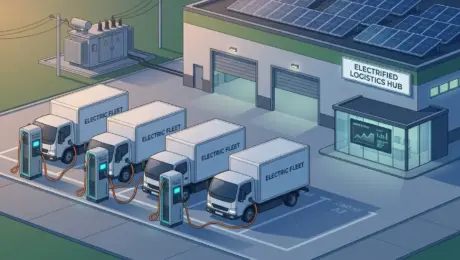
Upgrading Fleet Charging Depots with High-Power DC Infrastructure
Monday, 19 January 2026
As the commercial transportation sector accelerates its transition to electric vehicles (EVs), fleet operators face a critical bottleneck: energy delivery. While early electrification efforts often relied on standard charging methods, the demands of modern logistics, transit, and heavy-duty delivery fleets require drastically shorter turnaround times. To maximize vehicle uptime and maintain operational efficiency, transitioning from
- Published in EV Charging Solutions
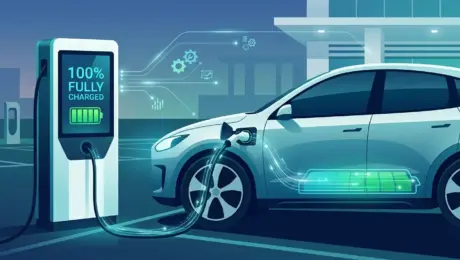
What Happens if You Leave Your EV Plugged In Fully Charged?
Saturday, 17 January 2026
For fleet operators, commercial facility managers, and commercial EV charging site hosts, maximizing the lifespan of electric vehicle (EV) batteries is a critical priority. One of the most common questions from both new EV drivers and infrastructure operators is: What actually happens if an EV remains plugged in after reaching a 100% charge? Decades of
- Published in EV Charging Solutions
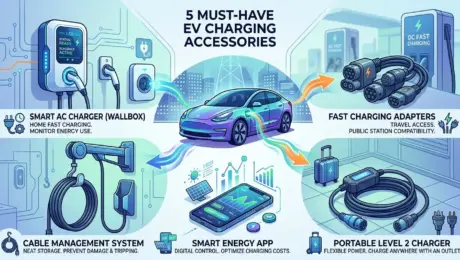
Top 5 Must-Have Charging Accessories for New EV Owners
Saturday, 17 January 2026
The transition to electric mobility is accelerating globally. For new EV owners, the initial focus is often on vehicle range and battery capacity. However, automotive dealerships, fleet operators, and commercial property managers know that the true key to a seamless EV experience lies in the charging ecosystem. Relying solely on the factory-provided cables often leaves
- Published in EV Charging Solutions
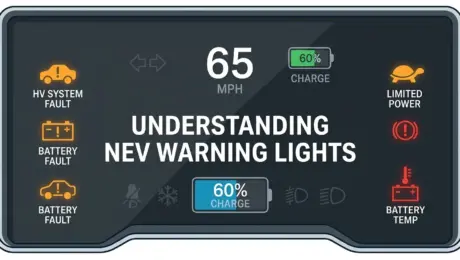
A Beginner’s Guide to Understanding NEV Dashboard Warning Lights
Saturday, 17 January 2026
The transition from Internal Combustion Engine (ICE) vehicles to New Energy Vehicles (NEVs)—encompassing Battery Electric Vehicles (BEVs) and Plug-in Hybrid Electric Vehicles (PHEVs)—represents a massive technological leap. For fleet operators, commercial leasing companies, and everyday drivers, this shift means adapting to an entirely new ecosystem of vehicle diagnostics. Gone are the days of the traditional
- Published in EV Charging Solutions
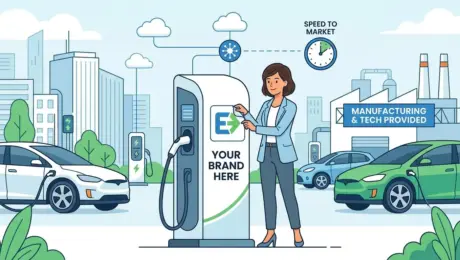
How to Launch a White-Label EV Charger Brand Without Building Everything In-House
Saturday, 17 January 2026
Launching an EV charger brand looks simple from a distance. Pick a housing, add a logo, publish a product page, and start talking to distributors or installers. In practice, the real bottleneck is not branding. It is deciding which layers of the offer must be yours and which layers should come from an experienced manufacturing
- Published in EV Charging Solutions
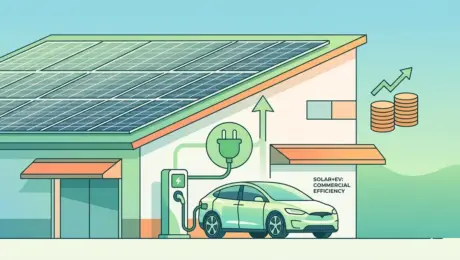
Solar Plus EV Charging: When the Combination Actually Makes Financial Sense for Commercial Sites
Saturday, 17 January 2026
Putting solar next to EV charging sounds like an obvious win. Generate electricity on-site, send it to the chargers, reduce grid purchases, and improve the sustainability profile of the property. In practice, the economics are not that automatic. The projects that work are usually not the ones built around a clean-energy narrative alone. They are
- Published in EV Charging Solutions

How to Identify Terminals on a 4-Pin Bridge Rectifier
Monday, 12 January 2026
In the world of electric vehicle (EV) charging and power electronics, the bridge rectifier is a silent workhorse. Whether it’s nested within a smart AC wallbox or part of a high-power DC fast charging module, this component is responsible for the critical task of converting Alternating Current (AC) from the grid into the Direct Current
- Published in Power Semiconductors
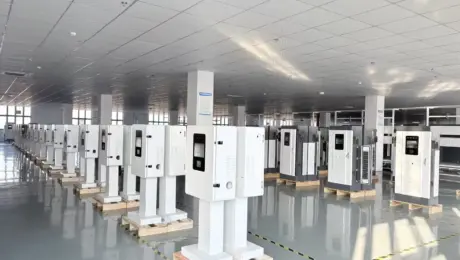
The Critical Role of Reliable Silicon Components in OEM EV Charger Manufacturing
Monday, 12 January 2026
The electric vehicle (EV) revolution is accelerating, but the mass adoption of electric mobility hinges entirely on the deployment of robust, efficient, and scalable charging infrastructure. Behind the sleek exterior of every modern charging station lies a complex ecosystem of power electronics. For Original Equipment Manufacturers (OEMs), the difference between a market-leading charger and one
- Published in EV Charging Solutions

Designing a Variable DC Power Supply with a KBPC5010 Rectifier
Sunday, 11 January 2026
A variable DC power supply is one of the most useful tools in any serious electronics lab. It supports circuit validation, component burn-in, battery system testing, motor control experiments, and a wide range of troubleshooting tasks. When the design target moves beyond low-current hobby use and into heavier bench loads, the power stage has to
- Published in Power Semiconductors
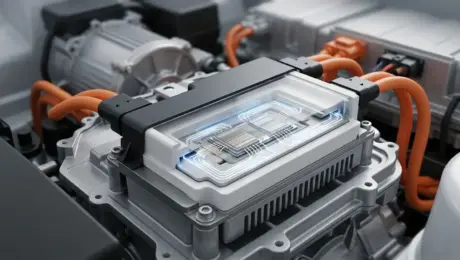
The Core of EV Reliability: Why High Dielectric Strength Matters in Automotive Grade Semiconductors
Friday, 09 January 2026
The electric vehicle (EV) revolution is accelerating, bringing an unprecedented demand for faster charging times, longer driving ranges, and highly efficient power management. As the automotive industry aggressively transitions from traditional 400V systems to advanced 800V—and even 1000V+—architectures, the stress placed on underlying power electronics has multiplied. At the very heart of this high-voltage transition
- Published in Power Semiconductors
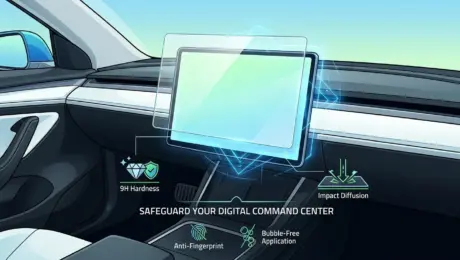
Protecting Your EV’s Touchscreen: Tempered Glass Guide
Wednesday, 07 January 2026
Modern Electric Vehicles (EVs) are defined by their advanced digital interfaces. Gone are the days of tactile dashboards cluttered with analog knobs and mechanical dials. Today’s EVs are commanded entirely through expansive, high-definition touchscreens that serve as the central nervous system of the vehicle. These centralized digital hubs manage critical operations, from battery thermal preconditioning
- Published in EV Charging Solutions
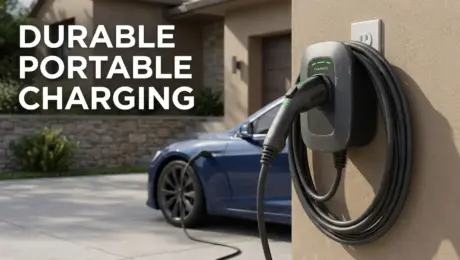
How Long Does a Portable EV Charger Last? Lifespan, Durability, and ROI Explained
Tuesday, 06 January 2026
In the rapidly evolving landscape of electromobility, the reliability of charging hardware is a cornerstone of operational success. For fleet operators, EV automotive distributors, and individual owners, the “portable” charger—often referred to as a Mode 2 charging cable—is a critical piece of infrastructure. It serves as both a primary charging solution for home use and
- Published in EV Charging Solutions

KBPC Series Square Bridges: Heavy-Duty Rectification for Welding & Charging
Monday, 05 January 2026
In the rapidly expanding worlds of electric vehicle (EV) infrastructure and heavy industrial manufacturing, reliable power conversion is the invisible force driving operations forward. Whether you are managing a fleet of smart EV charging stations or operating heavy-duty welding equipment, the efficiency of your power supply dictates your operational success. At the heart of this
- Published in Power Semiconductors

Why High-Quality Rectifier Diodes are Critical for Your Power Inverter
Monday, 05 January 2026
Power inverter performance is often discussed in terms of switching devices, control logic, and overall system topology. Those areas matter, but they do not carry the whole reliability story. In real-world power conversion, rectifier diodes still decide how efficiently current moves, how much heat the system must shed, and how much stress downstream components have
- Published in Power Semiconductors
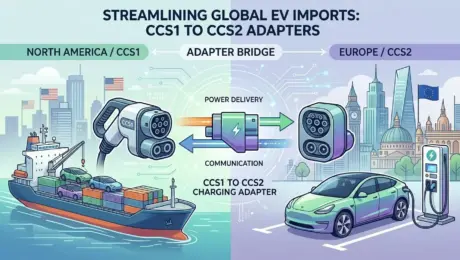
The Ultimate Guide to CCS1 to CCS2 Charging Adapters for European Importers
Monday, 05 January 2026
The global electric vehicle (EV) market is more interconnected than ever. However, for automotive importers, fleet managers, and infrastructure developers in Europe, regional charging standards can present a significant logistical hurdle. While the European Union has standardized around the Combined Charging System Type 2 (CCS2), North America and parts of Asia predominantly utilize CCS1. For
- Published in EV Charging Solutions
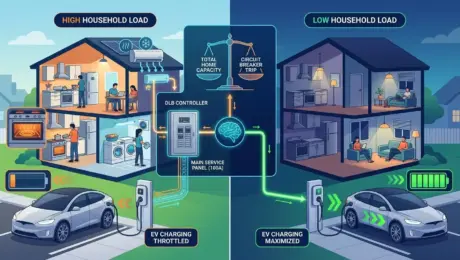
The Critical Role of Dynamic Load Balancing in Home EV Charging Stations
Sunday, 04 January 2026
As the global transition to electric mobility accelerates, the demand for robust residential charging infrastructure is surging. However, this rapid adoption presents a significant electrical bottleneck for modern homes. Adding an electric vehicle to a household grid is akin to adding another entire house’s worth of energy demand. To mitigate overloaded circuits, tripped breakers, and
- Published in EV Charging Solutions
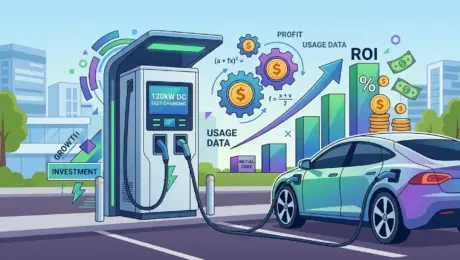
The Ultimate Guide to Calculating ROI for a 120kW DC Charging Station
Friday, 02 January 2026
As electric vehicle (EV) adoption accelerates globally, commercial real estate developers, fleet operators, and retail businesses are recognizing a massive opportunity: EV charging as a revenue center. However, deploying high-power infrastructure is a capital-intensive decision. Understanding the Return on Investment (ROI) is critical before breaking ground. At the center of this commercial opportunity is the
- Published in EV Charging Solutions
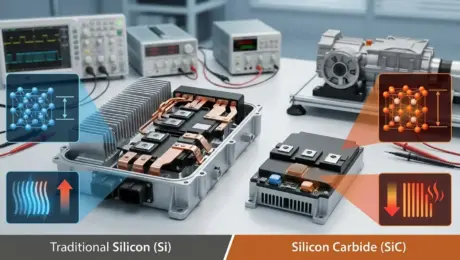
Silicon Carbide (SiC) vs. Traditional Silicon in EV Inverters
Tuesday, 30 December 2025
The electric vehicle (EV) industry is currently undergoing a “quiet” revolution, not in the aesthetics of the cars, but in the power electronics that drive them. As OEMs and infrastructure providers race to increase range and decrease charging times, the focus has shifted to the heart of the drivetrain: the traction inverter. For decades, traditional
- Published in Power Semiconductors
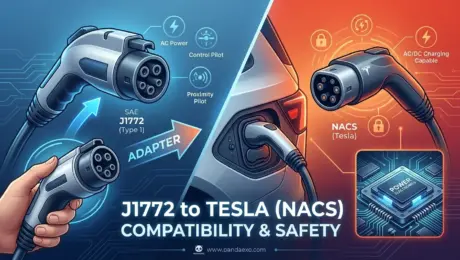
J1772 to Tesla Adapter Explained: Navigating Compatibility and Safety in EV Charging
Tuesday, 30 December 2025
As the electric vehicle (EV) market evolves toward universal charging standards, navigating the physical connections between different vehicles and charging stations remains a critical challenge for B2B infrastructure providers. The automotive industry’s rapid adoption of the North American Charging Standard (NACS)—originally pioneered by Tesla—has sparked a renewed focus on interoperability. For fleet operators, commercial real
- Published in EV Charging Solutions
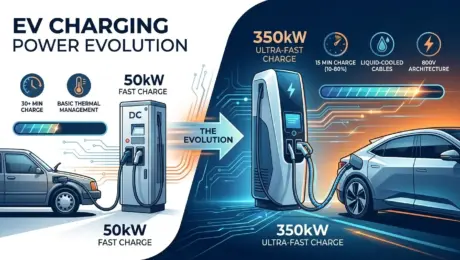
The Evolution of Fast Charging: From 50kW to 350kW
Sunday, 28 December 2025
Fast charging has moved from a niche convenience feature to a strategic infrastructure decision. For charge point operators, fleet managers, developers, and OEM partners, the jump from 50kW hardware to 350kW ultra-fast systems is not just a story about speed. It is a story about vehicle architecture, grid constraints, thermal design, customer expectations, and capital
- Published in EV Charging Solutions
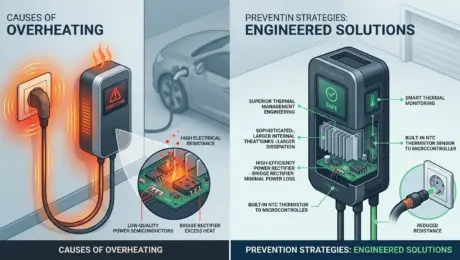
Portable EV Charger Overheating: Root Causes and Advanced Prevention Strategies
Saturday, 27 December 2025
As the global transition to electric vehicles (EVs) accelerates, the demand for accessible and reliable charging infrastructure has never been higher. While portable EV chargers offer unparalleled convenience for drivers on the go, they frequently face a critical engineering challenge: thermal management. When a portable EV charger overheats, it doesn’t just throttle charging speeds—it presents
- Published in EV Charging Solutions
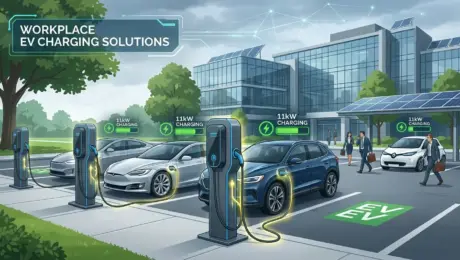
Installing 11kW AC Pedestal Chargers for Corporate Parking Lots
Saturday, 27 December 2025
As the transition to electric mobility accelerates, corporate facilities are facing a new mandate: providing reliable, scalable EV charging infrastructure for employees, executives, and visiting clients. While ultra-fast charging grabs headlines, facility managers and sustainability officers are discovering that the true workhorse of corporate infrastructure is the 11kW AC pedestal charger. By balancing installation costs,
- Published in EV Charging Solutions
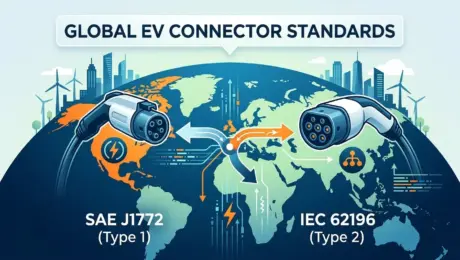
IEC 62196 Type 2 vs. SAE J1772: Selecting the Right Connector for Global EV Markets
Saturday, 27 December 2025
The global transition to electric mobility is accelerating, but for Charge Point Operators (CPOs), fleet managers, and automotive OEMs, the landscape is complicated by a “language barrier” of hardware standards. Selecting the wrong charging interface can lead to stranded assets and compatibility failures. At the heart of this technical divide are two primary standards: SAE
- Published in EV Charging Solutions
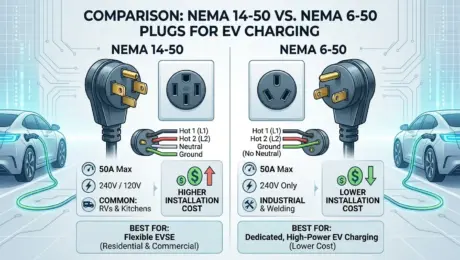
NEMA 14-50 vs. NEMA 6-50: Choosing the Right Connector for EV Charging Infrastructure
Saturday, 27 December 2025
As the global transition to electric mobility accelerates, fleet managers, electrical contractors, and property developers face a critical technical decision: selecting the right Level 2 charging interface. While hardwired installations offer a permanent solution, plug-in stations provide essential flexibility for scalable infrastructure. In the North American market, two heavy-duty connectors dominate the landscape: the NEMA
- Published in EV Charging Solutions
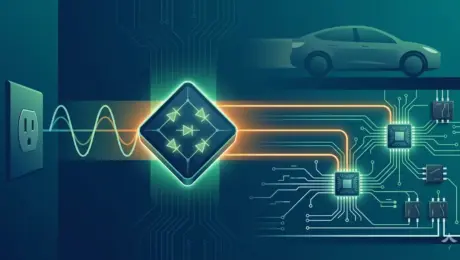
How KBP and KBL Bridge Rectifiers Power Level 1 EV Charger Designs
Thursday, 25 December 2025
As the electric vehicle (EV) market continues its exponential global growth, the demand for reliable, scalable, and safe charging infrastructure has never been higher. While ultra-fast DC chargers dominate public highways, Level 1 and Level 2 AC chargers remain the foundational backbone of residential and workplace charging. For B2B manufacturers and developers of EV Supply
- Published in Power Semiconductors
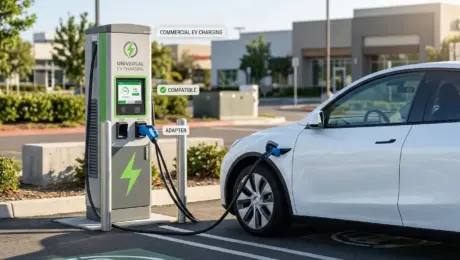
Can You Charge a Tesla at a Non-Tesla Charging Station?
Thursday, 25 December 2025
The electric vehicle (EV) landscape is evolving rapidly, and one of the most common questions from new drivers and infrastructure planners alike is, “Can a Tesla charge at a non-Tesla charging station?” For Charge Point Operators (CPOs), fleet managers, and commercial real estate developers, the answer is a resounding yes—and it represents a critical revenue
- Published in EV Charging Solutions