

 Deutsch
  Español
  Français
  Italiano
  Português
  Svenska
  Suomi
Suomi  Dansk
Dansk  Norsk bokmål
  Nederlands
  العربية
  עברית
עברית  Polski
  Türkçe
  Русский
  Uzbek
Uzbek  Azərbaycan
  Tiếng Việt
  ไทย
ไทย  한국어
한국어  日本語
日本語  简体中文
简体中文 
Full Wave vs. Half Wave Rectifier: Efficiency in Power Supply Design
Friday, 06 February 2026
Rectifier choice looks simple on paper, but in real power-supply design it has direct consequences for heat, filtering cost, reliability, and usable output quality. For engineers building EV charging hardware, industrial supplies, onboard conversion stages, or semiconductor-based power modules, the difference between half-wave and full-wave rectification is not academic. It affects whether the final system
- Published in Power Semiconductors
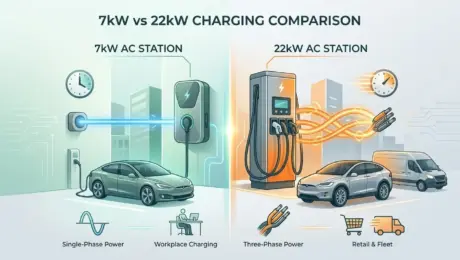
7kW vs. 22kW AC Commercial Chargers: A Comprehensive Cost-Benefit Analysis
Thursday, 05 February 2026
As the global transition to electric mobility accelerates, commercial property owners, fleet managers, and retail operators face a critical infrastructure decision: how to intelligently deploy EV chargers that maximize return on investment (ROI) while meeting driver demands. When evaluating alternating current (AC) infrastructure, the debate frequently centers around two primary power outputs: the standard 7kW
- Published in EV Charging Solutions
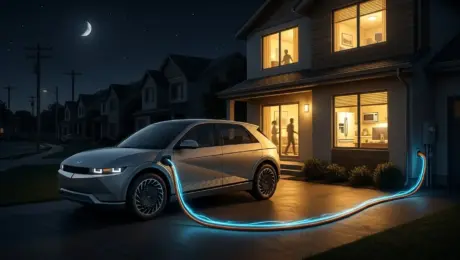
V2L (Vehicle to Load) Technology Explained: Powering Your Home
Thursday, 05 February 2026
The electric vehicle (EV) revolution has evolved far beyond the simple replacement of the internal combustion engine. Today, modern EVs are transitioning from standalone transportation assets into mobile, high-capacity energy storage systems. At the forefront of this paradigm shift is V2L (Vehicle-to-Load) technology, a groundbreaking feature that allows an EV to discharge its battery power
- Published in Power Semiconductors
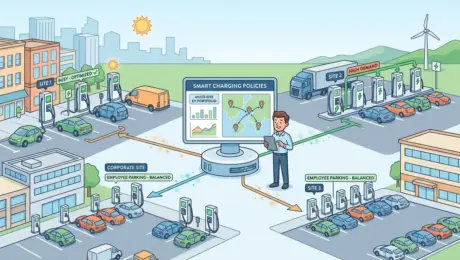
How to Build Smart Charging Policies for Multi-Site EV Portfolios
Thursday, 05 February 2026
Scaling EV charging across multiple sites is usually less about buying more chargers and more about deciding how charging behavior will be controlled. One office location may need fair employee access. A depot may need guaranteed departure readiness. A multifamily property may need overnight load sharing. A retail site may care more about turnover, guest
- Published in EV Charging Solutions
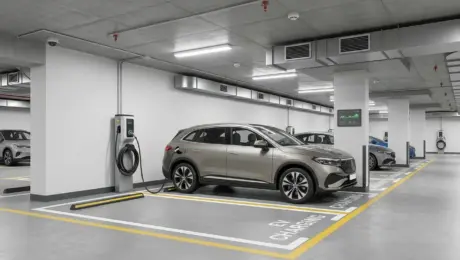
Essential Safety Tips for Charging EVs in Public Parking Garages
Thursday, 05 February 2026
The electric vehicle (EV) revolution has moved past the early adoption phase and is fundamentally reshaping modern transportation infrastructure. As EV adoption accelerates globally, commercial property owners, facility managers, and parking operators face a critical mandate: deploying scalable and secure charging solutions. Integrating EV charging infrastructure into public parking garages is no longer a luxury
- Published in EV Charging Solutions
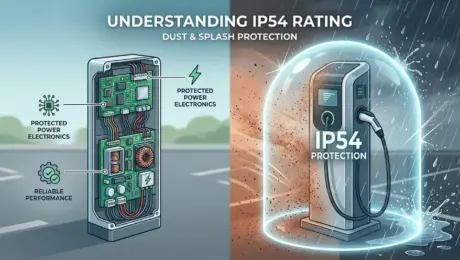
How an IP54 Rating Protects Your Outdoor EV Charging Stations
Tuesday, 03 February 2026
The rapid expansion of global e-mobility relies on one foundational pillar: dependable infrastructure. However, deploying charging networks outdoors exposes sensitive power electronics to harsh, unpredictable environmental realities. From driving rain and splashing mud to blowing dust and debris, an outdoor charger must be built to withstand the elements without compromising performance or safety. For Charge
- Published in EV Charging Solutions
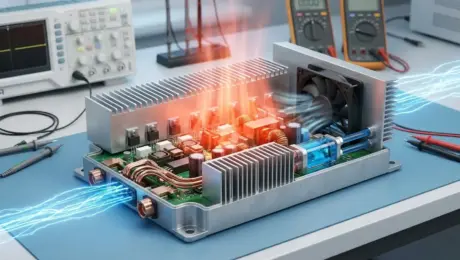
Why Thermal Management is the Core of EV Power Module Reliability
Tuesday, 03 February 2026
In the high-stakes world of electric vehicle (EV) infrastructure, the “race to the top” is often measured in kilowatts and charging speeds. However, as power densities increase and footprints shrink, the industry’s greatest challenge isn’t just delivering energy—it’s managing the heat generated during the process. For CPOs (Charge Point Operators) and fleet managers, thermal management
- Published in Power Semiconductors

Managing Thermal Dissipation in GBJ Series Flat Bridges for High-Power OBCs
Monday, 02 February 2026
As EV charging power levels increase, thermal performance becomes one of the clearest limits on long-term hardware reliability. In high-power onboard chargers, the front-end rectification stage must process substantial current while remaining inside safe operating temperatures. That is why thermal management around GBJ series flat bridge rectifiers is not a secondary design detail. It is
- Published in Power Semiconductors
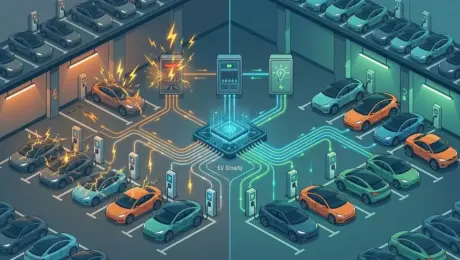
Dynamic Load Management (DLM) in Apartment Building EV Charging
Sunday, 01 February 2026
As the transition to electric mobility accelerates, property managers and developers face a significant engineering bottleneck: how to integrate multiple EV chargers into existing apartment buildings without triggering catastrophic grid overloads or requiring exorbitant electrical infrastructure upgrades. The solution to this multifamily charging puzzle isn’t simply adding more copper—it is deploying smarter power distribution. Dynamic
- Published in EV Charging Solutions
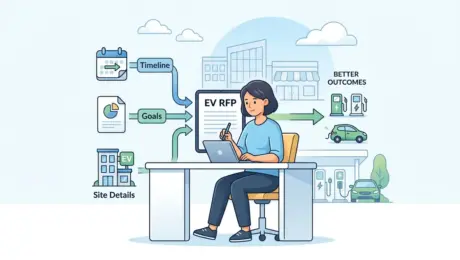
How to Write a Better RFP for a Commercial EV Charging Project
Sunday, 01 February 2026
Many commercial EV charging projects go off track before vendors even respond. The problem is usually not a lack of interest from suppliers. It is that the RFP asks for charger pricing before it defines the operational reality that the charging system needs to support. An RFP that says “quote ten chargers” may feel efficient,
- Published in EV Charging Solutions
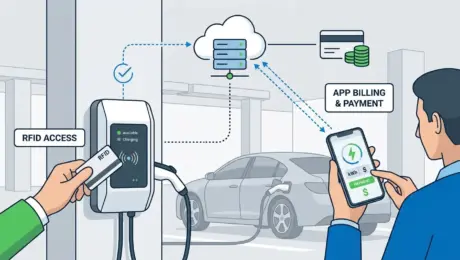
How RFID & App Billing Work in Semi-Public AC Charging Stations
Saturday, 31 January 2026
As electric vehicle (EV) adoption accelerates, the demand for accessible charging infrastructure has expanded far beyond public highways and residential garages. Enter the “semi-public” charging space—workplaces, multi-tenant residential buildings, hospitality venues, and retail parking lots. In these environments, property owners face a unique challenge: how to provide reliable EV charging infrastructure to authorized users while
- Published in EV Charging Solutions
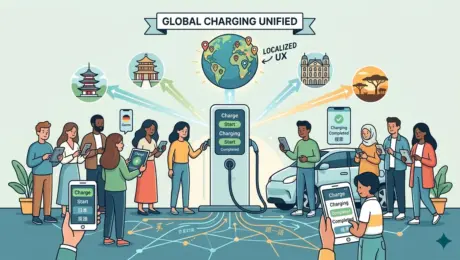
Multilingual UX and Market Localization in Global EV Charging Deployments
Saturday, 31 January 2026
A charging network can meet the right electrical standard, support the correct connector, and still create avoidable friction if drivers cannot understand the interface in front of them. That problem becomes much more serious when a charging rollout crosses borders. In global EV charging deployments, multilingual UX is not a cosmetic layer added at the
- Published in EV Charging Solutions
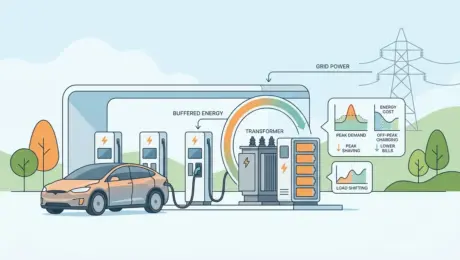
How Battery Storage Changes the Business Case for DC Fast Charging
Friday, 30 January 2026
A lot of DC fast charging projects look attractive until the utility quote arrives. On paper, the site has traffic, dwell demand, and a reason to offer fast charging. In practice, the project can stall because the local grid connection is limited, transformer work takes too long, or demand charges make peak-power sessions expensive enough
- Published in EV Charging Solutions
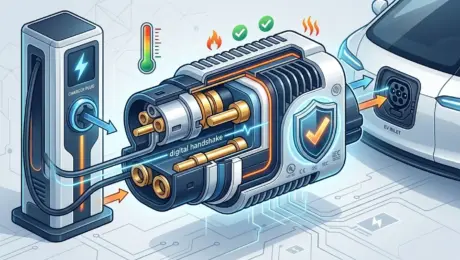
Are Universal EV Charging Adapters Safe to Use?
Friday, 30 January 2026
The rapid acceleration of global electric vehicle (EV) adoption has brought a significant operational hurdle to the forefront: connector fragmentation. With a mix of CCS1, CCS2, NACS (Tesla), J1772, and CHAdeMO standards actively in use, fleet operators, charge point operators (CPOs), and facility managers often face compatibility bottlenecks. Enter the “universal” EV charging adapter—a seemingly
- Published in EV Charging Solutions
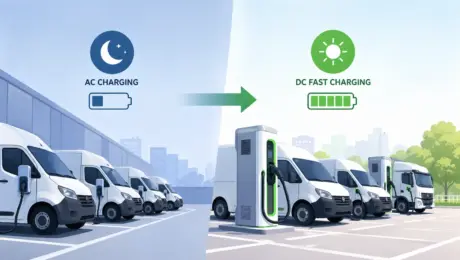
When to Upgrade a Fleet Depot from AC Charging to DC Fast Charging
Thursday, 29 January 2026
The moment to upgrade is usually not when a fleet manager decides DC fast charging looks more advanced. It is when overnight charging stops protecting morning dispatch. A depot can run well on AC for a long time if vehicles return predictably, sit for enough hours, and only need daily replenishment. But once route density
- Published in EV Charging Solutions
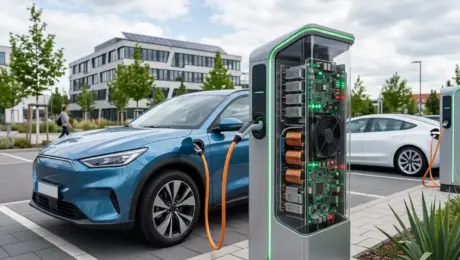
The Critical Role of Active Power Factor Correction (PFC) in EV Charging
Tuesday, 27 January 2026
As the global transition to electric mobility accelerates, the demand for robust and efficient charging infrastructure has never been higher. For charge point operators (CPOs) and fleet managers, the “efficiency” of a station isn’t just a technical spec—it is the difference between a profitable operation and one plagued by high utility penalties and frequent hardware
- Published in Power Semiconductors
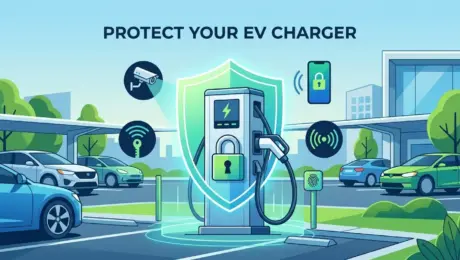
How to Protect Your EV Charger from Theft
Monday, 26 January 2026
As the global transition to electric mobility accelerates, EV charging infrastructure has become a high-value asset for businesses, commercial fleets, and residential property managers. However, with the rise in adoption comes a growing concern: EV charger theft and vandalism. Whether it is the “copper stripping” of high-voltage cables or the theft of the entire wallbox
- Published in EV Charging Solutions
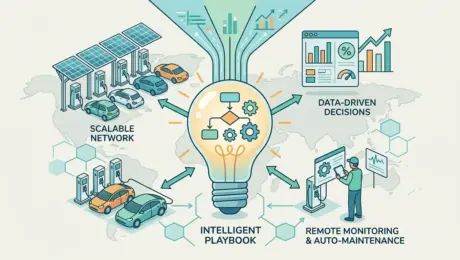
How to Build a Scalable EV Charging Operations Playbook
Monday, 26 January 2026
The moment an EV charging operation expands beyond one or two sites, informal habits stop working. The technician who knows which charger needs a remote reset, which site manager approves downtime, and which billing exception is acceptable cannot be the operating model for a growing network. A scalable operations playbook is what turns charger deployments
- Published in EV Charging Solutions
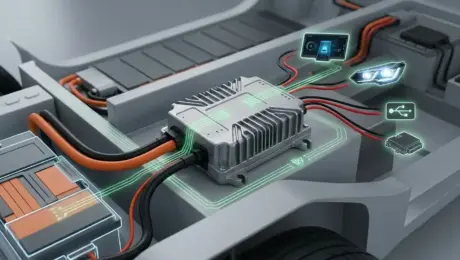
48V to 12V DC Converters: Upgrading EV Accessories Safely
Sunday, 25 January 2026
The automotive industry is undergoing a massive electrical transformation. As electric vehicles (EVs) and mild-hybrid systems demand more power for advanced driver-assistance systems (ADAS), steer-by-wire, and active suspension, OEMs are rapidly adopting 48V electrical architectures. However, a significant engineering challenge remains: a vast ecosystem of legacy automotive accessories—from infotainment screens and LED lighting to standard
- Published in Power Semiconductors
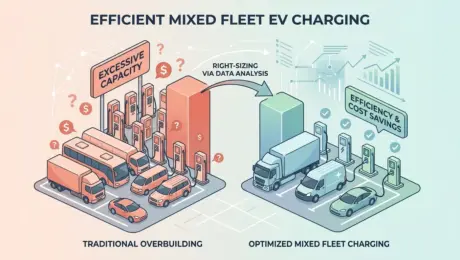
How to Size EV Charging Infrastructure for Mixed Fleets Without Overbuilding
Saturday, 24 January 2026
If you manage a mixed EV fleet, the biggest sizing mistake is usually not underestimating demand. It is assuming every vehicle needs the same charging behavior at the same time. A depot with service vans, pool cars, supervisor vehicles, and a few high-utilization units does not behave like a single-use fleet. Some vehicles can sit
- Published in EV Charging Solutions
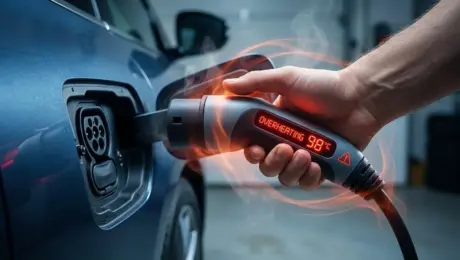
Why is My EV Charging Cable So Hot?
Friday, 23 January 2026
An EV charging cable that feels hot can trigger immediate concern for drivers, site hosts, and charging operators. Sometimes that concern is justified. Often, however, the cable is simply doing what power cables do under sustained load: generating heat as current moves through resistance. The real question is not whether some warmth is normal. It
- Published in EV Charging Solutions
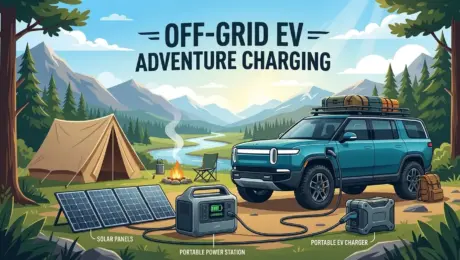
The Best Portable EV Chargers for Camping and Off-Grid Travel
Friday, 23 January 2026
The surge in electric vehicle (EV) adoption has definitively transcended urban commuting, extending rapidly into the realms of eco-tourism, overlanding, and off-grid camping. As adventure-seeking drivers take their EVs deeper into the wilderness, the commercial demand for reliable, ruggedized portable charging infrastructure has skyrocketed. For eco-resort operators, outdoor equipment distributors, and off-grid fleet managers, understanding
- Published in EV Charging Solutions
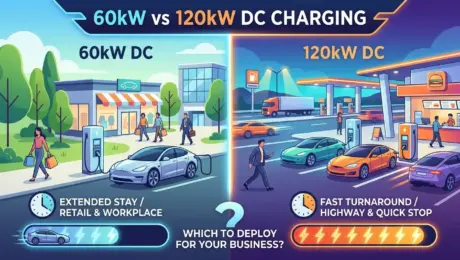
60kW vs. 120kW DC EV Chargers: Which is Best for Your Business?
Friday, 23 January 2026
The rapid acceleration of electric vehicle (EV) adoption has transformed EV charging infrastructure from a niche amenity into a core business requirement. For commercial property owners, fleet operators, and retail businesses, investing in the right hardware is a critical decision that impacts total cost of ownership (TCO), grid capability, and customer satisfaction. When businesses look
- Published in EV Charging Solutions
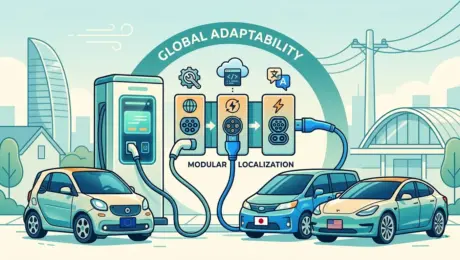
What Makes an EV Charger Easier to Localize for Different Markets?
Thursday, 22 January 2026
When EV charging companies expand into a new region, the biggest delays usually do not come from charger power alone. They come from connector mismatches, certification gaps, billing workflows that do not fit local expectations, utility requirements that change the site design, and service models that break down once the first units are installed. That
- Published in EV Charging Solutions
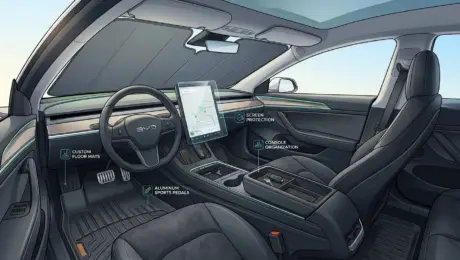
Elevating the EV Experience: Top Interior Upgrades for the BYD Atto 3 and BYD Seal
Thursday, 22 January 2026
The global transition toward electric mobility has introduced a new paradigm of automotive excellence, and BYD (Build Your Dreams) has rapidly emerged as a dominant force in this revolution. With flagship models like the highly versatile BYD Atto 3 and the aerodynamically sleek BYD Seal, the automaker has proven that high-performance electric vehicles (EVs) can
- Published in EV Charging Solutions
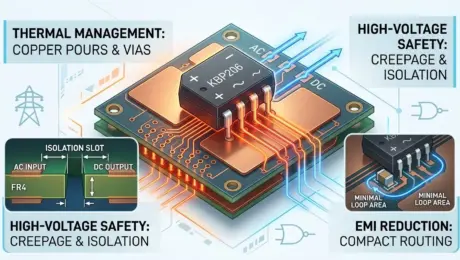
KBP Series Miniature Bridge Rectifiers: PCB Layout for Smart Chargers
Thursday, 22 January 2026
In smart EV chargers, the attention usually goes to charging power, connector standards, and software visibility. But the control board only performs as well as its auxiliary power stage. If the low-power AC-to-DC section is unstable, the charger can suffer from communication faults, thermal stress, erratic control behavior, or avoidable field failures. That is why
- Published in Power Semiconductors

Car Inverter Overload Protection: How It Keeps Your EV Safe
Thursday, 22 January 2026
The rapid acceleration of electric vehicle (EV) adoption relies on a fundamental promise: uncompromised safety alongside high performance. At the heart of this promise lies the vehicle’s power electronics, specifically the car inverter. Whether converting direct current (DC) from the battery to alternating current (AC) to drive the traction motor, or managing Vehicle-to-Load (V2L) applications,
- Published in Power Semiconductors

The Ultimate Guide to Upgrading Your RV Power System with Modern Silicon Components
Wednesday, 21 January 2026
The modern recreational vehicle (RV) is no longer just a motorized tent; it is a sophisticated, rolling microgrid. From powering remote workstations and high-efficiency HVAC units to supporting induction cooktops and robust residential refrigerators, the electrical demands of today’s RVs have surged. For B2B manufacturers, upfitters, and serious off-grid enthusiasts, relying on outdated power distribution
- Published in Power Semiconductors
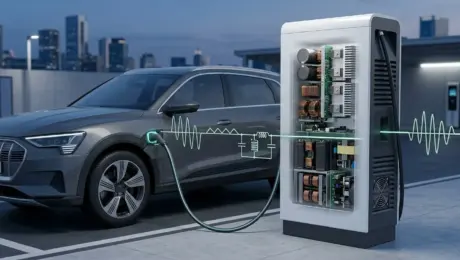
The Heart of the Charge: Minimizing Ripple Voltage in Automotive Power Delivery
Wednesday, 21 January 2026
In the world of Electric Vehicle (EV) infrastructure, efficiency isn’t just a metric—it’s the difference between a high-performing asset and a maintenance liability. For CPOs (Charge Point Operators) and automotive engineers, the silent enemy of power quality is ripple voltage. As we transition toward ultra-fast charging and high-density power electronics, the ability to deliver clean,
- Published in Power Semiconductors
Hidden Procurement Risks in EV Charging Projects and How to Avoid Them
Wednesday, 21 January 2026
A charging project can look procurement-ready on paper and still fail at the point where deployment becomes real. The unit price is approved, the charger power level seems reasonable, and the delivery date fits the rollout plan. Then the utility lead time extends, the software stack does not match the operator’s workflow, the civil scope
- Published in EV Charging Solutions