
 Deutsch
  Español
  Français
  Italiano
  Português
  Svenska
  Suomi
Suomi  Dansk
Dansk  Norsk bokmål
  Nederlands
  العربية
  עברית
עברית  Polski
  Türkçe
  Русский
  Uzbek
Uzbek  Azərbaycan
  Tiếng Việt
  ไทย
ไทย  한국어
한국어  日本語
日本語  简体中文
简体中文 
The moment an EV charging operation expands beyond one or two sites, informal habits stop working. The technician who knows which charger needs a remote reset, which site manager approves downtime, and which billing exception is acceptable cannot be the operating model for a growing network.
A scalable operations playbook is what turns charger deployments into a repeatable system. It defines how sites are classified, how AC and DC assets are assigned, how alerts are escalated, how firmware changes are approved, which KPIs matter, and when expansion should happen.
Without that structure, growth usually creates the same problems: inconsistent uptime, uneven user experience, slow fault recovery, fragmented reporting, and procurement decisions that solve one local issue while making the wider portfolio harder to run.
Start With the Network Promise
Before writing procedures, define what the charging operation is promising to users and to the business. A fleet depot that must protect morning dispatch should not be run by the same logic as a retail charging site designed to monetize dwell time. A workplace charging program with predictable daytime parking does not need the same response model as a public fast-charging corridor.
That service promise should answer five basic questions:
- Who is the primary user group: public drivers, employees, residents, fleet vehicles, or a mix?
- What matters most operationally: uptime, throughput, queue reduction, revenue capture, or controlled energy cost?
- How much dwell time does the site typically have?
- Which failures are acceptable, and which ones immediately damage operations or revenue?
- What level of visibility does the central operations team need across sites?
Once those answers are clear, the playbook can be designed around real service expectations instead of generic charger management.
Define the Playbook Layers Early
The best operations playbooks standardize the decisions that must stay common while allowing site-level flexibility where local conditions genuinely differ.
| Playbook Layer | What Should Stay Standardized | What Can Vary by Site |
|---|---|---|
| Site classification | Site scoring method, approval gates, core data fields | Local demand profile, landlord or utility constraints |
| Charger strategy | Rules for when AC, DC, or blended charging is used | Final charger count, mounting style, traffic flow layout |
| Access and billing | User roles, authorization logic, refund rules, escalation ownership | Pricing structure by market, fleet priority rules, public access windows |
| Monitoring and support | Alert severity definitions, response targets, ticket workflow | On-site responder details, local contractor roster |
| Maintenance and spares | Inspection frequency, spare-part categories, documentation templates | Spare quantity by charger class and site criticality |
| Software and change control | Approved protocols, version governance, test and rollback rules | Third-party integrations that reflect local operating needs |
| Expansion triggers | KPI thresholds and investment approval logic | Timing based on utility readiness, construction windows, and demand growth |
This structure matters because scaling fails when every site becomes its own exception. A playbook should reduce decision friction, not create a longer list of one-off rules.
Segment Sites by Throughput Pressure, Dwell Window, and Business Risk
Many operators group sites by geography first. That is useful for field service planning, but it is not enough for operations design. What matters more is how much throughput pressure the site carries, how predictable the dwell window is, and what the business loses when charging fails.
| Site Type | Typical Operating Reality | Main Risk if Underplanned | Likely Charging Strategy |
|---|---|---|---|
| Fleet depot | High vehicle concentration, fixed departure windows | Dispatch disruption | AC-first with selective DC recovery capacity |
| Retail or hospitality site | Mixed arrival patterns, customer dwell sensitivity | Missed revenue and poor customer experience | Blended model based on dwell profile |
| Workplace or multifamily | Longer parking duration, lower urgency | Uneven access, overloaded circuits, user dissatisfaction | AC smart charging |
| Highway or en-route location | Short dwell, high throughput expectations | Queues, failed sessions, reputational damage | DC fast charging |
| Mixed-use commercial site | Different user classes and charging priorities | Policy conflicts and utilization imbalance | Layered access with site-specific charger mix |
At this stage, every site should also pass a readiness screen covering utility capacity, civil complexity, parking flow, communications, and policy ownership. The same front-end discipline described in this commercial EV charging project checklist becomes even more important when mistakes can be repeated across multiple locations.
Match AC and DC to the Job They Need to Do
Scalable operations do not come from declaring one charger type universally better. They come from assigning the right charging method to the right operating need.
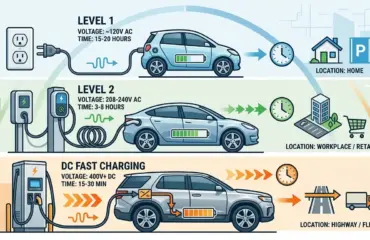
For sites with stable dwell windows, manageable turnaround pressure, and a need for gradual expansion, AC charging is usually the operational foundation. It is well suited to workplaces, residential settings, branch parking, and depot replenishment where the goal is dependable daily charging rather than rapid recovery.
For sites where dwell time is short, charger throughput drives revenue, or route-critical vehicles must return to service quickly, DC charging becomes more valuable. It helps operators reduce dwell time and protect utilization at high-pressure locations, but it also brings more grid, thermal, cost, and maintenance complexity.
| Operational Need | AC Smart Charging Is Usually Better When | DC Fast Charging Is Usually Better When | Blended Model Is Best When |
|---|---|---|---|
| Daily replenishment | Vehicles park for hours and energy demand is predictable | Rarely the most economical first choice | A small DC layer is needed for exceptions |
| High site throughput | Low urgency and limited queue pressure | Speed directly affects customer turnover or fleet recovery | Different user classes share the site |
| Installation simplicity | Utility limits and civil scope are tight | Business case can absorb added complexity | Phase one needs lower cost, phase two may add DC |
| Operational resilience | Slower charging still protects the schedule | Fast recovery is essential when delays occur | Some vehicles need speed while most do not |
That tradeoff should be written into the playbook as policy, not re-debated at every site.
Build Monitoring and Escalation Into Daily Operations
Network growth exposes a common weakness: teams monitor chargers, but they do not run a disciplined operating model around incidents. A scalable playbook needs severity levels, response targets, ownership rules, and clear fallback procedures. That is the difference between having software visibility and having real operations control, which is why a formal EV charging network uptime strategy matters early.
A practical escalation model often looks like this:
- Severity 1: a full site outage, failed payment or authorization across the site, or a depot-impacting loss of charging capacity
- Severity 2: one or more chargers unavailable at a constrained site, or repeated failed sessions affecting active users
- Severity 3: warning states, intermittent communication issues, or performance drift that does not yet threaten service continuity
Each severity level should define who is paged, how fast remote triage begins, when field service is dispatched, what local teams are told to do, and how temporary workarounds are communicated to users.
The playbook should also document degraded-mode operations. If the network connection drops, can local access still work? If a DC unit fails, which vehicles move to AC fallback? If a billing workflow breaks, is there a temporary access policy that protects trust without creating financial confusion?
Govern Software, Interoperability, and Firmware as Controlled Change
Operational scale becomes fragile when each site drifts into its own software version, backend workflow, or communications logic. Interoperability decisions should therefore sit inside the operations playbook, not only in procurement documents. For multi-site operators, the fundamentals explained in open charging networks are operational issues as much as technical ones, because protocol and platform choices affect migration risk, reporting consistency, roaming, and third-party integration options.
Firmware should be governed the same way. An update policy should define pilot sites, maintenance windows, rollback thresholds, and approval ownership before any fleet-wide rollout begins. That is the safer approach outlined in this EV charger firmware update strategy, and it prevents change management from becoming a hidden source of downtime.
In practical terms, the playbook should state:
- which software versions are approved for production
- which sites are used for first-stage testing
- what evidence is required before wider deployment
- when a release must be paused or rolled back
- who signs off on configuration changes that affect pricing, access, or load management
When these rules are missing, scale usually creates inconsistency faster than it creates efficiency.
Treat Maintenance and Spares as Capacity Planning
Maintenance should not sit outside the scaling conversation. It is part of capacity planning, because a site with recurring faults, slow parts replacement, or unclear inspection routines is effectively operating with less usable infrastructure than its installed connector count suggests.
That is why the playbook should separate maintenance by charger class and by site criticality. High-utilization DC sites may need tighter inspection cycles, stronger cable and connector checks, and faster spare-part response than low-intensity AC locations. Depots with dispatch sensitivity may justify locally stored critical spares, while lower-pressure sites can rely more on regional field inventory.
A scalable maintenance section should define:
- preventive inspection intervals by charger type and site pressure
- required spare categories for AC and DC assets
- documentation standards for repeat faults and replaced parts
- remote diagnostic steps before dispatching field technicians
- repair response targets by site criticality
Operators that skip this discipline often expand faster than their service model can support.
Choose Partners That Reduce Operational Fragmentation
Scaling an EV charging network is easier when hardware, software expectations, and support logic can remain coherent across different site types. That does not mean using one charger model everywhere. It means choosing suppliers that can support multiple deployment scenarios without forcing the operations team to manage unnecessary fragmentation.
For infrastructure buyers, distributors, and fleet planners, that usually means looking for a partner that can support AC and DC charging under one operating framework, align with smart energy management requirements, and provide enough manufacturing and engineering depth to support repeatable deployment. This is where PandaExo becomes relevant in practical terms: operators trying to build a scalable playbook are often looking for portfolio consistency, platform visibility, and, in some markets, OEM or ODM flexibility rather than a one-off hardware purchase.
Use KPIs That Signal Scaling Trouble Early
A good playbook is measurable. The wrong metrics only tell you what failed last month. The right ones tell you when the current operating model is about to stop scaling.
| KPI | What It Reveals | Common Trigger for Action |
|---|---|---|
| Session completion rate | Whether the network is reliably delivering usable charging sessions | Site-level fault review or software investigation |
| Mean time to restore service | How fast incidents move from alert to recovery | Escalation redesign or contractor performance review |
| Utilization by hour and by charger class | Whether charger mix matches real demand | Add connectors, rebalance access, or shift pricing logic |
| Queue events or failed access attempts | Whether throughput or authorization logic is becoming a bottleneck | Add capacity or revise user-priority rules |
| Energy delivered per installed connector | Whether capital is underused or the site is constrained | Reclassify the site or change deployment phase timing |
| Repeat fault ratio by charger model or site | Whether reliability problems are systemic rather than isolated | Firmware hold, hardware review, or spare-part stock increase |
| Site onboarding cycle time | Whether rollout governance is becoming too slow or too chaotic | Simplify approval gates or standardize design packages |
These KPIs should be reviewed at both site level and portfolio level. A site can look acceptable in isolation while still proving that the broader operating model is inconsistent.
Write Expansion Triggers Into the Playbook
The final step is turning growth into a rules-based process. Expansion should not happen just because utilization feels high or because a sales team wants more visible infrastructure. It should follow defined triggers.
Common triggers include:
- sustained utilization above a defined threshold during key operating hours
- repeated queueing or missed fleet charging windows
- rising repeat-fault ratios that justify replacing rather than repairing
- a shift in site purpose, such as workplace charging becoming mixed-use public access
- new utility readiness that makes previously deferred upgrades viable
- higher concentrations of vehicles that require faster turnaround
This is also where the playbook should define when a site moves from AC-only to blended charging, when a mixed-use site should split public and priority access, and when a growing portfolio needs a more centralized operations structure.
Practical Summary
A scalable EV charging operations playbook does not try to make every site identical. It creates a common operating system that keeps the right things consistent while allowing local design choices to follow real site conditions.
In practice, that means defining the network promise first, standardizing playbook layers early, matching AC and DC to actual service needs, enforcing alert and escalation discipline, governing software and firmware changes carefully, treating maintenance as part of usable capacity, and measuring the KPIs that reveal scaling pressure before service quality falls.
Operators that do this well are usually the ones that expand with less friction. They do not just add chargers. They add repeatable operating logic, which is what makes a charging network easier to scale, easier to support, and more defensible commercially over time.