
 Deutsch
  Español
  Français
  Italiano
  Português
  Svenska
  Suomi
Suomi  Dansk
Dansk  Norsk bokmål
  Nederlands
  العربية
  עברית
עברית  Polski
  Türkçe
  Русский
  Uzbek
Uzbek  Azərbaycan
  Tiếng Việt
  ไทย
ไทย  한국어
한국어  日本語
日本語  简体中文
简体中文 
The rapid acceleration of electric vehicle (EV) adoption has transformed EV charging infrastructure from a niche amenity into a core business requirement. For commercial property owners, fleet operators, and retail businesses, investing in the right hardware is a critical decision that impacts total cost of ownership (TCO), grid capability, and customer satisfaction.
When businesses look to invest in fast-charging solutions, the conversation frequently centers around two popular power tiers: the 60kW and the 120kW DC fast chargers. Both offer significant advantages over standard AC charging, but choosing the right output depends heavily on your specific commercial use case.
In this guide, we will break down the technical and commercial differences between 60kW and 120kW chargers to help you determine the optimal solution for your business.
Understanding the Fundamentals of DC Fast Charging
Before comparing power outputs, it is important to understand what makes DC Chargers so effective. Unlike AC chargers, which rely on the vehicle’s onboard converter to change alternating current into direct current, DC fast chargers handle the conversion internally.
This internal conversion requires robust power electronics and core semiconductor components—such as high-efficiency Bridge Rectifiers—to deliver high-voltage direct current straight to the vehicle’s battery. This bypasses the onboard limitations of the EV, resulting in a dramatically faster charging curve.
The 60kW DC EV Charger: The Versatile Workhorse
A 60kW charger is often considered the “sweet spot” for many commercial locations. It provides a significant charging speed—adding roughly 180 to 240 miles of range per hour—without placing an extreme burden on local grid infrastructure.
Ideal Use Cases
- Retail and Shopping Centers: Perfect for locations where customers typically spend 60 to 90 minutes. It provides a meaningful charge while encouraging longer store visits.
- Workplace and Corporate Campuses: Excellent for employee charging hubs where cars remain parked for half-day or full-day shifts.
- Fleet Depots (Overnight or Mid-Shift): Commercial delivery fleets can utilize 60kW chargers to efficiently recharge vans during longer layovers or overnight downtime.
Business Benefits
- Lower Installation Costs: 60kW units typically require less extensive electrical upgrades, minimizing trenching, transformer upgrades, and panel expansions.
- Reduced Demand Charges: Utilities often charge commercial customers based on peak power draw. A 60kW unit keeps these operational demand charges manageable compared to ultra-fast chargers.
The 120kW DC EV Charger: The Rapid Transit Solution
When turnaround time is the primary key performance indicator (KPI), the 120kW DC charger is the undisputed choice. Capable of adding approximately 360 to 480 miles of range per hour, these high-power stations are designed to get drivers back on the road rapidly.
Ideal Use Cases
- Highway Corridors and Rest Stops: Essential for long-distance travelers who need to charge from 20% to 80% in 30 minutes or less.
- Quick-Service Restaurants (QSRs) and Convenience Stores: Aligns perfectly with a 15-to-30-minute dwell time, allowing drivers to grab food and coffee while their vehicle tops up.
- High-Turnover Taxi and Ride-Share Hubs: Crucial for commercial drivers who lose money for every minute they spend waiting at a charging station.
Business Benefits
- Higher Throughput: You can serve twice as many vehicles in the same timeframe, maximizing the revenue potential of a single parking space.
- Premium Pricing Power: EV drivers are often willing to pay a premium tariff per kWh for the convenience of ultra-fast charging.
- Future-Proofing: As next-generation EVs roll out with larger battery packs and higher peak-charge acceptance rates, 120kW infrastructure will remain highly relevant.
Key Factors to Consider for Your Deployment Strategy
Choosing between these two systems ultimately comes down to balancing capital expenditure (CAPEX) with operational goals. Consider the following:
- Customer Dwell Time: Match the charger speed to how long your customers naturally stay at your facility.
- Grid Capacity: Consult with your utility provider. Jumping from 60kW to 120kW may trigger the need for a costly new transformer.
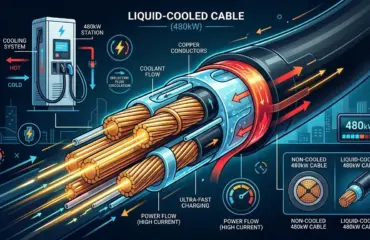
- Space Constraints: 120kW units are generally larger and may require heavier cabling and more advanced liquid or active air cooling mechanisms.
Why Choose PandaExo for Your EV Infrastructure?
Whether your business model dictates the steady reliability of a 60kW unit or the rapid turnaround of a 120kW station, PandaExo provides world-class hardware engineered for maximum uptime.
Operating from a state-of-the-art 28,000-square-meter manufacturing base, PandaExo leverages a deep heritage in power semiconductors to deliver factory-direct scale and precision. We don’t just assemble chargers; we engineer the smart energy management platforms and high-performance AC and DC hardware that power the future of mobility.
Furthermore, for businesses looking to build their own brand, PandaExo offers comprehensive Customized OEM/ODM services to tailor our cutting-edge technology to your exact specifications.
Ready to Electrify Your Business?
Investing in the right EV infrastructure is the first step toward generating new revenue streams and attracting high-value customers. Explore our complete EV charger catalog to find the perfect fit for your facility.