
 Deutsch
  Español
  Français
  Italiano
  Português
  Svenska
  Suomi
Suomi  Dansk
Dansk  Norsk bokmål
  Nederlands
  العربية
  עברית
עברית  Polski
  Türkçe
  Русский
  Uzbek
Uzbek  Azərbaycan
  Tiếng Việt
  ไทย
ไทย  한국어
한국어  日本語
日本語  简体中文
简体中文 
The modern recreational vehicle (RV) is no longer just a motorized tent; it is a sophisticated, rolling microgrid. From powering remote workstations and high-efficiency HVAC units to supporting induction cooktops and robust residential refrigerators, the electrical demands of today’s RVs have surged. For B2B manufacturers, upfitters, and serious off-grid enthusiasts, relying on outdated power distribution technology is no longer viable. The future of mobile energy management lies in upgrading to advanced power electronics driven by modern silicon components.
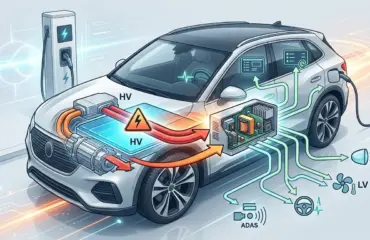
As the lines between electric vehicles (EVs) and smart RVs continue to blur, the technologies powering them are converging. By integrating EV-grade semiconductors and modern silicon architectures, RV power systems can achieve unprecedented efficiency, thermal stability, and compact form factors.
The Core Challenge: Why Legacy RV Power Systems Fall Short
For decades, traditional RV power centers relied heavily on bulky iron-core transformers and standard silicon diodes to manage the conversion between 120V/240V AC shore power and 12V/24V DC battery banks. While functional, these legacy systems are plagued by inherent limitations:
- Thermal Inefficiency: Older linear converters bleed massive amounts of energy as heat, requiring loud cooling fans and large aluminum heat sinks.
- Voltage Drop & Slow Charging: Standard diodes feature high forward-voltage drops, meaning a significant percentage of energy is lost before it ever reaches the battery. This results in agonizingly slow charge times for modern lithium-iron-phosphate (LiFePO4) battery banks.
- Excessive Weight and Size: Copper-heavy transformers add unnecessary weight to the chassis, reducing overall vehicle fuel efficiency and occupying valuable storage real estate.
To meet the high-amperage demands of modern lithium batteries and high-wattage appliances, the RV industry must adopt the same high-frequency switching and wide-bandgap semiconductor technologies currently driving the EV infrastructure revolution.
The Silicon Revolution in Mobile Power Electronics
The transition from legacy systems to modern power electronics centers around utilizing advanced silicon and wide-bandgap (WBG) materials like Silicon Carbide (SiC) and Gallium Nitride (GaN). These materials switch faster, run cooler, and handle higher voltages than their traditional counterparts.
High-Efficiency Power Rectification
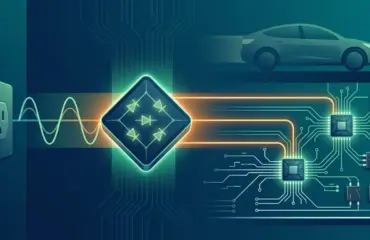
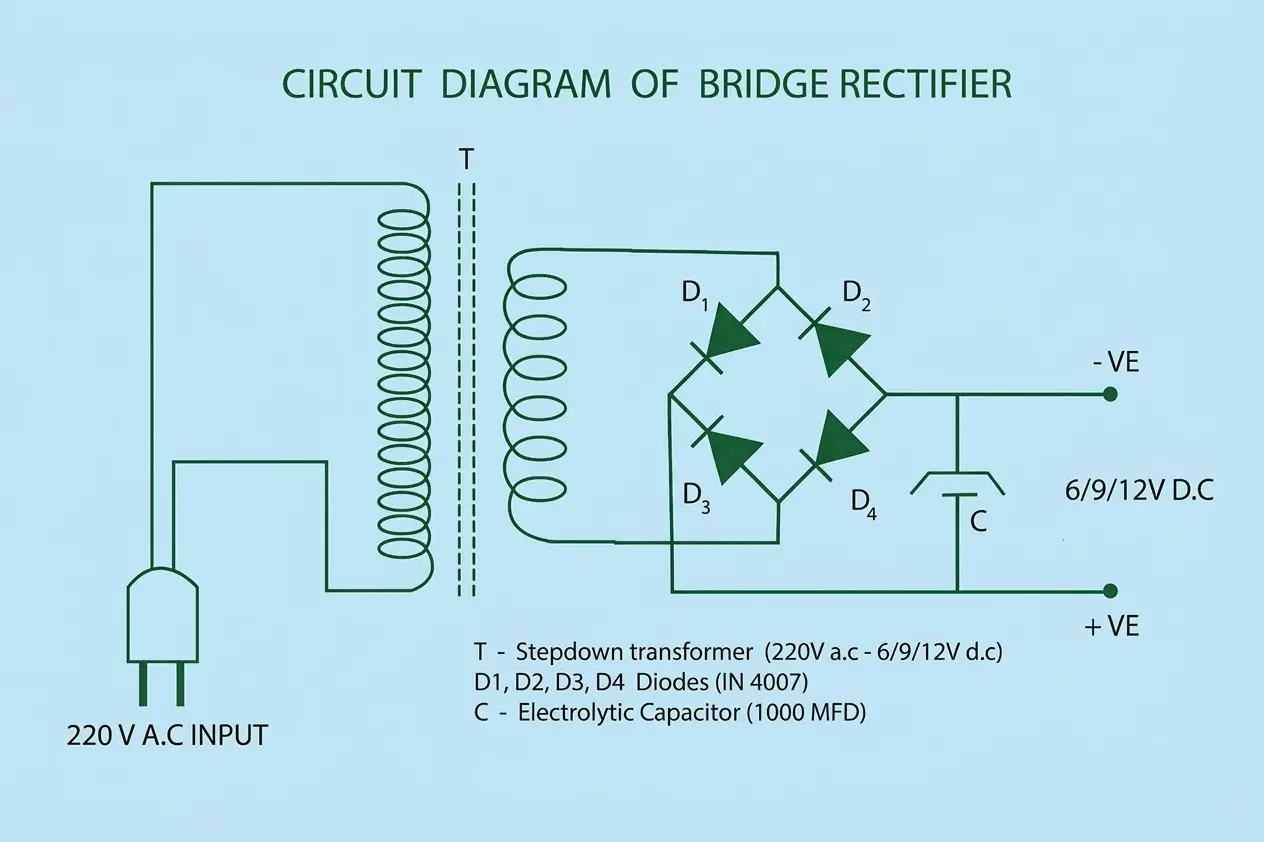
When an RV plugs into shore power or a generator, the incoming Alternating Current (AC) must be converted into Direct Current (DC) to charge the onboard battery bank. This process, known as rectification, is the most critical bottleneck in legacy RV power systems.
By upgrading to modern, low-loss bridge rectifiers, power converters can achieve near-perfect AC-to-DC conversion. Modern rectifiers utilize advanced silicon topologies to drastically reduce forward voltage drop and minimize switching losses. This means more power goes directly into charging the RV’s battery bank and less energy is wasted as heat, completely eliminating the need for bulky, loud cooling fans in the power center.
Smart Inversion and Pure Sine Wave Generation
Conversely, converting DC battery power back into AC power to run residential appliances requires an inverter. Modern RVs demand Pure Sine Wave (PSW) inverters to safely operate sensitive electronics like laptops, medical CPAP machines, and modern microwaves.
Advanced silicon MOSFETs (Metal-Oxide-Semiconductor Field-Effect Transistors) and IGBTs (Insulated-Gate Bipolar Transistors) allow modern inverters to switch at incredibly high frequencies. This results in a cleaner, smoother AC waveform that exactly replicates—or often exceeds—the quality of grid power.
Comparing Legacy vs. Modern Silicon Components
To fully grasp the operational benefits of upgrading an RV’s power system, we must look at the quantitative differences between traditional components and modern EV-grade power electronics.
| Metric | Legacy RV Power Components (Standard Diodes & Transformers) | Modern Silicon Components (Advanced Rectifiers, MOSFETs, SiC) |
| Conversion Efficiency | 75% to 85% | 95% to 99% |
| Thermal Output | High (Requires active, loud fan cooling) | Low (Often supports passive cooling) |
| Form Factor / Weight | Bulky and heavy (Iron/Copper core) | Ultra-compact and lightweight (Solid-state) |
| Switching Frequency | Low (< 20 kHz) | High (Up to hundreds of kHz) |
| Lifespan & Reliability | Moderate (Prone to thermal degradation) | Exceptional (High thermal tolerance, EV-grade durability) |
Synergy with EV Technology: The Next Frontier for RVs
The RV industry is rapidly electrifying. We are seeing the emergence of fully electric motorhomes and towable trailers equipped with motorized, battery-assisted axles. As RV battery banks scale from standard 100Ah setups to massive 50kWh+ EV-style packs, the charging infrastructure must evolve in tandem.
Campgrounds and RV parks are already upgrading their pedestals to accommodate this shift, integrating dedicated EV charging hardware. RV parks looking to attract the next generation of travelers are installing high-quality AC Chargers to provide reliable charging points for extended stays. Meanwhile, electric motorhomes in transit require rapid turnarounds, necessitating high-voltage DC Charging systems for rapid energy delivery at highway rest stops and travel centers.
The technological overlap is undeniable: the same advanced semiconductor components required to build a rugged, high-output RV inverter are the very foundation of modern EV charging stations.
Why Component Pedigree Matters: The PandaExo Advantage
Whether you are designing a proprietary smart energy management system for an off-grid expedition vehicle or deploying a nationwide network of EV chargers, hardware reliability begins at the semiconductor level. Power electronics are only as resilient as the silicon they are built upon.
This is where PandaExo’s deep heritage in power semiconductors provides an unmatched industry advantage. Operating a state-of-the-art 28,000-square-meter advanced manufacturing base, PandaExo doesn’t just assemble charging stations; we engineer the fundamental power components that drive them. This factory-direct scale and precision ensure that every product, from a discrete silicon bridge rectifier to a megawatt-scale DC fast charger, meets rigorous global standards for thermal stability and continuous power delivery.
Key advantages for B2B partners and OEMs:
- Vertical Integration: Complete oversight from component-level semiconductor manufacturing to final product assembly.
- Custom OEM/ODM Services: Tailored energy management and charging solutions engineered to fit the exact specifications of modern RVs and commercial fleets.
- Global Compliance: Hardware designed to meet and exceed international safety and electrical standards.
- Future-Proof Smart Platforms: Seamless software integration for real-time load balancing, remote monitoring, and smart grid connectivity.
Step Into the Future of Mobile Power
The era of inefficient, heavy, and unreliable RV power systems is over. By embracing modern silicon components and EV-grade manufacturing standards, OEMs and infrastructure developers can deliver the seamless, high-power experiences that today’s mobile consumers demand.
As a global leader in smart EV charging stations and precision power electronics, PandaExo is uniquely positioned to bridge the gap between EV technology and the future of RV power systems.