
 Deutsch
  Español
  Français
  Italiano
  Português
  Svenska
  Suomi
Suomi  Dansk
Dansk  Norsk bokmål
  Nederlands
  العربية
  עברית
עברית  Polski
  Türkçe
  Русский
  Uzbek
Uzbek  Azərbaycan
  Tiếng Việt
  ไทย
ไทย  한국어
한국어  日本語
日本語  简体中文
简体中文 
The rise of Electric Vehicles (EVs) has revolutionized the Great American Road Trip. With massive onboard battery capacities, your EV is no longer just a mode of transport; it is a mobile power plant. However, extracting that stored energy to power a coffee maker, a laptop, or medical equipment while camping requires a critical piece of hardware: the power inverter.
Choosing between a Pure Sine Wave and a Modified Sine Wave inverter is the difference between seamless off-grid luxury and potentially damaging your expensive electronics. For B2B distributors, fleet managers, and outdoor enthusiasts, understanding the technical nuances of power conversion is essential for building a reliable mobile energy ecosystem.
The Fundamentals of Power Conversion: DC to AC
EV batteries store energy as Direct Current (DC). However, the vast majority of household appliances and camping gear operate on Alternating Current (AC). An inverter’s job is to “flip” the direction of the current back and forth to mimic the electricity provided by the utility grid.
The quality of this conversion—how smoothly that current alternates—defines the “wave” produced.
What is a Pure Sine Wave Inverter?
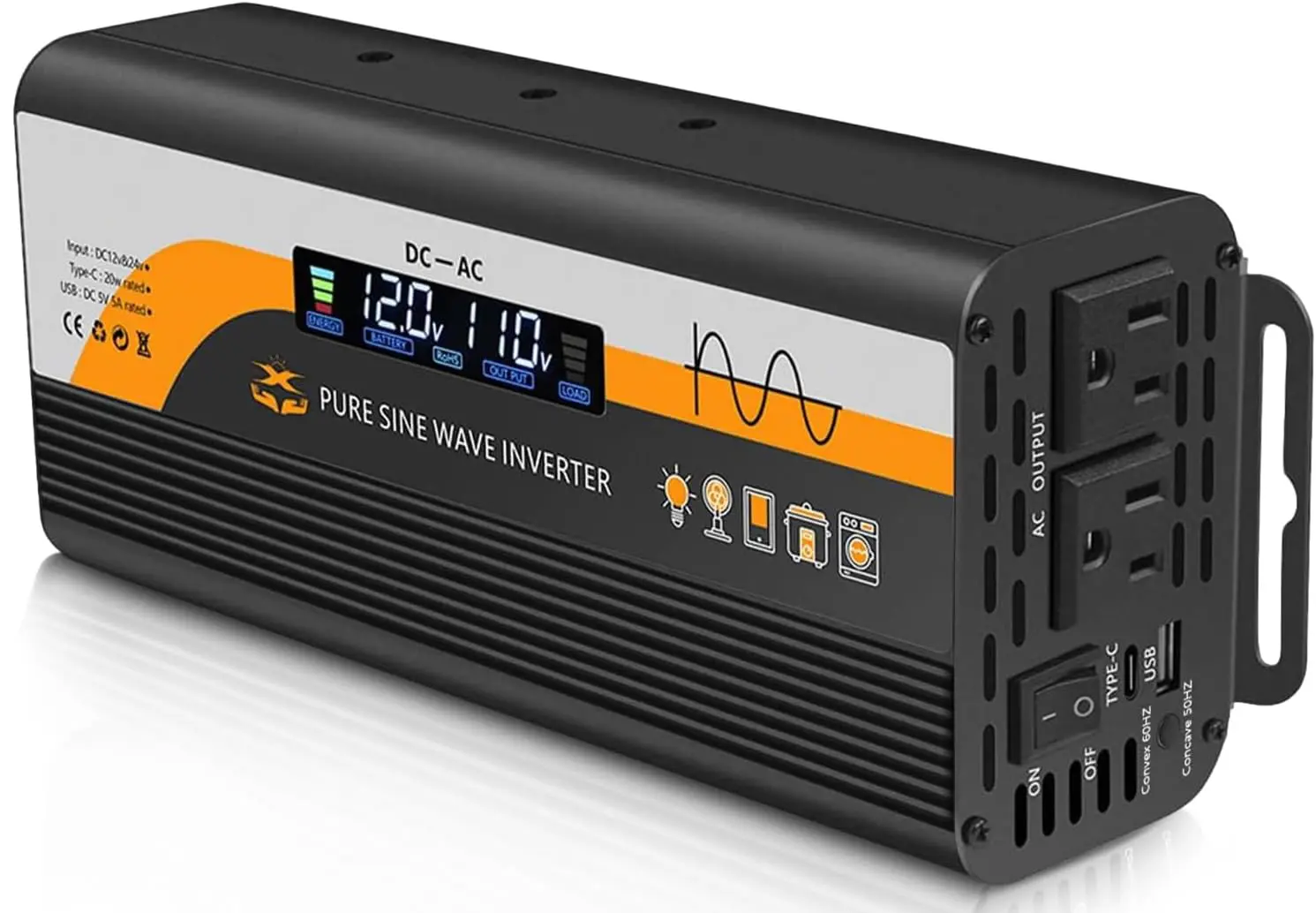
A Pure Sine Wave (PSW) inverter produces an output that is nearly identical to the power delivered by a wall outlet. The voltage rises and falls in a smooth, continuous, symmetrical oscillation. This represents the gold standard of power quality, characterized by low total harmonic distortion (THD).
What is a Modified Sine Wave Inverter?
A Modified Sine Wave (MSW) inverter is a more economical alternative. Instead of a smooth curve, it produces a “stair-step” wave. The voltage jumps abruptly from positive to negative, spending a brief moment at zero volts. While this mimics AC power closely enough for simple devices, the “choppy” nature of the wave creates electrical noise and heat.
Technical Comparison: Which One Wins for EV Camping?
When you are miles away from the nearest charging station, efficiency and equipment safety are paramount. PandaExo’s heritage in power semiconductors informs our rigorous approach to power conversion and bridge rectifiers, ensuring that users understand the trade-offs involved in these two technologies.
| Feature | Pure Sine Wave (PSW) | Modified Sine Wave (MSW) |
|---|---|---|
| Waveform Shape | Smooth, continuous curve | Blocky, “stair-step” segments |
| Device Compatibility | 100% (All sensitive electronics) | Limited (May damage sensitive gear) |
| Efficiency | High (Less heat, less energy waste) | Lower (Wasted as heat and noise) |
| Acoustic Noise | Silent operation of devices | Can cause “hum” in fans/audio gear |
| Cost | Premium | Budget-friendly |
Why Pure Sine Wave is the Standard for Modern EVs
Modern EV camping involves more than just a lightbulb and a radio. Users are increasingly bringing high-end technology into the wilderness, making the choice of inverter a matter of protecting their investments.
1. Protection for Sensitive Electronics
Laptops, CPAP machines, and high-end camera battery chargers rely on sophisticated microprocessors. These components are designed for the smooth transition of a Pure Sine Wave. The abrupt voltage shifts of a Modified Sine Wave can cause internal components to overheat, leading to shortened lifespans or immediate failure.
2. Induction and Motor Efficiency
If your EV camping setup includes a portable induction cooktop or a compressor-based fridge, a Pure Sine Wave inverter is non-negotiable. Motors running on MSW inverters often run hotter and consume up to 30% more energy. In an EV camping scenario, this translates to faster drain on your vehicle’s main battery.
3. Audio and Visual Clarity
For those using their EV to power mobile workstations or outdoor cinema setups, MSW inverters are notorious for causing interference. You may notice “snow” on screens or a persistent 60Hz hum in audio speakers caused by the harmonic distortion of the modified wave.
PandaExo: Powering the Future of Mobile Infrastructure
At PandaExo, we understand that the transition to electric mobility requires robust hardware that bridges the gap between the vehicle and the user. Whether you are sourcing reliable AC charging points for a campsite or exploring DC Fast Charging for highway corridors, the quality of the power electronics defines the user experience.
Our 28,000-square-meter manufacturing facility leverages decades of experience in semiconductor integration to ensure that every piece of PandaExo hardware meets the highest standards of efficiency and safety.
Final Verdict: Which Should You Choose?
- Choose a Pure Sine Wave Inverter if: You plan to power laptops, medical devices, microwaves, induction hobs, or any device with a motor or microprocessor. It is the only choice for a “no-compromise” EV camping experience.
- Choose a Modified Sine Wave Inverter if: You are on a strict budget and only need to power simple resistive loads like incandescent lights, basic heaters, or old-fashioned power tools.
As EV batteries continue to grow in capacity, the demand for high-quality EV charging infrastructure and sophisticated power management becomes even more critical. Ensuring your camping setup is powered by clean, stable energy is not just a luxury—it’s a necessity for the modern nomad.
Ready to upgrade your EV infrastructure? Explore PandaExo’s full range of smart charging solutions and power electronics. From factory-direct AC wallboxes to high-performance DC stations, we provide the backbone for the electric revolution. Contact our technical sales team today to discuss your OEM/ODM needs.