

 Deutsch
  Español
  Français
  Italiano
  Português
  Svenska
  Suomi
Suomi  Dansk
Dansk  Norsk bokmål
  Nederlands
  العربية
  עברית
עברית  Polski
  Türkçe
  Русский
  Uzbek
Uzbek  Azərbaycan
  Tiếng Việt
  ไทย
ไทย  한국어
한국어  日本語
日本語  简体中文
简体中文 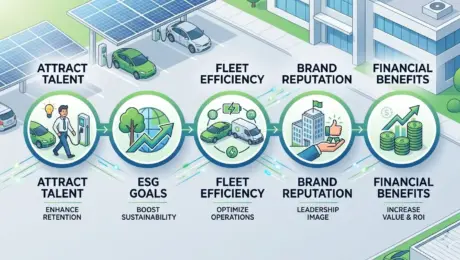
Top 5 Benefits of Providing EV Chargers for Your Employees at the Workplace
Monday, 16 March 2026
The global transition to electric mobility is no longer a distant projection—it is a present-day corporate reality. As internal combustion engine (ICE) vehicles phase out, the workplace is evolving from a mere professional hub into a critical energy node. For forward-thinking organizations, installing EV charging infrastructure is no longer just a “green” perk; it is
- Published in EV Charging Solutions
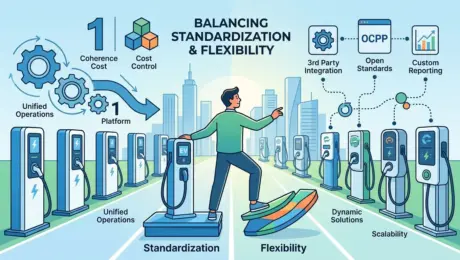
Standardization vs. Flexibility: How Multi-Site Owners Should Choose EV Charger Platforms
Monday, 16 March 2026
The portfolio problem usually appears after the first few successful installs. A company adds chargers at one site, proves demand, and then tries to repeat the model across ten, twenty, or fifty locations. That is where friction starts. One site may have long-dwell employee parking and stable utility capacity. Another may be a retail property
- Published in EV Charging Solutions
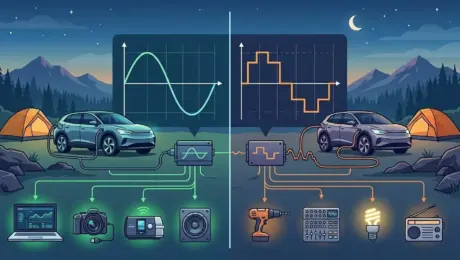
Pure Sine Wave vs. Modified Sine Wave Inverters for EV Camping
Thursday, 12 March 2026
The rise of Electric Vehicles (EVs) has revolutionized the Great American Road Trip. With massive onboard battery capacities, your EV is no longer just a mode of transport; it is a mobile power plant. However, extracting that stored energy to power a coffee maker, a laptop, or medical equipment while camping requires a critical piece
- Published in Power Semiconductors
How Long Does It Take to Charge an Electric Car at a Level 2 Station?
Thursday, 12 March 2026
As the global transition to electric mobility accelerates, businesses and fleet operators are moving beyond the question of “if” they should electrify and focusing on the “how.” For many commercial and residential applications, Level 2 AC charging is the backbone of the infrastructure. However, the time it takes to charge remains one of the most
- Published in EV Charging Solutions
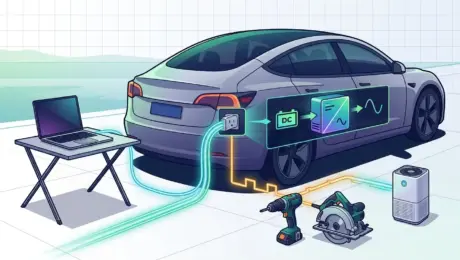
How to Use a Power Inverter in Your Electric Vehicle
Wednesday, 11 March 2026
As the global transition toward sustainable mobility accelerates, the electric vehicle (EV) is evolving from a mere mode of transport into a sophisticated mobile energy hub. For fleet operators, commercial builders, and tech-savvy consumers, the ability to extract usable AC power from a vehicle’s high-voltage DC battery—a process facilitated by a power inverter—is a game-changer.
- Published in Power Semiconductors
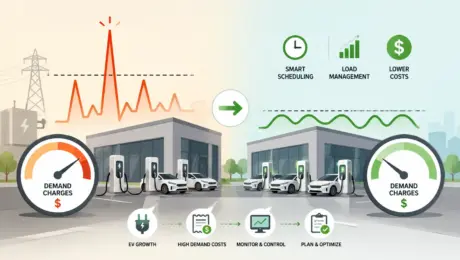
Demand Charges and EV Charging Economics: What Commercial Site Hosts Need to Understand
Wednesday, 11 March 2026
An EV charging project can look attractive in a procurement spreadsheet and still underperform once the first full utility bill arrives. For many commercial site hosts, the surprise is not total energy consumption. It is the monthly peak created when several vehicles charge at once, when fast charging overlaps with building demand, or when charger
- Published in EV Charging Solutions
Does DC Fast Charging Damage Your EV Battery?
Wednesday, 11 March 2026
The transition to electric mobility is no longer a distant vision—it is the current reality for global logistics, public infrastructure, and private fleets. For businesses and operators, the primary hurdle to EV adoption remains “downtime.” This is where DC fast charging enters the frame as the critical engine of the electric revolution. However, as fast-charging
- Published in EV Charging Solutions
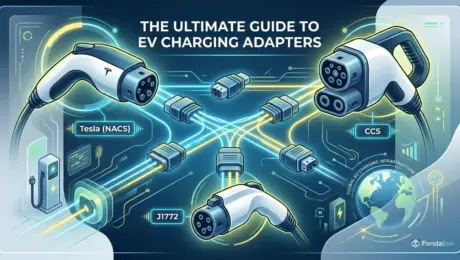
The Ultimate Guide to EV Charging Adapters: Navigating Tesla, J1772, and CCS
Tuesday, 10 March 2026
The rapid acceleration of global electric vehicle (EV) adoption has brought a critical challenge to the forefront of the industry: interoperability. For Charge Point Operators (CPOs), fleet managers, and commercial real estate developers, building a future-proof EV charging infrastructure means understanding the complex landscape of connector standards and EV charging adapters. Whether you are deploying
- Published in EV Charging Solutions
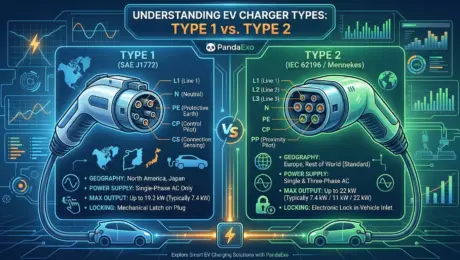
Type 1 vs. Type 2 EV Chargers: What’s the Difference?
Tuesday, 10 March 2026
As the global transition toward electric mobility accelerates, the demand for reliable, scalable electric vehicle (EV) charging infrastructure has never been higher. For charge point operators (CPOs), fleet managers, and real estate developers, understanding the core hardware standards is critical to deploying successful networks. One of the most common technical crossroads encountered in project planning
- Published in EV Charging Solutions
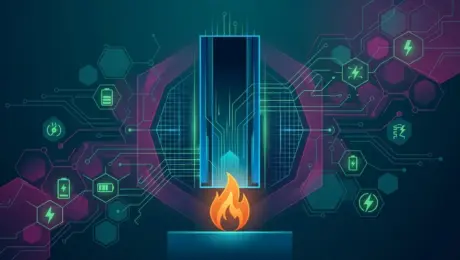
The Ultimate Guide to UL 94V-0 Flammability Ratings in Power Electronics & EV Infrastructure
Tuesday, 10 March 2026
As the electric vehicle (EV) market accelerates globally, the demand for high-performance, rapid energy delivery systems has never been greater. However, dealing with high voltages and sustained currents inherently involves managing significant thermal output. In the B2B landscape of power electronics and EV infrastructure, hardware reliability is synonymous with fire safety. At the center of
- Published in Power Semiconductors
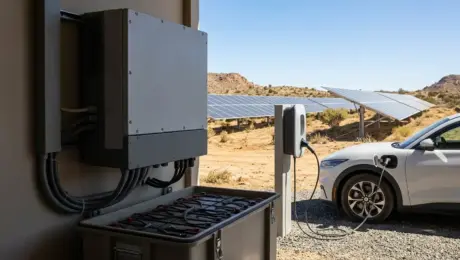
Selecting the Right Inverter for Your Off-Grid Solar Setup
Tuesday, 10 March 2026
An off-grid solar project succeeds or fails on power quality long before the site operator notices a branding detail or dashboard feature. For remote facilities, eco-hospitality sites, telecom assets, fleet yards, and standalone EV charging hubs, the inverter is the component that determines whether stored DC energy becomes usable AC power reliably and efficiently. That
- Published in EV Charging Solutions
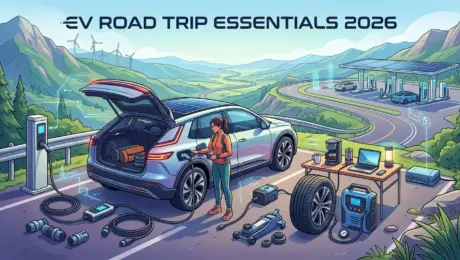
Essential Road Trip Accessories for EV Drivers in 2026
Monday, 09 March 2026
By 2026, the electric vehicle (EV) landscape has matured from a phase of early adoption into an era of mass-market dominance and sophisticated engineering. With the proliferation of 800V and 1000V vehicle architectures, battery capacities routinely exceeding 100kWh, and the standardization of charging protocols, the modern EV road trip is no longer defined by range
- Published in EV Charging Solutions
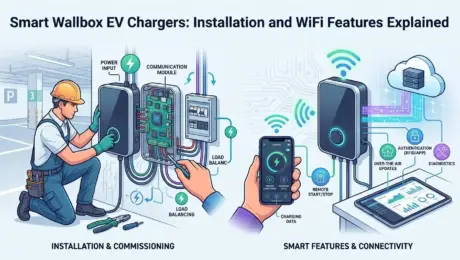
The Ultimate Guide to Smart Wallbox EV Chargers: Installation & WiFi Features Explained
Monday, 09 March 2026
The global transition to electric mobility relies heavily on robust, scalable, and intelligent charging infrastructure. For commercial property managers, fleet operators, and enterprise businesses, simply installing basic, un-networked chargers is no longer a viable long-term strategy. To optimize energy usage, track billing, and future-proof facilities, organizations are turning to the smart EV wallbox. In this
- Published in EV Charging Solutions
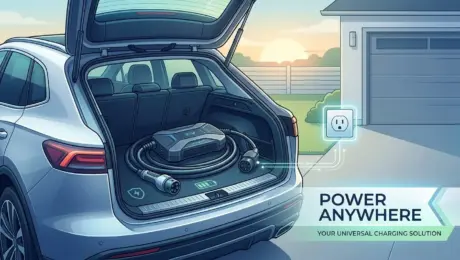
Range Anxiety Solved: Why Every EV Owner Needs a Portable EV Charger in Their Trunk
Monday, 09 March 2026
As the global transition to electric mobility accelerates, drivers and fleet operators are experiencing the undeniable benefits of EV ownership—lower operational costs, reduced emissions, and superior driving performance. However, despite the massive investments being poured into public grid expansions, a common psychological and logistical hurdle remains: range anxiety. While public charging networks are growing, they
- Published in EV Charging Solutions
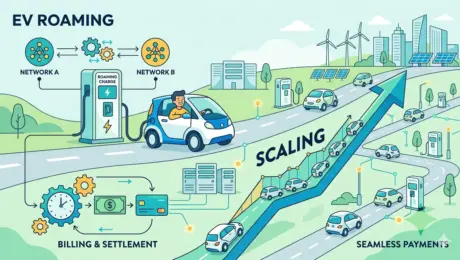
Roaming, Billing, and Settlement: What Scaling EV Charging Networks Need to Get Right Early
Monday, 09 March 2026
Most charging networks do not run into serious roaming and settlement pain on day one. The trouble starts later, when more drivers arrive through third-party apps, more partner agreements go live, and tariff logic becomes harder to explain across sites, regions, and user groups. At that point, roaming is no longer just a commercial growth
- Published in EV Charging Solutions
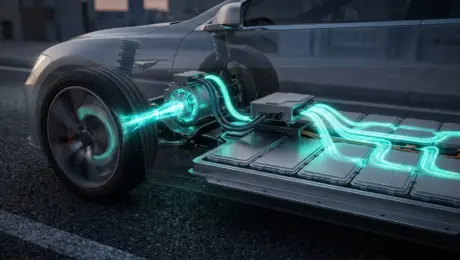
How Regenerative Braking Converts AC Motor Power to DC Battery Storage
Monday, 09 March 2026
In the world of high-performance electric vehicle (EV) infrastructure, efficiency isn’t just a metric—it’s the foundation of the entire ecosystem. While most of the industry focuses on how energy moves from the grid into the vehicle, one of the most elegant pieces of engineering happens in the opposite direction: Regenerative Braking. For fleet operators, charging
- Published in Power Semiconductors
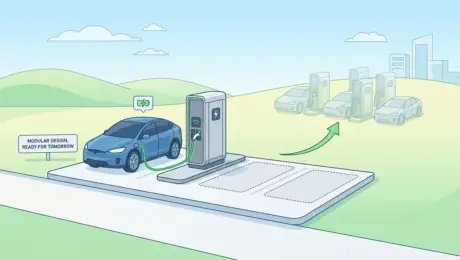
How to Plan EV Charging Capacity for Future Expansion Without Overspending Today
Sunday, 08 March 2026
The hardest EV charging decision is usually not whether demand will grow. It is how much of that future demand you should pay for right now. Many site hosts, fleet operators, property owners, and charging-network planners know expansion is coming. More EVs will enter the fleet. Tenant expectations will change. Utilization will climb. The mistake
- Published in EV Charging Solutions
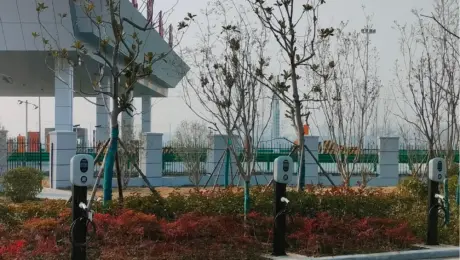
EV Charger Installation Guide: Costs, Permits, and Step-by-Step Process
Sunday, 08 March 2026
The transition to electric mobility is no longer a future-proof concept—it is a current business imperative. For fleet managers, commercial property owners, and industrial developers, providing reliable charging is as essential as high-speed internet. However, the path from procurement to “plug-and-play” involves a complex landscape of electrical engineering, local bureaucracy, and capital planning. This guide
- Published in EV Charging Solutions
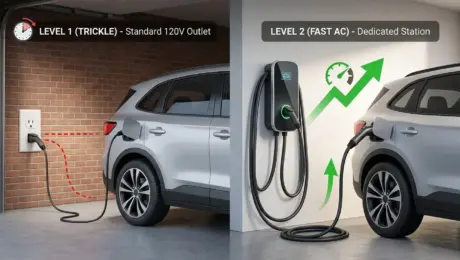
Can You Plug an EV Charger into a Regular Outlet?
Saturday, 07 March 2026
For many new EV owners or commercial property managers, the first question isn’t about battery chemistry or torque—it’s about the plug. Specifically: “Can I just use the wall outlet I already have?” The short answer is yes, but the professional answer is rarely should you. While the convenience of a standard domestic socket is tempting,
- Published in EV Charging Solutions
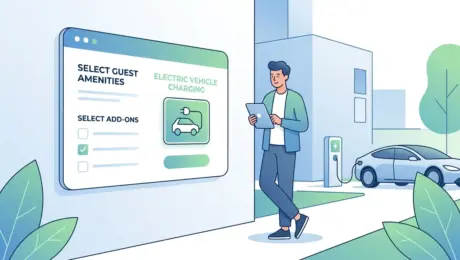
How Hotels Can Structure Guest EV Charging Without Adding Operational Friction
Saturday, 07 March 2026
A hotel rarely struggles with guest EV charging because the chargers are too visible. The friction usually appears somewhere else: the front desk becomes a manual access gate, premium parking spaces turn into queue disputes, staff have no rule for idle vehicles, and finance teams cannot explain who should pay for the electricity. If the
- Published in EV Charging Solutions
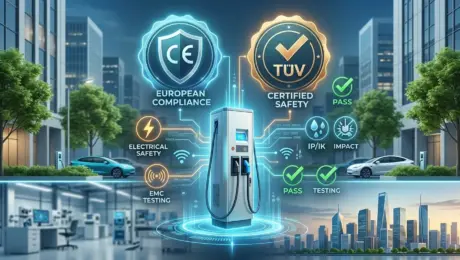
CE and TÜV Certification for EV Chargers: A Buyer’s Guide
Thursday, 05 March 2026
The global transition to electric mobility is accelerating, bringing a massive deployment of EV charging infrastructure. For Charge Point Operators (CPOs), commercial fleet managers, and distributors, selecting the right hardware is not just about power output and software integration—it is fundamentally about safety, reliability, and regulatory compliance. In the European market and beyond, CE and
- Published in EV Charging Solutions
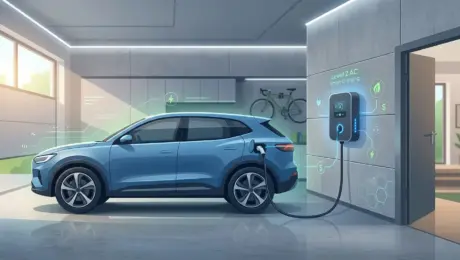
How to Choose the High-Performance Home EV Charging Station Your Garage Deserves
Thursday, 05 March 2026
The transition to electric mobility is no longer a futuristic concept—it is the current standard for the modern homeowner. However, as EV battery capacities expand and vehicle software becomes more sophisticated, the “standard” 120V wall outlet is no longer a viable solution for the daily driver. Transitioning your garage into a high-tech fueling hub requires
- Published in EV Charging Solutions
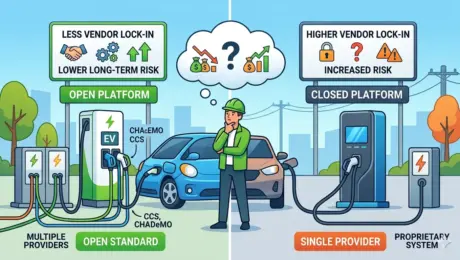
Open vs. Closed Charging Platforms: Which Model Creates Less Long-Term Risk for EV Infrastructure Buyers?
Wednesday, 04 March 2026
The platform decision rarely feels dangerous at the start of an EV charging rollout. A first site goes live, users can authenticate, sessions appear on a dashboard, and the deployment looks stable enough. The real risk usually shows up later, when a second hardware vendor enters the picture, when a property group wants portfolio-wide reporting,
- Published in EV Charging Solutions
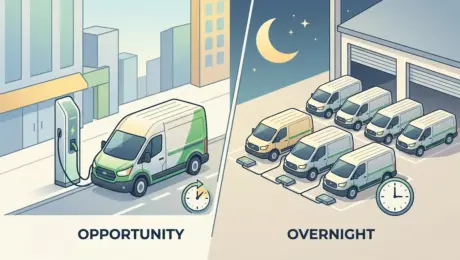
Opportunity Charging vs. Overnight Charging: Which Fleet Charging Strategy Scales Better?
Wednesday, 04 March 2026
For fleet operators, the real charging question is rarely how fast a charger can deliver energy on paper. It is whether the charging model fits vehicle dwell time, route pressure, site power limits, and expansion plans without creating a new operational bottleneck. That is why the debate between opportunity charging and overnight charging matters. One
- Published in EV Charging Solutions
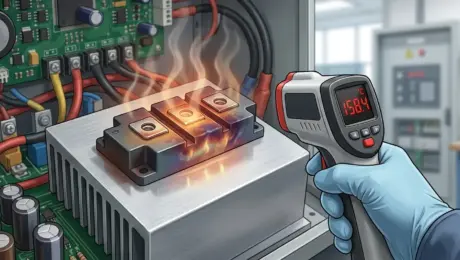
Why Your Bridge Rectifier is Overheating and How to Fix It
Tuesday, 03 March 2026
Bridge rectifiers are easy to overlook until one starts running hot enough to threaten charger uptime. In EV charging systems, that is a serious problem. Excessive heat at the rectifier stage does not just reduce efficiency. It can trigger derating, accelerate capacitor stress, damage nearby assemblies, and shorten the service life of the charger itself.
- Published in Power Semiconductors
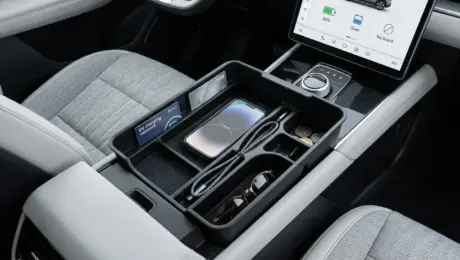
Total System Efficiency: Installing a Center Console Organizer in Your Electric Vehicle
Monday, 02 March 2026
The modern electric vehicle (EV) is a masterclass in engineering, power electronics, and spatial design. By eliminating the bulky internal combustion engine and the traditional transmission tunnel, EV manufacturers have unlocked an unprecedented amount of cabin space. However, this architectural freedom often results in deep, cavernous center consoles that—while spacious—lack practical compartmentalization. For the modern
- Published in EV Charging Solutions
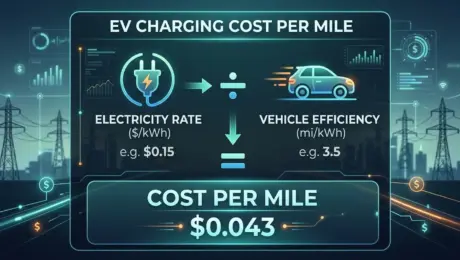
How to Calculate Your EV Charging Cost per Mile
Monday, 02 March 2026
As the global transition to electric mobility accelerates, fleet managers and private owners alike are shifting their focus from “miles per gallon” to “cost per kilowatt-hour.” Understanding the true cost of fueling an electric vehicle (EV) is no longer just an environmental consideration—it is a critical financial metric. At PandaExo, where we leverage our deep
- Published in EV Charging Solutions
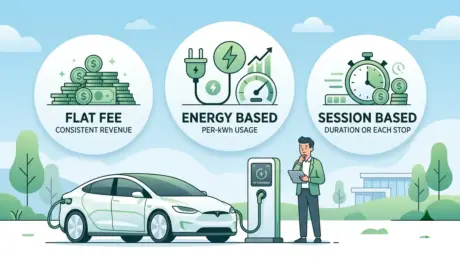
EV Charging Pricing Models for Site Hosts: Flat Fee, Energy-Based, Session-Based, or Hybrid?
Sunday, 01 March 2026
For most site hosts, the difficult pricing question is not whether drivers should pay. It is how the price structure should support the job the charging site is supposed to do. A workplace charger meant to improve tenant value should not usually be priced the same way as a highway fast-charging site, a mixed-use retail
- Published in EV Charging Solutions
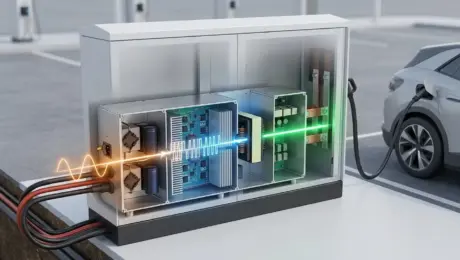
How Switched-Mode Power Supplies (SMPS) Drive EV Infrastructure
Sunday, 01 March 2026
As the global transition to electric mobility accelerates, the demand for faster, smaller, and more efficient charging solutions has never been higher. At the core of every modern EV charger—from a compact residential wallbox to a high-power industrial station—lies a critical piece of power electronics: the Switched-Mode Power Supply (SMPS). For B2B stakeholders, fleet operators,
- Published in Power Semiconductors
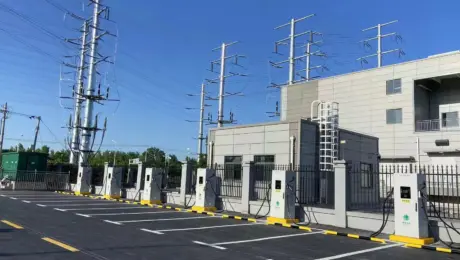
Is Charging an Electric Car Really Cheaper Than Gas?
Sunday, 01 March 2026
The automotive landscape has shifted. As of 2026, the question is no longer whether electric vehicles (EVs) are a viable alternative to internal combustion engines (ICE), but exactly how much they save the modern enterprise and consumer. For fleet managers, commercial property owners, and private drivers, the “fuel” debate is now a sophisticated calculation of
- Published in EV Charging Solutions