
 Deutsch
  Español
  Français
  Italiano
  Português
  Svenska
  Suomi
Suomi  Dansk
Dansk  Norsk bokmål
  Nederlands
  العربية
  עברית
עברית  Polski
  Türkçe
  Русский
  Uzbek
Uzbek  Azərbaycan
  Tiếng Việt
  ไทย
ไทย  한국어
한국어  日本語
日本語  简体中文
简体中文 
The transition to electric mobility is no longer a futuristic concept—it is the current standard for the modern homeowner. However, as EV battery capacities expand and vehicle software becomes more sophisticated, the “standard” 120V wall outlet is no longer a viable solution for the daily driver. Transitioning your garage into a high-tech fueling hub requires more than just buying a plug; it requires an understanding of power electronics, smart grid integration, and long-term infrastructure reliability.
At PandaExo, we leverage our deep heritage in power semiconductors and our 28,000-square-meter advanced manufacturing facility to bridge the gap between industrial-grade engineering and residential convenience. Whether you are a first-time EV owner or a property developer looking for scalable residential solutions, choosing the right EV charging infrastructure is the single most important step in future-proofing your investment.
Assessing Your Electrical Architecture: Amperage and Voltage
Before selecting a hardware unit, you must audit your garage’s electrical capacity. Most modern electric vehicles benefit significantly from a Level 2 AC charging station, which operates on a 240V circuit—similar to a heavy-duty clothes dryer or kitchen range.
- 32-Amp vs. 48-Amp Stations: A 32-amp charger typically provides about 25 miles of range per hour, which is sufficient for most overnight needs. However, for vehicles with larger battery packs (100kWh+), a 48-amp station is the gold standard, requiring a 60-amp circuit breaker to handle the continuous load safely.
- The Hardwire vs. Plug-in Debate: While NEMA 14-50 “plug-in” chargers offer portability, hardwired installations are often preferred for permanent garage setups. Hardwiring removes a point of failure (the outlet), allows for higher amperage delivery, and provides a cleaner aesthetic for high-end residential garages.
The Rise of the Smart Wallbox: Beyond Simple Power Delivery
In 2026, a “dumb” charger is a liability. Choosing reliable charging points means looking for “Smart” or “Connected” features that integrate with your home’s energy ecosystem. PandaExo’s smart AC series is designed to do more than just move electrons; it manages them.
- Scheduled Charging & TOU Optimization: Electricity rates fluctuate. Smart chargers allow you to schedule sessions during “off-peak” hours (typically midnight to 6:00 AM), potentially saving hundreds of dollars annually in energy costs.
- Dynamic Load Balancing: If your home is running an HVAC system, an electric water heater, and a charger simultaneously, you risk tripping the main breaker. Smart chargers can communicate with your home’s energy management system to throttle charging speeds in real-time based on total household demand.
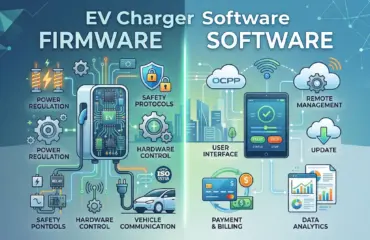
- Wi-Fi and App Connectivity: Real-time monitoring allows you to track energy consumption, receive “charge complete” notifications, and even troubleshoot hardware remotely via dedicated smartphone applications.
Physical Design and Durability Standards
A garage can be a harsh environment, subject to dust, humidity, and temperature fluctuations. When evaluating a station, technical specifications regarding the enclosure are paramount.
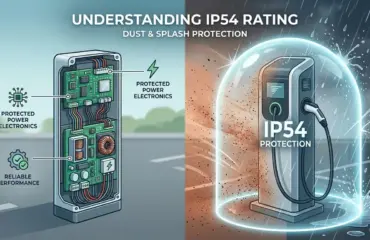
- IP and IK Ratings: Look for an IP54 or higher rating for dust and water resistance. If your charger is near a high-traffic area, an IK08 or IK10 impact rating ensures the casing can withstand accidental bumps from tools or car doors.
- Cable Management: A 25-foot cable is the industry standard for flexibility, allowing you to reach the vehicle’s port regardless of whether you back in or pull forward. High-quality cables remain flexible even in sub-zero temperatures, a hallmark of PandaExo’s precision engineering.
- Connector Standards: While the industry is shifting toward NACS (Tesla standard) in North America, J1772 remains the standard for many existing vehicles. PandaExo offers modular configurations to ensure your hardware remains compatible with your current and future vehicle fleet.
Future-Proofing for Bidirectional Charging (V2H/V2G)
The most significant trend in residential EV infrastructure is bidirectional charging. This technology allows your car to act as a giant battery for your home (Vehicle-to-Home) or even feed energy back into the grid (Vehicle-to-Grid).
While most current home installations are AC-based, the infrastructure is moving toward high-efficiency DC charging technology for the home, which bypasses the car’s onboard converter to allow for faster, two-way energy flow. If you are planning a comprehensive home solar and storage setup, choosing a station that supports ISO 15118 communication protocols is essential for future compatibility.
Why PandaExo is the Professional Choice
Choosing a charger from a global leader like PandaExo means you are benefiting from factory-direct precision. Our manufacturing base utilizes the same rigorous quality control used in high-power industrial semiconductors, ensuring that your home station is built to the same standards as a public rapid-charging hub.