
 Deutsch
  Español
  Français
  Italiano
  Português
  Svenska
  Suomi
Suomi  Dansk
Dansk  Norsk bokmål
  Nederlands
  العربية
  עברית
עברית  Polski
  Türkçe
  Русский
  Uzbek
Uzbek  Azərbaycan
  Tiếng Việt
  ไทย
ไทย  한국어
한국어  日本語
日本語  简体中文
简体中文 
As the global transition toward sustainable mobility accelerates, the electric vehicle (EV) is evolving from a mere mode of transport into a sophisticated mobile energy hub. For fleet operators, commercial builders, and tech-savvy consumers, the ability to extract usable AC power from a vehicle’s high-voltage DC battery—a process facilitated by a power inverter—is a game-changer.
Whether you are looking to run high-precision tools at a remote construction site or charge sensitive electronics during a logistics haul, understanding the synergy between EV charging infrastructure and onboard power conversion is essential. This guide explores how power inverters function within the EV ecosystem, the technical nuances of installation, and how PandaExo’s heritage in power semiconductors ensures peak efficiency.
What is a Power Inverter in an EV Context?
In the simplest terms, an inverter is a power electronics device that converts Direct Current (DC), which is stored in the EV’s battery, into Alternating Current (AC), which is the standard form of electricity used by most household and industrial appliances.
While every EV has an internal inverter to power the drivetrain motor, “using a power inverter” in a B2B or utility context usually refers to Vehicle-to-Load (V2L) or Vehicle-to-Everything (V2X) applications. This allows the vehicle to act as a massive, mobile power bank.
The Core Technology: Semiconductors
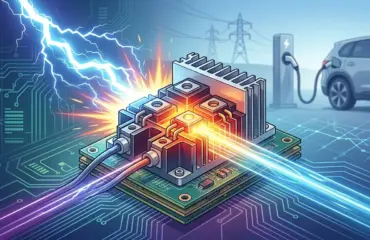
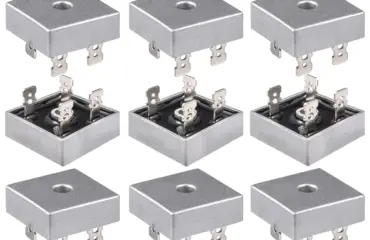
The efficiency of this conversion depends heavily on the quality of the internal components. At the heart of these systems are bridge rectifiers and high-speed switching transistors (like SiC MOSFETs). PandaExo leverages decades of expertise in semiconductor manufacturing to ensure that the power modules within our infrastructure products handle thermal loads with industry-leading precision.
Choosing the Right Inverter: Pure Sine Wave vs. Modified Sine Wave
When integrating an external inverter or selecting a vehicle with V2L capabilities, the “wave quality” of the output is the most critical technical specification.
| Feature | Pure Sine Wave Inverter | Modified Sine Wave Inverter |
|---|---|---|
| Output Quality | Identical to grid power; smooth, continuous wave. | Stepped, “blocky” approximation of a wave. |
| Device Compatibility | Safe for all devices, including medical gear and laptops. | May damage sensitive electronics or cause “hum.” |
| Efficiency | High efficiency; devices run cooler and longer. | Lower efficiency; prone to energy loss as heat. |
| Best Use Case | Precision tools, servers, and high-end EVs. | Simple heating elements or old brushed motors. |
For commercial applications, a Pure Sine Wave inverter is the only viable choice. It ensures that the sophisticated circuitry in modern AC Smart Chargers and mobile workstations remains protected from harmonic distortion.
Step-by-Step: How to Use an Inverter with Your EV
Depending on the vehicle’s design, there are two primary ways to utilize an inverter:
1. Utilizing Built-in V2L/V2X Ports
Many modern EVs come equipped with integrated AC outlets.
- Locate the port: Usually found in the trunk, frunk, or near the charging inlet.
- Enable via Software: Most vehicles require you to activate the “Power Out” mode via the infotainment screen to prevent unexpected battery drain.
- Monitor Load: Ensure the total wattage of your devices does not exceed the vehicle’s rated output (commonly 1.9 kW to 3.6 kW).
2. Aftermarket Inverter Installation (12V/15V System)
If the vehicle lacks native AC outlets, an aftermarket inverter can be connected to the low-voltage auxiliary battery.
- Connection: Connect the inverter leads directly to the 12V battery terminals (using heavy-gauge cables) rather than the cigarette lighter, which is usually limited to 120 W.
- The DC-DC Converter: Remember that in an EV, the 12V battery is kept charged by the main high-voltage pack via a DC-DC converter. Ensure your inverter’s draw does not exceed the DC-DC converter’s recharge rate.
Safety and Best Practices for B2B Applications
Operating high-voltage equipment requires a commitment to rigorous safety standards. When using power conversion technology, keep the following in mind:
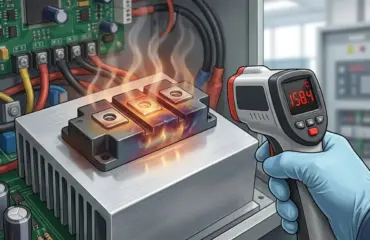
- Thermal Management: Inverters generate heat during the DC-to-AC conversion. Ensure the unit is placed in a well-ventilated area to avoid thermal throttling.
- State of Charge (SoC) Limits: Set a “reserve limit” on your vehicle (e.g., 20%). This ensures the inverter shuts off automatically, leaving you with enough range to reach the nearest DC Fast Charging station.
- Grounding: For high-power industrial use, ensure the inverter is properly grounded to prevent electrical shock or equipment damage.
At PandaExo, we don’t just assemble chargers; we engineer the power components that make modern transport possible. Our 28,000-square-meter manufacturing base integrates the latest in power semiconductor technology into every product in our catalog.
By understanding the physics of power inversion—from the bridge rectifier level up to the smart energy management software—we provide OEM/ODM services that allow businesses to build more resilient, versatile EV fleets.