
 Deutsch
  Español
  Français
  Italiano
  Português
  Svenska
  Suomi
Suomi  Dansk
Dansk  Norsk bokmål
  Nederlands
  العربية
  עברית
עברית  Polski
  Türkçe
  Русский
  Uzbek
Uzbek  Azərbaycan
  Tiếng Việt
  ไทย
ไทย  한국어
한국어  日本語
日本語  简体中文
简体中文 
The transition to electric mobility is no longer a future-proof concept—it is a current business imperative. For fleet managers, commercial property owners, and industrial developers, providing reliable charging is as essential as high-speed internet. However, the path from procurement to “plug-and-play” involves a complex landscape of electrical engineering, local bureaucracy, and capital planning.
This guide provides a comprehensive breakdown of the installation process, helping you navigate the technical and financial requirements of deploying world-class EV charging infrastructure at scale.
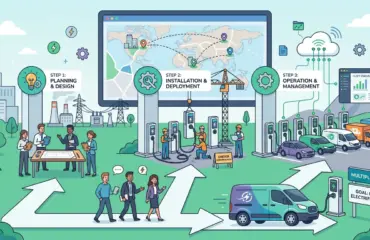
Step 1: Site Assessment and Load Calculation
Before a single trench is dug, you must understand your facility’s electrical “headroom.” EV chargers are continuous loads, meaning they draw maximum power for extended periods.
- Load Analysis: A certified electrician must perform a load calculation to determine if your current transformer and distribution panels can support additional 32A to 80A circuits.
- Infrastructure Strategy: In 2026, smart energy management is the gold standard. If your panel is near capacity, PandaExo’s smart platforms can utilize dynamic load balancing to distribute power without requiring a multi-thousand-dollar service upgrade.
- Physical Placement: Proximity to the electrical room is the biggest cost-saver. Every foot of conduit and copper wiring adds to the bottom line.
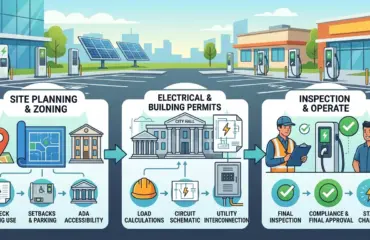
Step 2: Navigating Permits and ADA Compliance
Commercial installations are subject to strict regulatory oversight. In many jurisdictions, “expedited permitting” for EVSE (Electric Vehicle Supply Equipment) is now mandatory, but documentation must be flawless.
- Electrical Permits: Required for all new dedicated circuits and panel modifications.
- Zoning and Site Plans: You may need to provide a site map showing charger height, bollard placement for protection, and signage.
- ADA Standards: Accessibility is non-negotiable. This includes specific requirements for “van-accessible” charging stalls, reach heights for the charging point interface, and clear path-of-travel slopes.
Step 3: Estimating Installation and Hardware Costs
Costs vary significantly based on whether you are installing AC destination chargers or high-speed DC units.
| Component | Level 2 AC (7kW – 22kW) | DC Fast Charging (50kW – 150kW+) |
|---|---|---|
| Hardware | $500 – $2,500 | $25,000 – $100,000+ |
| Labor & Materials | $1,500 – $5,000 | $20,000 – $60,000 |
| Permits & Design | $200 – $1,000 | $2,000 – $5,000 |
| Utility Upgrades | Optional (often avoided) | Frequently Required |
For businesses looking for high-turnover solutions or highway corridor support, investing in DC Fast Charging stations is the most effective way to minimize “dwell time” and maximize user throughput.
Step 4: Civil Works and Electrical Execution
Once permits are in hand, the physical work begins. This stage is where “factory-direct precision” meets field engineering.
- Trenching and Boring: If chargers are located in a parking lot away from the building, contractors must trench at least 18-24 inches deep to lay underground conduit.
- Mounting Options: Choose between wall-mounted units for garages or pedestal-mounted stations for open lots. Pedestals require a concrete “housekeeping” pad for stability and moisture protection.
- Final Commissioning: After the hardware is mounted, the system is energized and tested for grounding integrity, communication with the management software, and safety shut-off triggers.
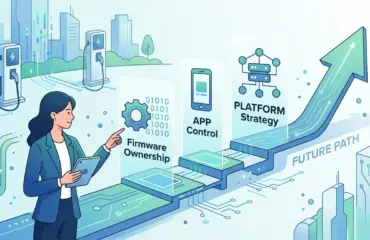
Step 5: Software Integration and Operations
The final step is connecting your hardware to a smart management platform. This allows you to:
- Set Pricing: Charge users per kWh or per hour to recoup investment costs.
- Manage Access: Use RFID cards or mobile apps to restrict charging to employees or tenants only.
- Monitor Health: Receive real-time alerts if a station goes offline, ensuring high uptime for your users.
Partner with PandaExo for Your Infrastructure
Navigating the complexities of EVSE deployment requires a partner who understands the deep physics of power semiconductors and the commercial realities of the global market. With a 28,000-square-meter manufacturing base and a focus on high-performance reliability, PandaExo delivers the precision your project demands.