

 Deutsch
  Español
  Français
  Italiano
  Português
  Svenska
  Suomi
Suomi  Dansk
Dansk  Norsk bokmål
  Nederlands
  العربية
  עברית
עברית  Polski
  Türkçe
  Русский
  Uzbek
Uzbek  Azərbaycan
  Tiếng Việt
  ไทย
ไทย  한국어
한국어  日本語
日本語  简体中文
简体中文 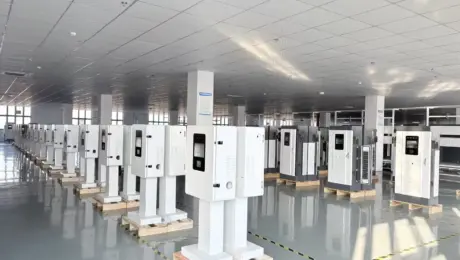
Commercial EV Charging Project Checklist: Decisions to Make Before You Procure and Install
Tuesday, 31 March 2026
Commercial EV charging projects usually go wrong long before the first charger is energized. The most expensive mistakes tend to happen in planning, when teams commit to hardware, civil work, or launch schedules before they have aligned site constraints, utility realities, operating responsibilities, and commercial goals. For property owners, fleet operators, CPOs, developers, and installers,
- Published in EV Charging Solutions
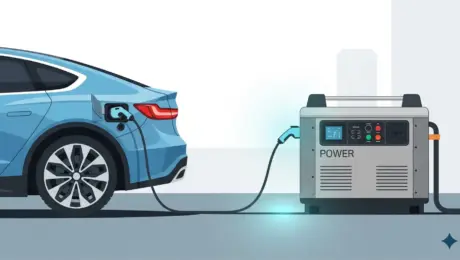
Can You Charge an EV with a Generator or Backup Battery?
Tuesday, 31 March 2026
Yes, an EV can be charged from a generator or a backup battery system, but that answer only becomes useful once the operating context is clear. For commercial users, the real issue is not whether charging is technically possible. It is whether the backup source can deliver stable, usable power at the right cost, for
- Published in EV Charging Solutions

24/7 EV Charging Call Center Setup: A Complete Guide for CPOs and Network Operators
Tuesday, 31 March 2026
An EV charging network does not succeed on hardware alone. Once stations are live, driver confidence is shaped by how quickly operators can resolve failed sessions, payment issues, offline chargers, and urgent support requests. For charge point operators, fleet charging managers, and enterprise network teams, service responsiveness becomes part of the product. That is why
- Published in EV Charging Solutions
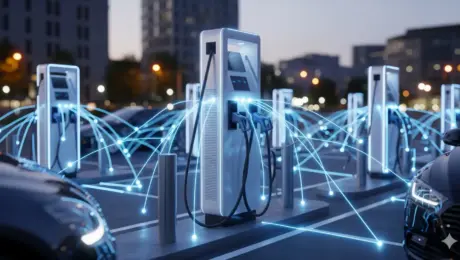
Open Charging Networks Explained: OCPP, OCPI, Roaming, and EV Charger Interoperability Trends
Monday, 30 March 2026
As EV charging markets scale, the most important procurement question is no longer just which charger to install. Sophisticated buyers are asking whether their future network will stay flexible once more sites, more software vendors, more roaming partners, and more vehicle types enter the picture. That is why open charging networks matter. For charge point
- Published in EV Charging Solutions
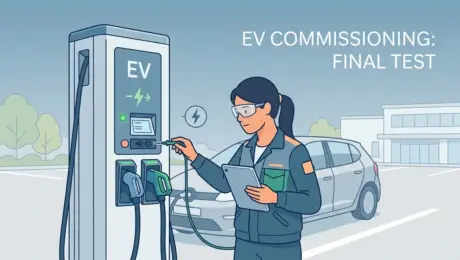
EV Charger Commissioning Checklists for Large Commercial Projects
Monday, 30 March 2026
Large commercial EV charging projects rarely fail because the charger model was completely wrong. More often, they fail at handover. The chargers are installed, the switchgear is energized, and the software account is live, but the site still is not truly ready for users, operators, or finance teams. That is why commissioning matters. On a
- Published in EV Charging Solutions

Portfolio-Wide EV Charging Planning: A Property Manager’s Guide to Multi-Site Deployment
Saturday, 28 March 2026
Installing EV chargers at one building is a facilities project. Deploying chargers across an entire portfolio is an operating model. For property managers overseeing office assets, multifamily communities, retail centers, hotels, logistics sites, or mixed-use portfolios, the real challenge is not simply choosing the first site. It is building a repeatable framework for prioritization, electrical
- Published in EV Charging Solutions
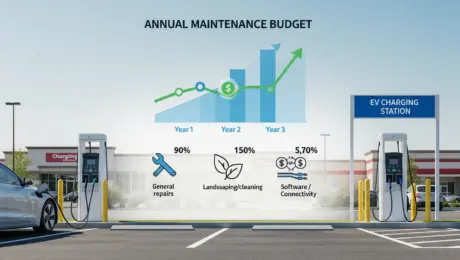
EV Charging Station Maintenance Costs: What Commercial Site Hosts Should Budget Annually
Saturday, 28 March 2026
For commercial site hosts, EV charger ownership does not end with procurement and installation. Once the system is live, the business is responsible for keeping hardware available, safe, connected, and serviceable year after year. That means maintenance is not a side expense. It is part of the operating model. If your organization manages public, workplace,
- Published in EV Charging Solutions
Where EV Drivers Need More Charging Stations and How Businesses Can Choose Better Sites
Friday, 27 March 2026
Many charging projects underperform for a simple reason: the site looked attractive on paper, but the charging behavior was never a good match. A visible property, a large parking area, or a recognizable brand location does not automatically create strong charging demand. The best EV charging sites are the ones where driver need, parking duration,
- Published in EV Charging Solutions
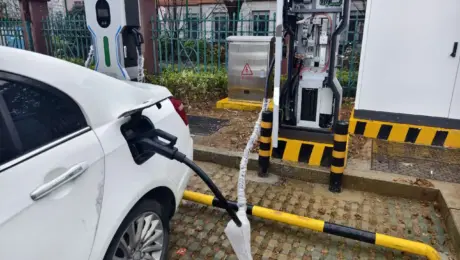
Preventive Maintenance for EV Charging Stations: A Practical Plan for Operators and Site Hosts
Friday, 27 March 2026
Preventive maintenance is one of the most reliable ways to protect EV charger uptime before failure forces a costly response. For operators, property owners, fleet managers, and site hosts, the objective is not just to keep equipment presentable. It is to reduce avoidable faults, extend asset life, and preserve a charging experience drivers can trust.
- Published in EV Charging Solutions

How to Find the Best EV Charging Stations Near Me
Wednesday, 25 March 2026
For individual drivers, “finding a charger” is a matter of convenience; for fleet managers, property developers, and CPO (Charge Point Operator) entrepreneurs, it is a critical operational variable. As the global transition toward sustainable mobility accelerates, the density and quality of available EV charging infrastructure have become the primary benchmarks for regional EV adoption success.
- Published in EV Charging Solutions
How to Monetize Your Parking Lot with Commercial EV Charging Stations
Wednesday, 25 March 2026
The traditional parking lot is undergoing a fundamental shift in its economic utility. Once viewed merely as a static overhead cost or a secondary convenience for visitors, the rise of electric mobility has rebranded the parking space as a high-value energy hub. For commercial real estate owners, retail developers, and facility managers, the question is
- Published in EV Charging Solutions

Why Level 2 EV Charging is the Gold Standard for Modern Infrastructure
Wednesday, 25 March 2026
As the global shift toward sustainable transport accelerates, businesses and homeowners alike are facing a critical decision: how to balance charging speed, installation costs, and long-term battery health. While DC ultra-fast charging grabs the headlines for highway travel, the quiet workhorse of the industry is the Level 2 charger. For the vast majority of daily
- Published in Power Semiconductors
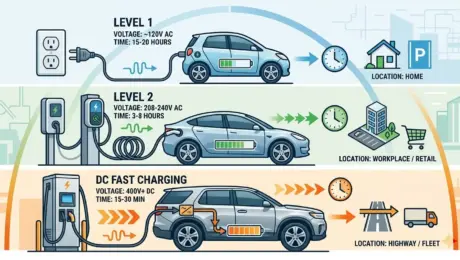
Level 1, Level 2, and DC Fast Charging: A Strategic Guide to EV Infrastructure
Wednesday, 25 March 2026
The global transition to electric mobility is no longer a “future” trend—it is a present-day industrial shift. For businesses, fleet operators, and property developers, understanding the nuances of charging speeds is the difference between a high-return investment and an obsolete installation. Navigating the landscape of EV power delivery requires more than just knowing “fast” from
- Published in EV Charging Solutions
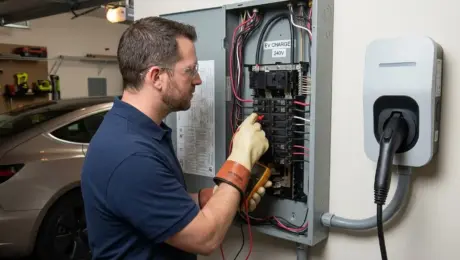
Is Your Home Electrical Panel Ready for a Level 2 EVSE
Wednesday, 25 March 2026
Transitioning to electric mobility is a transformative step for any homeowner, but the shift from “gas station stops” to “overnight charging” requires more than just a plug and a cable. While most EVs come with a Level 1 cord that fits a standard 120V outlet, the slow charging speeds—often adding only 3–5 miles of range
- Published in EV Charging Solutions

The Future of Residential Refueling: Choosing the Best Smart EV Charger for Your Home
Wednesday, 25 March 2026
The transition to electric mobility is no longer a “future” trend—it is a present-day reality. For the modern homeowner, the shift from gas stations to residential charging is the single greatest convenience of EV ownership. However, as the market matures in 2026, a “charger” is no longer just a plug in a wall; it is
- Published in EV Charging Solutions
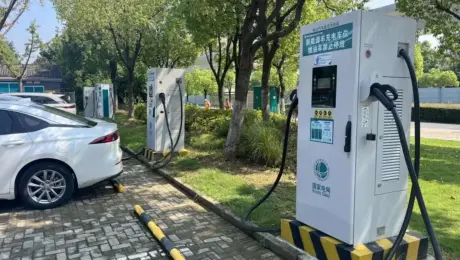
The Hidden Costs of EV Charging Stations: What New EV Owners Must Know
Wednesday, 25 March 2026
For many businesses and fleet operators entering the electric vehicle (EV) space, the initial focus is often on the hardware—the sleek, high-tech pedestals or wallboxes that represent the transition to green energy. However, seasoned industry veterans know that the purchase price of the equipment is only the tip of the iceberg. In the B2B sector,
- Published in EV Charging Solutions
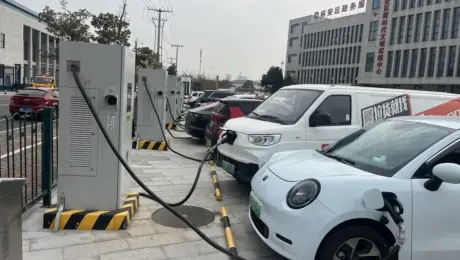
How Much Does It Cost to Charge an EV? (Home vs. Public Charging)
Wednesday, 25 March 2026
For fleet operators, property managers, and individual drivers, the transition to electric mobility often hinges on a single, critical question: “How much will this actually cost me?” While the fuel savings compared to internal combustion engines (ICE) are undisputed—often exceeding $1,000 annually per vehicle—the complexity of kilowatt-hour (kWh) pricing, demand charges, and infrastructure tiers can
- Published in EV Charging Solutions
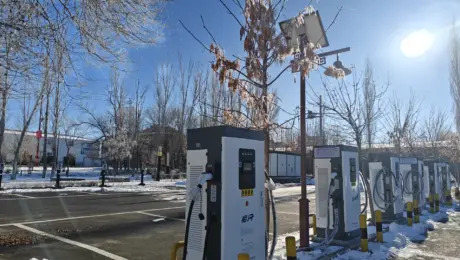
How to Use a Public EV Charging Station: A Beginner’s Step-by-Step Guide
Wednesday, 25 March 2026
The transition to electric mobility is no longer a futuristic concept; it is a global industrial shift. As fleet operators, commercial property owners, and new EV drivers navigate this landscape, understanding the mechanics of public infrastructure is paramount. While the process is designed to be intuitive, the diversity of hardware—ranging from high-speed power modules to
- Published in EV Charging Solutions
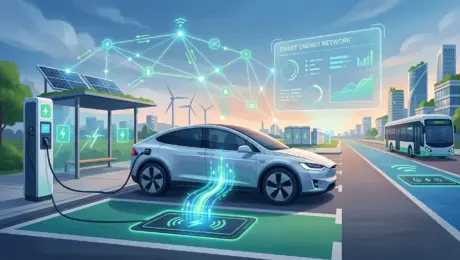
How Wireless Charging and Smart Grids Are Reshaping Public EV Infrastructure
Wednesday, 25 March 2026
The electric vehicle (EV) landscape in 2026 is virtually unrecognizable from the market of a decade ago. We have moved decisively past early-adopter range anxiety into an era defined by mass deployment, commercial fleet electrification, and ultra-fast energy delivery. As global EV sales consistently shatter records, the primary bottleneck for widespread adoption is no longer
- Published in EV Charging Solutions
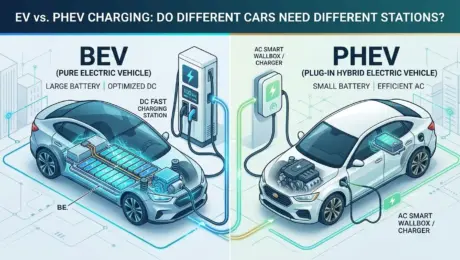
EV vs. PHEV Charging Infrastructure: Optimizing Station Selection for Diverse Fleet and Consumer Demands
Wednesday, 25 March 2026
The rapid electrification of global transportation presents an unprecedented opportunity for commercial property owners, fleet managers, and Charge Point Operators (CPOs). However, navigating the transition requires more than simply installing plugs in parking spaces. A critical point of confusion in infrastructure planning is the distinction between Battery Electric Vehicles (BEVs) and Plug-in Hybrid Electric Vehicles
- Published in EV Charging Solutions
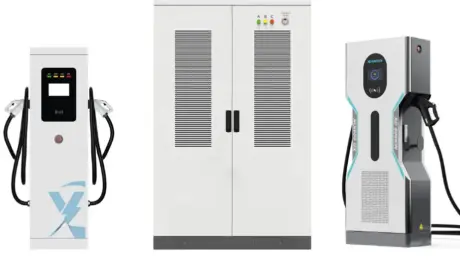
Decoding EVSE: The Complete Guide to Electric Vehicle Supply Equipment and Smart Charging Infrastructure
Tuesday, 24 March 2026
The rapid proliferation of electric vehicles (EVs) is fundamentally reshaping the global energy and transportation landscapes. For commercial real estate developers, municipal planners, and fleet operators, investing in reliable EV infrastructure is no longer optional—it is a strategic business imperative. However, navigating the transition to electrified transport requires a precise understanding of the foundational technology
- Published in EV Charging Solutions
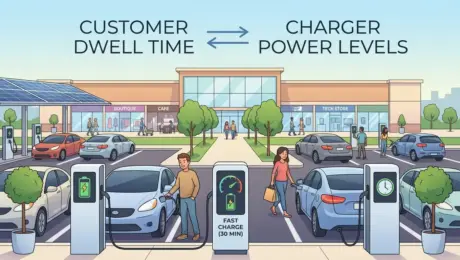
How Retail Centers Can Balance Customer Dwell Time and Charger Power Levels
Monday, 23 March 2026
Retail charging only works when the charging experience fits the shopping visit. A site built around short, convenience-driven stops needs a different power mix from a lifestyle center where customers stay for an hour, watch a movie, or spend half a day moving across multiple tenants. That is why the best retail charging strategy is
- Published in EV Charging Solutions
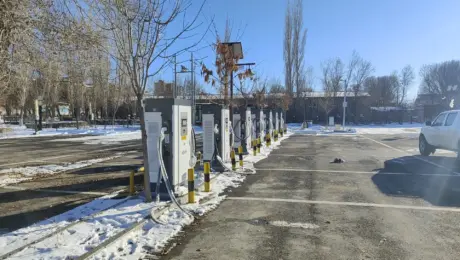
Everything You Need to Know About EV Charging Stations in 2026
Saturday, 21 March 2026
The electric vehicle (EV) charging landscape in 2026 has officially crossed the threshold from fragmented early-stage infrastructure to a highly standardized, mission-critical extension of the global energy grid. For fleet operators, charge point operators (CPOs), and commercial developers, EV infrastructure is no longer simply a sustainability milestone—it is a core operational asset and a primary
- Published in EV Charging Solutions
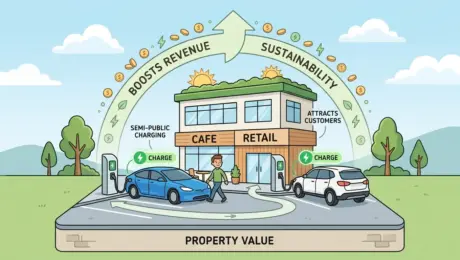
The Real Economics of Semi-Public EV Charging at Commercial Properties
Friday, 20 March 2026
The biggest financial mistake in semi-public EV charging is assuming the business case lives or dies on charger revenue alone. For office parks, hotels, retail centers, business campuses, and mixed-use commercial properties, the real economics are broader. Charger selection affects capital cost, utility exposure, parking turnover, tenant experience, site attractiveness, and future expansion risk. A
- Published in EV Charging Solutions
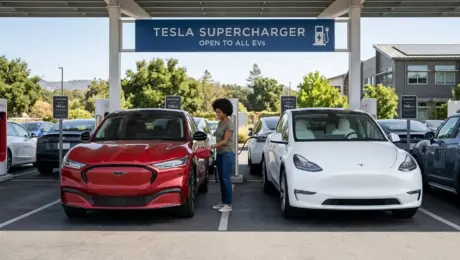
Can Non-Tesla EVs Use Tesla Superchargers?
Thursday, 19 March 2026
The electric vehicle (EV) landscape has reached a definitive tipping point. For years, Tesla’s Supercharger network was the “walled garden” of the automotive world—a high-speed, ultra-reliable sanctuary reserved exclusively for Tesla drivers. However, as we move through 2026, those walls have effectively come down. With the widespread adoption of the North American Charging System (NACS)
- Published in EV Charging Solutions
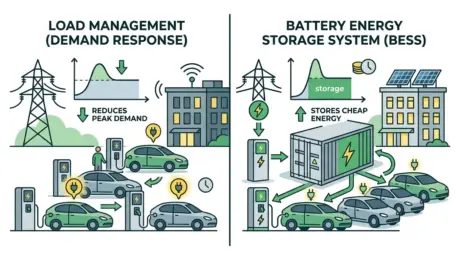
Load Management vs. Battery Energy Storage for EV Charging: Which Solves Peak Demand More Cost-Effectively?
Wednesday, 18 March 2026
A charging site does not become expensive only because electricity costs money. It becomes expensive when too many vehicles demand power at the same moment, the utility meter records a short but severe spike, and the project team is forced to choose between oversizing the grid connection or constraining charging performance. That is why peak
- Published in EV Charging Solutions
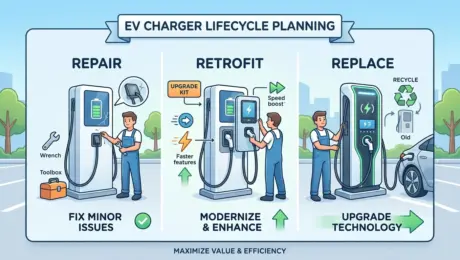
EV Charger Lifecycle Planning: When to Repair, Retrofit, or Replace
Wednesday, 18 March 2026
A charger rarely reaches the end of its useful life just because the installation date says so. It reaches that point when recurring faults start disrupting sessions, the site outgrows the original charging strategy, or outdated controls make operations harder than they need to be. That is why lifecycle planning matters. For site hosts, fleet
- Published in EV Charging Solutions
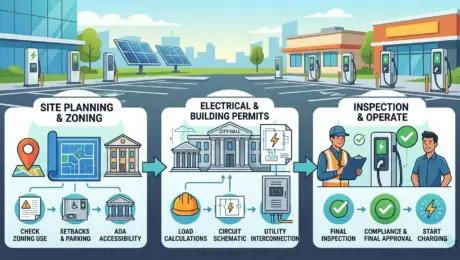
Commercial EV Charging Station Permits and Zoning Laws Explained
Wednesday, 18 March 2026
The transition to electric mobility is no longer a “future” trend—it is a regulatory and commercial mandate. For property developers, fleet managers, and business owners, the decision to install EV charging infrastructure is increasingly driven by strict new legislation. As of 2025 and 2026, many regions now require non-residential buildings with more than 20 parking
- Published in EV Charging Solutions
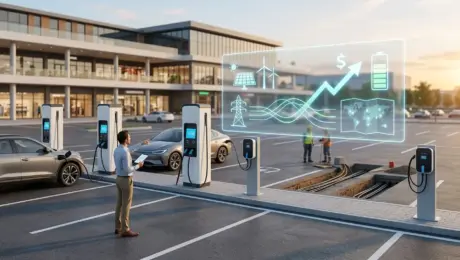
How to Start Your Own EV Charging Business
Tuesday, 17 March 2026
The global transition to electric mobility is no longer a future concept—it is a present reality. As the adoption of electric vehicles (EVs) accelerates exponentially, the demand for accessible, reliable, and high-performance charging infrastructure has created one of the most lucrative commercial opportunities of the decade. For entrepreneurs, commercial real estate developers, and fleet operators,
- Published in EV Charging Solutions
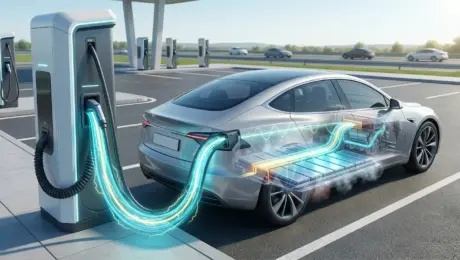
The Science of Speed: How EV Supercharging Works
Tuesday, 17 March 2026
Fast charging matters because EV convenience is measured in time, not only in battery capacity. Drivers want shorter stops, fleet operators want tighter vehicle turnaround, and charging networks want each bay to serve more sessions per day. Supercharging addresses all three needs by moving large amounts of energy into a battery within a limited window.
- Published in EV Charging Solutions