
 Deutsch
  Español
  Français
  Italiano
  Português
  Svenska
  Suomi
Suomi  Dansk
Dansk  Norsk bokmål
  Nederlands
  العربية
  עברית
עברית  Polski
  Türkçe
  Русский
  Uzbek
Uzbek  Azərbaycan
  Tiếng Việt
  ไทย
ไทย  한국어
한국어  日本語
日本語  简体中文
简体中文 
For fleet operators, property managers, and individual drivers, the transition to electric mobility often hinges on a single, critical question: “How much will this actually cost me?” While the fuel savings compared to internal combustion engines (ICE) are undisputed—often exceeding $1,000 annually per vehicle—the complexity of kilowatt-hour (kWh) pricing, demand charges, and infrastructure tiers can be daunting. As a global leader in power electronics, PandaExo provides the high-performance hardware and smart energy management platforms needed to navigate these economics.
In this guide, we break down the real-world costs of EV charging in 2026, comparing the accessibility of residential setups with the high-speed utility of commercial DC charging solutions.
1. The Economics of At-Home Charging
Home charging remains the most cost-effective method for the vast majority of EV users. By leveraging residential electricity rates, drivers can treat their vehicles like smartphones—charging overnight when the grid is underutilized.
Residential Utility Rates and Time-of-Use (TOU)
In 2026, the average residential electricity cost in the U.S. is approximately $0.18 per kWh. However, savvy users utilize Smart Wallboxes to schedule charging during “off-peak” hours.
- Standard Rate: $0.18 per kWh
- Off-Peak Rate: Often as low as $0.08–$0.10 per kWh
- Full Charge (72 kWh Battery): ~$12.96 (Standard) vs. ~$6.48 (Off-Peak)
For those looking for high-capacity residential or light-commercial solutions, exploring a robust charger catalog is the first step toward securing long-term energy independence.
Infrastructure Investment
While the “fuel” is cheap, the hardware requires an upfront investment. A professional Level 2 AC Smart Wallbox, combined with installation, typically ranges from $800 to $2,000. Fortunately, federal tax credits (available through mid-2026) often offset up to 30% of these costs.
2. Public Charging: Convenience at a Premium
Public charging infrastructure serves two primary roles: enabling long-distance travel and providing solutions for urban residents without home garage access. Because these stations involve high land-lease costs, maintenance, and grid connection fees, the price per kWh is naturally higher.
Public AC Charging (Level 2)
Commonly found at shopping centers, hotels, and workplaces, AC charging is a mid-tier cost option.
- Average Cost: $0.25 to $0.40 per kWh.
- Best For: “Topping off” while the vehicle is parked for 2–5 hours.
DC Fast Charging (Level 3)
DC Fast Chargers are the “gas stations” of the EV world. They bypass the vehicle’s onboard converter to pump electricity directly into the battery, offering 10% to 80% charge in as little as 20 minutes.
- Average Cost: $0.45 to $0.65 per kWh.
- Cost Drivers: High-power demand charges from utilities and the significant capital expense of the hardware itself.
3. Comparison Summary: Home vs. Public
| Metric | Home (Off-Peak) | Public AC | DC Fast Charging |
|---|---|---|---|
| Cost per kWh | $0.09 | $0.32 | $0.48 |
| Cost for 100 Miles | ~$2.70 | ~$9.60 | ~$14.40 |
| Primary Advantage | Lowest Cost | Convenience/Dwell Time | Speed/Long Distance |
4. Why Enterprise Logistics and Property Managers Choose PandaExo
For B2B stakeholders, managing these costs at scale requires more than just a plug. PandaExo’s 28,000-square-meter manufacturing base produces the precision power semiconductors that drive efficiency in both AC and DC environments.
Smart Energy Management
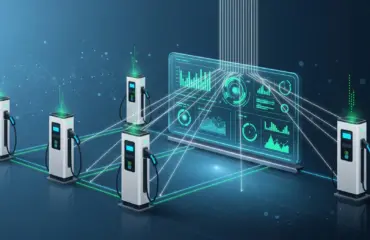
Our platforms offer Dynamic Load Balancing, which allows multiple chargers to share a single grid connection without triggering expensive “peak demand” penalties from the utility company. This is essential for:
- Multi-Family Housing: Providing affordable charging to tenants while protecting the building’s electrical panel.
- Fleet Depots: Ensuring all delivery vans are charged by 6:00 AM using the cheapest possible energy window.
- Retailers: Attracting high-value EV drivers with reliable, branded charging experiences.
The PandaExo Advantage: Factory-Direct Scale
By eliminating middleman markups, PandaExo provides OEM/ODM services that allow businesses to deploy large-scale charging networks with a significantly lower Total Cost of Ownership (TCO).
Strategy Over Speed
While DC fast charging is an engineering marvel, the most profitable EV strategy focuses on “slow and steady” AC charging where vehicles naturally dwell. By balancing a mix of home-base charging and strategic public fast-charging, operators can reduce their energy spend by up to 70% compared to fossil fuels.
Ready to optimize your infrastructure costs? Contact the PandaExo engineering team today to discuss a customized OEM solution for your fleet or commercial property.