
 Deutsch
  Español
  Français
  Italiano
  Português
  Svenska
  Suomi
Suomi  Dansk
Dansk  Norsk bokmål
  Nederlands
  العربية
  עברית
עברית  Polski
  Türkçe
  Русский
  Uzbek
Uzbek  Azərbaycan
  Tiếng Việt
  ไทย
ไทย  한국어
한국어  日本語
日本語  简体中文
简体中文 
For many businesses and fleet operators entering the electric vehicle (EV) space, the initial focus is often on the hardware—the sleek, high-tech pedestals or wallboxes that represent the transition to green energy. However, seasoned industry veterans know that the purchase price of the equipment is only the tip of the iceberg.
In the B2B sector, failing to account for “soft costs,” grid requirements, and operational overhead can lead to budget overruns that exceed 200% to 300% of the original hardware estimate. At PandaExo, we leverage our deep heritage in power semiconductors and our 28,000-square-meter manufacturing base to help clients navigate these financial complexities.
This guide breaks down the true total cost of ownership (TCO) for EV charging infrastructure, ensuring your investment remains a strategic asset rather than a financial liability.
The Infrastructure Iceberg: Civil Works and Grid Upgrades
The most significant hidden expense in any EV deployment is rarely the charger itself; it is the preparation of the site. Depending on the age of your facility and its proximity to the local power transformer, these costs can fluctuate wildly.
- Trenching and Conduit: If your parking stalls are far from your electrical room, you will face high labor and material costs for digging trenches and laying heavy-duty conduit. In 2026, copper prices and labor rates continue to drive these figures upward, with complex runs often costing more than the chargers they support.
- Transformer and Panel Upgrades: Most commercial buildings were not designed to handle the massive simultaneous draw of multiple high-speed chargers. You may need to upgrade your main service panel or, in the case of DC charging, work with your utility provider to install a dedicated transformer.
- ADA Compliance and Siting: Regulations often require a percentage of charging stalls to be accessible (ADA compliant). This may involve repaving, adding ramps, or widening stalls—civil works that must be factored into the initial CAPEX.
Software and the Cost of “Smart” Connectivity
While “dumb” chargers might seem cheaper upfront, they are often a “false economy” for commercial use. To manage a fleet or offer public charging, you need a robust smart energy management platform.
- Network Subscription Fees: Smart chargers require a Cloud-based backend to manage user access, process payments, and monitor station health. These recurring monthly fees cover cellular or Wi-Fi connectivity and over-the-air (OTA) updates.
- Load Balancing Technology: Without smart software, your chargers could trigger “demand charges”—expensive penalties from utility companies when your power usage spikes. Advanced platforms mitigate this by capping total power draw, but the software integration itself carries an operational cost.
- Interoperability (OCPP): Ensuring your EV charging infrastructure utilizes the Open Charge Point Protocol (OCPP) is vital. Proprietary systems may lock you into a single vendor, leading to high “switching costs” later if you need to upgrade or change providers.
Navigating the Regulatory and Permitting Maze
“Soft costs” refer to the administrative and non-physical expenses required to get a station live. These are notoriously difficult to predict but essential to your timeline.
- Permitting and Inspection: Every municipality has different zoning laws and electrical codes. Engineering stamps, permit filings, and multiple rounds of inspections can add thousands of dollars and months of delay to a project.
- Commissioning Fees: Once a station is installed, it must be “commissioned”—a process where a certified technician verifies the safety, grounding, and network communication of the unit.
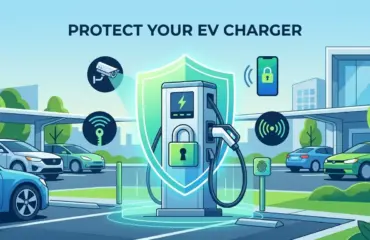
- Insurance and Vandalism: Adding high-value electronics to your parking lot may increase your insurance premiums. Furthermore, investing in “hardened” hardware or protective bollards is a necessary secondary cost to prevent accidental or intentional damage.
Operational Excellence: Maintenance and Uptime
A broken charger is more than an inconvenience; for a business, it is lost revenue or a grounded fleet. While PandaExo’s factory-direct precision ensures high reliability, no mechanical system is immune to wear and tear.
- Preventative Maintenance: Routine inspections of cables, connectors, and cooling systems (for high-power DC units) are required to ensure a 99% uptime.
- Wear-and-Tear Parts: Charging cables and plugs are high-wear items. Depending on usage volume, these may need replacement every 2 to 4 years.
- Electricity Arbitrage: If you are providing AC charging as a service, the spread between your commercial electricity rate and the price you charge users must cover all the aforementioned overhead to ensure a positive ROI.
Strategic Planning for Long-Term ROI
Understanding these hidden costs is not meant to discourage investment, but rather to empower it. By choosing a partner like PandaExo, you gain access to factory-direct scaling and customized OEM/ODM services that streamline the path from procurement to installation.
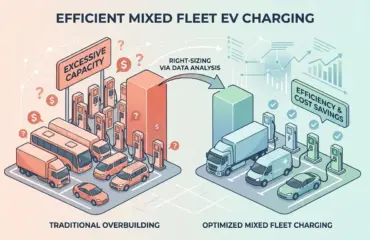
The key to a successful EV transition lies in site-readiness audits and scalable architecture. By over-provisioning your conduit today, you can avoid the “hidden” cost of digging up your parking lot again tomorrow.