
 Deutsch
  Español
  Français
  Italiano
  Português
  Svenska
  Suomi
Suomi  Dansk
Dansk  Norsk bokmål
  Nederlands
  العربية
  עברית
עברית  Polski
  Türkçe
  Русский
  Uzbek
Uzbek  Azərbaycan
  Tiếng Việt
  ไทย
ไทย  한국어
한국어  日本語
日本語  简体中文
简体中文 
Many charging projects underperform for a simple reason: the site looked attractive on paper, but the charging behavior was never a good match. A visible property, a large parking area, or a recognizable brand location does not automatically create strong charging demand.
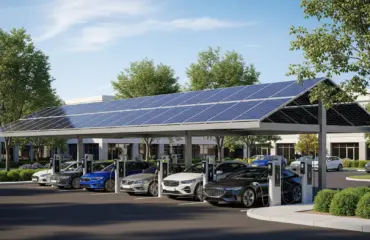
The best EV charging sites are the ones where driver need, parking duration, utility readiness, and commercial purpose work together. For businesses, that means site selection should be treated as both a demand problem and an infrastructure planning decision.
When that alignment is right, charging can support revenue, customer retention, tenant value, fleet readiness, or broader property strategy. When it is wrong, even good hardware can struggle to produce the expected return.
Start With Driver Behavior, Not Just Available Parking
Drivers do not need charging everywhere equally. They need it in locations that fit the logic of the trip, the length of the stop, and the state of charge when they arrive. That is why good site planning begins with behavior, not only with vacant spaces or real estate visibility.
Some locations are naturally aligned with short-stay top-ups. Others are better suited to destination charging or recurring daily use. Businesses that ignore that distinction often end up selecting the wrong charger type, overbuilding power capacity, or placing equipment where usage never becomes consistent.
PandaExo’s article on how drivers search for charging stations is a helpful reminder that convenience, reliability, trip context, and ease of access shape real-world site value more than simple map presence.
The Strongest Charging Sites Usually Follow a Clear Use Pattern
Different property types create different charging expectations. A workplace car park does not behave like a highway stop, and a hotel does not behave like a retail center. Site selection improves when businesses group opportunities by charging pattern rather than by property category alone.
| Site Type | Typical Dwell Pattern | Best Charging Logic | Main Commercial Value |
|---|---|---|---|
| Retail and mixed-use | Short to medium stay | AC charging or moderate-power DC depending on turnover | Supports customer convenience, longer visits, and repeat traffic |
| Hotels and hospitality | Extended stay or overnight | AC charging and managed load distribution | Adds guest value without forcing high-power infrastructure everywhere |
| Multifamily and residential-adjacent | Recurring long-duration parking | AC charging with access control and energy management | Improves resident amenity and long-term property appeal |
| Workplaces and fleet depots | Predictable scheduled parking | AC or planned DC based on duty cycle | Supports employee charging or operational fleet readiness |
| Travel corridors and high-turnover public sites | Short stop with urgency | Higher-power DC charging | Maximizes throughput, convenience, and public charging relevance |
The lesson is not that one site type is always better than another. It is that the charging format has to match the way the site is actually used. If it does not, utilization and user satisfaction usually suffer.
Evaluate the Site as a Business Case and an Electrical Project
Businesses sometimes evaluate charging sites as a branding exercise first and an engineering project second. In practice, both need to be reviewed together.
A serious site review should combine four major lenses:
- Driver demand and parking behavior
- The commercial objective of the host site
- Grid, utility, and electrical feasibility
- Nearby competition and network saturation
This matters because charger selection follows site logic. A property with long dwell time may not need expensive fast charging to succeed. A corridor location with short dwell time may fail if the deployment is built around slow charging assumptions.
If the site is intended to support direct charging revenue or broader parking-lot economics, PandaExo’s guide to monetizing parking assets with EV charging is a useful framework for pressure-testing the business case.
The Questions Businesses Should Ask Before Approving a Site
Strong site decisions usually come from disciplined screening rather than instinct. Before advancing a property, businesses should test the location against practical operational questions.
| Evaluation Area | Key Question | Why It Matters |
|---|---|---|
| Demand | Is there visible or forecast EV traffic that fits this property? | Without real charging demand, the site may never justify the investment |
| Dwell Time | How long do vehicles normally remain parked? | Dwell time determines whether AC, DC, or a mixed strategy is appropriate |
| Electrical Readiness | Can the site support the required power without excessive delay or cost? | Grid limitations can turn a strong commercial site into a weak project |
| Access and Flow | Is the site easy to enter, use, and exit? | A technically feasible site can still fail if driver friction is high |
| Business Objective | Is the goal revenue, tenant service, fleet support, or destination value? | The wrong success metric often leads to the wrong hardware choice |
| Expansion Potential | Can the site scale later if utilization grows? | A site that cannot grow may require expensive redesign too early |
This type of screening helps businesses avoid a common mistake: selecting a site because it is available rather than because it is suitable.
Match the Charger Type to the Parking Pattern
One of the clearest causes of underperformance is charger-site mismatch. Slow charging can disappoint drivers if the location is built around urgency. Oversized DC infrastructure can weaken project economics if vehicles are parked for hours and do not need rapid turnaround.
Businesses should think about charger choice as a behavioral fit:
- AC charging usually makes sense where vehicles stay longer and infrastructure flexibility matters.
- DC charging usually makes more sense where turnaround speed, public visibility, or fleet throughput is the priority.
- A phased mix can work well when a site serves more than one user group or is expected to expand over time.
That is why PandaExo’s broader guide to Level 1, Level 2, and DC fast charging strategy is useful during site planning. It helps decision-makers connect power level with real use case rather than treating charger selection as a generic specification task.
Common Siting Mistakes Businesses Should Avoid
Poor site selection is rarely caused by one dramatic error. More often, it comes from several small assumptions that all lean in the wrong direction.
The most common mistakes include:
- Choosing a site based only on parking availability
- Overestimating charging demand because the location is visible or prestigious
- Underestimating electrical upgrade complexity or utility timelines
- Installing charger types that do not fit actual dwell behavior
- Ignoring competitive saturation in the immediate trade area
- Selecting awkward parking layouts that create user friction
Another frequent problem is assuming that if the site works operationally, it will also work commercially. In reality, a site may be electrically feasible and still weak as a charging destination if the driver journey is inconvenient or the surrounding demand is too soft.
What High-Potential Charging Sites Usually Have in Common
The strongest candidate sites tend to share a set of practical traits. They do not always look identical, but they usually show similar operational strengths.
| High-Potential Trait | What It Signals |
|---|---|
| Predictable or growing EV traffic | There is a realistic base of users instead of speculative demand |
| Parking duration that fits charger power | The charging format supports actual user behavior |
| Clear host-business objective | The project can be measured against the right commercial outcome |
| Practical utility and permitting path | Deployment is less likely to stall in engineering review |
| Room for phased expansion | The site can grow with demand instead of being redesigned too early |
| Easy driver entry, parking, and connector access | Better user experience supports repeat usage and fewer support issues |
The best sites also make long-term operations easier. A location that is hard to monitor, hard to support, or hard for drivers to understand may never perform as well as a simpler site with better behavioral alignment.
Why Better Site Selection Improves Portfolio Performance
For organizations managing multiple properties, site selection quality becomes even more important. A single weak site is manageable. A portfolio full of poorly matched sites creates recurring drag across utilization, maintenance, support, and expansion planning.
That is why smart operators increasingly think in terms of portfolio logic rather than isolated charger placement. They evaluate where charging will create the most durable value, where energy constraints are manageable, and where site types can be standardized over time.
This is also where a broader EV charger portfolio becomes useful. Site planners often need more than one deployment pattern across their estate, and the right solution set should support that reality rather than forcing a single hardware format into every scenario.
How PandaExo Helps Businesses Choose Better Sites
PandaExo is relevant to site planning because site quality depends on realistic charger matching, not just on hardware procurement. Businesses need to understand what charging experience they want the property to deliver before they finalize equipment scope.
With AC and DC charging solutions plus smart energy management capability, PandaExo helps businesses evaluate which architecture fits the behavior of the site. That is especially valuable for operators comparing mixed-use properties, workplace locations, hospitality assets, fleet depots, or phased rollouts across multiple regions.
The result is a more practical planning process: choose sites based on demand logic, then match them with infrastructure that supports the intended business outcome.
Final Takeaway
The best EV charging sites are not chosen through guesswork or branding intuition alone. They are chosen by understanding where drivers actually need charging, how long they stay, what the site is trying to achieve commercially, and whether the electrical path is realistic.
Businesses that align those factors are far more likely to deploy chargers that stay relevant, perform well, and support long-term expansion. If your organization is evaluating where to place new charging infrastructure, PandaExo can help you connect site behavior with the right AC or DC charging strategy. Contact the PandaExo team to discuss site-matched charging solutions for commercial deployment.