
 Deutsch
  Español
  Français
  Italiano
  Português
  Svenska
  Suomi
Suomi  Dansk
Dansk  Norsk bokmål
  Nederlands
  العربية
  עברית
עברית  Polski
  Türkçe
  Русский
  Uzbek
Uzbek  Azərbaycan
  Tiếng Việt
  ไทย
ไทย  한국어
한국어  日本語
日本語  简体中文
简体中文 
The rapid acceleration of electric vehicle (EV) adoption relies on a fundamental promise: uncompromised safety alongside high performance. At the heart of this promise lies the vehicle’s power electronics, specifically the car inverter. Whether converting direct current (DC) from the battery to alternating current (AC) to drive the traction motor, or managing Vehicle-to-Load (V2L) applications, the inverter processes immense amounts of energy.
Without robust car inverter overload protection, the delicate balance of high-voltage power conversion could easily result in catastrophic component failure, compromised battery health, or vehicle downtime. For fleet operators, OEMs, and charging network providers, understanding these internal safety mechanisms is critical to deploying resilient EV charging infrastructure that interacts flawlessly with modern vehicles.
The Heart of the EV: Understanding the Inverter’s Role
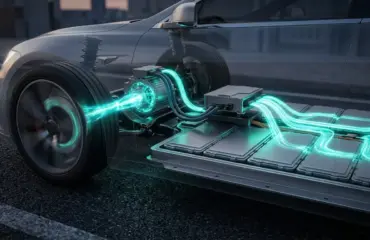
In an electric vehicle, the inverter is the master conductor of power. It dictates the speed, torque, and efficiency of the motor by rapidly switching high-voltage DC into a precisely timed AC waveform. Because these systems handle hundreds of amps and up to 800 volts (or more) in modern architectures, they are subjected to intense thermal and electrical stress.
“The reliability of an electric vehicle is directly proportional to the thermal and electrical resilience of its inverter. Overload protection isn’t just a safety net; it is an active lifecycle management tool.”
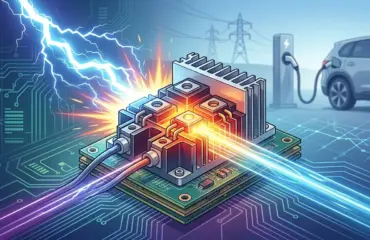
When an overload occurs—due to aggressive acceleration, a stalled motor, a short circuit, or extreme ambient temperatures—the inverter must react in microseconds to prevent irreversible damage to the power semiconductor modules (IGBTs or SiC MOSFETs).
The Core Mechanisms of Car Inverter Overload Protection
To ensure continuous, safe operation, automotive engineers utilize a multi-layered approach to inverter protection. These mechanisms constantly monitor the electrical and thermal states of the system, stepping in precisely when thresholds are breached.
1. Key Protection Types
| Protection Type | Trigger Condition | System Response | Primary Benefit |
|---|---|---|---|
| Overcurrent Protection (OCP) | Current exceeds the safe operating limits of the semiconductors (e.g., during a short circuit or locked rotor). | Immediate shutdown of gate drivers within microseconds to halt current flow. | Prevents explosive failure of IGBT/SiC modules and protects the motor windings. |
| Thermal Overload Protection (OTP) | NTC thermistors detect temperatures exceeding critical limits (typically >150°C for Silicon, >175°C for Silicon Carbide). | Power derating (limiting torque/speed) or complete system shutdown if temperatures continue to rise. | Prolongs component lifespan and prevents thermal runaway. |
| Overvoltage / Undervoltage (OVP/UVP) | DC-link voltage spikes during heavy regenerative braking or drops dangerously low due to battery sag. | Clamping the voltage, dissipating excess energy, or disabling the inverter. | Protects the DC-link capacitors and prevents insulation breakdown. |
| Desaturation Protection (Desat) | A specific type of short-circuit detection where the voltage across the semiconductor rises sharply while turned “ON.” | Ultra-fast localized shutdown at the gate driver level (usually <10 microseconds). | Saves the core power switches from instantaneous thermal destruction. |
2. The Software-Hardware Handshake
These hardware-level protections are closely governed by the vehicle’s Microcontroller Unit (MCU). The MCU uses advanced algorithms to predict thermal loads based on current draw, proactively derating power before a physical hardware limit is even reached. This ensures the driver experiences a smooth reduction in power rather than a sudden, jarring shutdown.
How Inverter Protection Synergizes with EV Charging Infrastructure
The safety of an EV doesn’t end when the vehicle is parked. During a charging session, the vehicle’s onboard electronics must maintain a continuous, secure handshake with the external charging equipment.
If a fleet operator is utilizing high-power DC Fast Charging stations for rapid energy delivery, the external charger handles the heavy AC-to-DC conversion. However, the EV’s internal battery management system and inverter still actively monitor the DC-link for voltage spikes or unexpected current surges, working in tandem with the station’s safety protocols.
Conversely, when relying on smart AC Charging points for overnight fleet depot charging or workplace charging, the vehicle’s Onboard Charger (OBC) and inverter systems bear the load of AC-to-DC conversion. In these scenarios, the vehicle’s internal overload protection is the primary defense against grid fluctuations, ensuring stable, safe energy assimilation.
The Role of Core Semiconductor Components
None of this protection is possible without exceptionally high-quality power electronics. The speed at which an inverter can detect a fault and safely dissipate energy comes down to the purity and design of its internal components.
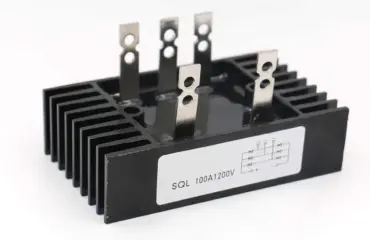
For decades, the foundation of robust power conversion has relied on precision-engineered semiconductors. Components like high-efficiency Bridge Rectifiers and advanced power modules are critical for managing thermal loads and ensuring that when an overload condition occurs, the hardware can withstand the transient stress without failing.
At PandaExo, our deep heritage in power semiconductors directly informs how we design and manufacture our charging infrastructure. We understand that the station delivering the power must be just as intelligent and resilient as the inverter receiving it.
Securing Your Fleet with Factory-Direct Precision
Car inverter overload protection is a testament to the incredible engineering inside modern electric vehicles. But to truly maximize the safety, efficiency, and ROI of an electrified fleet, the external charging infrastructure must match the vehicle’s internal sophistication.
Operating from a 28,000-square-meter advanced manufacturing base, PandaExo delivers smart energy management platforms and high-performance charging stations built on a foundation of semiconductor expertise. By sourcing factory-direct hardware, B2B clients benefit from unmatched OEM/ODM customization, industrial-grade reliability, and scale.