
 Deutsch
  Español
  Français
  Italiano
  Português
  Svenska
  Suomi
Suomi  Dansk
Dansk  Norsk bokmål
  Nederlands
  العربية
  עברית
עברית  Polski
  Türkçe
  Русский
  Uzbek
Uzbek  Azərbaycan
  Tiếng Việt
  ไทย
ไทย  한국어
한국어  日本語
日本語  简体中文
简体中文 
The global electric vehicle (EV) market is more interconnected than ever. However, for automotive importers, fleet managers, and infrastructure developers in Europe, regional charging standards can present a significant logistical hurdle. While the European Union has standardized around the Combined Charging System Type 2 (CCS2), North America and parts of Asia predominantly utilize CCS1.
For European importers bringing in overseas vehicles, or testing facilities homologating international fleets, navigating this connector mismatch is critical. This guide explores the technical distinctions between CCS1 and CCS2, why high-quality adapters are essential, and how to source the right hardware to ensure seamless power delivery.
Understanding the Divide: CCS1 vs. CCS2
Both CCS1 and CCS2 are DC fast-charging standards built upon existing AC connector designs, but they cater to different electrical grid structures.
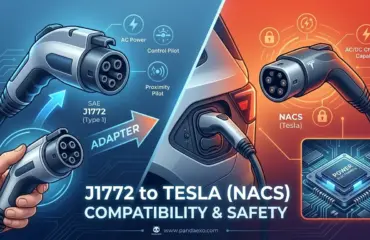
- CCS1 (Type 1 Base): Built on the SAE J1772 standard, CCS1 integrates single-phase AC charging pins with two large DC pins at the bottom. It is the standard across North America and South Korea.
- CCS2 (Type 2 Base): Built on the Mennekes standard, CCS2 supports three-phase AC charging, making it highly efficient for European grid infrastructures. Like CCS1, it adds two DC pins at the bottom for high-speed charging.
Because the physical form factors and pin layouts differ, an imported CCS1 vehicle cannot physically connect to a European CCS2 charging station without an engineered adapter.
Why European Importers Rely on Adapters
For B2B operations in the European market, sourcing reliable CCS1 to CCS2 adapters is about more than just convenience—it is a business necessity for several key use cases:
- Grey Market and Direct Vehicle Imports: Importers bringing popular North American EV models (such as specific trims of trucks or SUVs not yet available in Europe) need to ensure these vehicles can utilize public European infrastructure.
- Homologation and Testing: European automotive testing facilities require robust adapters to evaluate international vehicles against European charging networks before domestic certification.
- Cross-Border Fleet Management: Multinational companies operating mixed fleets need standardized solutions to keep vehicles operational regardless of their origin port.
Critical Technical Requirements for B2B Sourcing
Not all adapters are created equal. When sourcing CCS1 to CCS2 adapters, European importers must prioritize safety, continuous power ratings, and build quality.
1. High-Power Compatibility and Thermal Management
Adapters must be capable of handling the extreme currents delivered during rapid charging sessions. When dealing with high-power DC fast charging, an adapter must sustain high amperage (often up to 250A or more) without overheating. Look for adapters with advanced thermal management materials and integrated temperature monitoring.
2. Regulatory Compliance and Safety
In the EU market, CE certification is non-negotiable. Adapters must feature secure locking mechanisms to prevent accidental disconnection while under high electrical load, protecting both the user and the vehicle’s onboard systems.
3. AC and DC Cross-Compatibility
Importers must also consider the vehicle’s daily charging needs. While DC charging handles rapid top-ups, daily operations often rely on AC smart charging networks. Ensure your infrastructure setup accounts for both high-voltage DC conversion and standard AC bridging.
The PandaExo Advantage in Power Delivery
At PandaExo, we understand that an adapter is only as strong as its core engineering. Operating a 28,000-square-meter advanced manufacturing base, we bring factory-direct scale and precision to the EV infrastructure sector.
Our deep heritage in power semiconductors—from high-efficiency bridge rectifiers to advanced energy management controllers—gives us unparalleled insight into what makes power delivery safe, efficient, and reliable. We don’t just assemble hardware; we engineer smart charging solutions designed for the rigors of global B2B deployment.
Whether you require customized OEM/ODM services for specialized adapters, or you are looking to upgrade your facility’s infrastructure to support a diverse fleet, we have the engineering pedigree to support your goals.
Ready to Streamline Your EV Infrastructure?
Navigating global EV standards doesn’t have to slow down your import operations or fleet deployments. Equip your business with hardware engineered for precision, safety, and scale.
Explore our full range of EV chargers and smart infrastructure solutions today. To discuss custom OEM/ODM manufacturing or bulk sourcing for your European operations, contact the PandaExo engineering team.