
 Deutsch
  Español
  Français
  Italiano
  Português
  Svenska
  Suomi
Suomi  Dansk
Dansk  Norsk bokmål
  Nederlands
  العربية
  עברית
עברית  Polski
  Türkçe
  Русский
  Uzbek
Uzbek  Azərbaycan
  Tiếng Việt
  ไทย
ไทย  한국어
한국어  日本語
日本語  简体中文
简体中文 
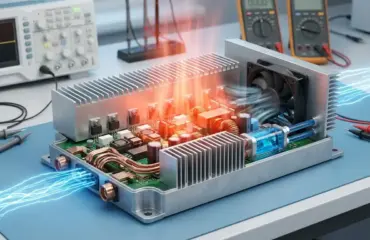
Power inverter performance is often discussed in terms of switching devices, control logic, and overall system topology. Those areas matter, but they do not carry the whole reliability story. In real-world power conversion, rectifier diodes still decide how efficiently current moves, how much heat the system must shed, and how much stress downstream components have to absorb.
For OEMs, inverter designers, industrial buyers, and EV charging infrastructure developers, diode quality is not a low-level purchasing detail. It is part of the business case. The wrong component choice can increase thermal load, shorten service life, and turn a power stage that looks cost-effective on paper into a maintenance problem in the field.
Why Rectifier Diodes Still Matter in Modern Power Conversion
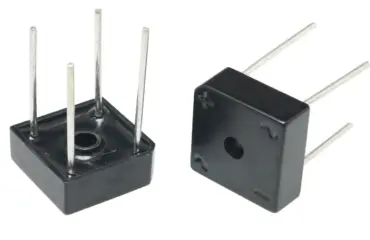
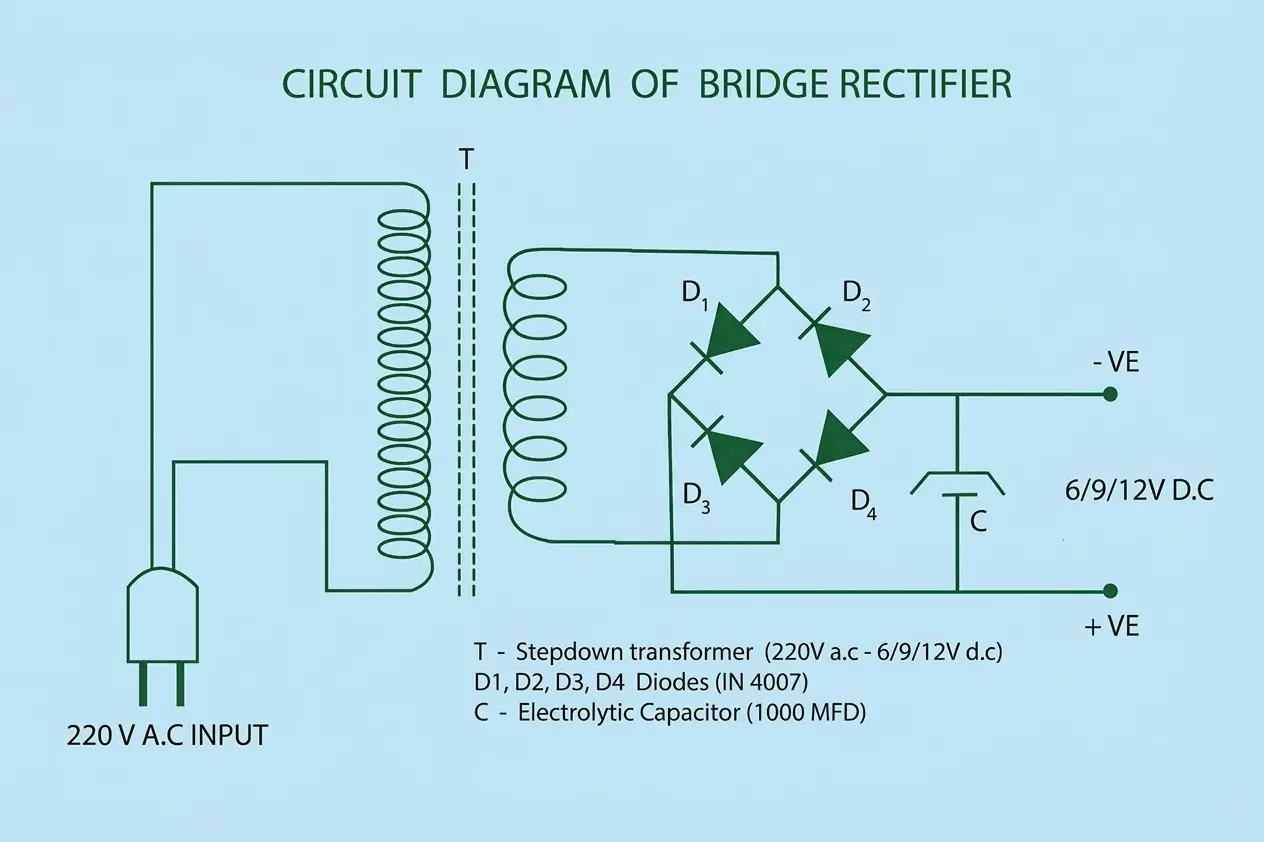
In many inverter-based systems, the power path is not as simple as DC in and AC out. Industrial drives, solar equipment, commercial power systems, and EV chargers often begin by converting AC input into a stable DC bus. That rectification stage depends on diodes that must conduct high current, withstand reverse voltage, and survive continuous thermal cycling.
Diodes also matter inside the inverter bridge itself, where anti-parallel or freewheeling paths help manage inductive current when switching devices turn off. That means diode quality affects both the front-end conversion stage and the switching environment deeper in the power stack.
The table below shows why these components matter more than their simplicity suggests.
| Diode Responsibility | Technical Role | Commercial Impact |
|---|---|---|
| Front-end rectification | Converts AC input into DC bus power | Supports stable inverter behavior and predictable system efficiency |
| Reverse blocking | Prevents unwanted reverse current flow | Protects switching devices and reduces fault risk |
| Freewheeling current path | Carries inductive current during switching transitions | Reduces stress on transistors and improves switching stability |
| Thermal endurance | Survives continuous current and temperature cycling | Helps determine service life and maintenance frequency |
For teams working specifically on EV charging hardware, PandaExo’s article on how bridge rectifiers drive EV charging infrastructure is a useful companion read.
What Low-Quality Diodes Really Cost
Low-cost rectifier diodes rarely fail only in a neat, isolated way. More often, they degrade system performance gradually and force the rest of the design to compensate. That compensation shows up as lost efficiency, more heat, heavier cooling requirements, and more frequent service intervention.
The hidden problem is that these costs compound. A small increase in forward loss may look minor at the component level, but across continuous operation it becomes a heat-management, reliability, and O&M issue.
| Weak Diode Characteristic | Technical Consequence | What the Business Feels |
|---|---|---|
| Higher forward voltage drop | More conduction loss during current flow | Lower system efficiency and higher operating cost |
| Slower reverse recovery | Greater switching loss and more electrical noise | More stress on paired transistors and reduced converter robustness |
| Poor thermal resistance | Hotter junction temperatures and weaker heat transfer | Larger cooling burden and shorter component life |
| Lower temperature stability | Faster degradation in high-load or high-ambient environments | More field failures and increased service frequency |
This is why rectifier diode quality is closely tied to lifecycle cost, not just BOM cost.
The Four Main Risks of Cutting Corners on Diodes
Excessive Power Loss
When diode losses are higher than expected, the system wastes more input energy as heat. In high-current applications, that becomes material very quickly. What begins as a semiconductor selection issue ends up affecting cabinet temperature, cooling design, and total conversion efficiency.
For charging infrastructure and industrial power systems, this directly affects how much useful output the customer actually gets for the energy consumed.
Thermal Runaway and Heat Stress
Once excess loss is created, it must go somewhere. If the diode package, thermal path, or material quality is weak, the additional heat accumulates in the junction and surrounding assemblies. That raises the risk of accelerated aging, unstable operation, and in severe cases catastrophic inverter failure.
PandaExo’s article on why thermal management is the core of EV power module reliability is especially relevant here because thermal discipline is often the difference between acceptable field life and repeat failures.
Reverse Recovery Stress
In higher-frequency switching environments, reverse recovery behavior matters a great deal. A slow diode continues conducting briefly in reverse during turn-off, which increases switching losses and adds electrical stress to the paired switching devices. The result can include:
- More EMI
- Greater transistor stress
- More heat during switching transitions
- Lower efficiency at real operating frequencies
That combination makes low-quality diodes particularly costly in modern high-performance inverter designs.
Higher O&M Burden
In commercial deployments, semiconductor quality influences how often service teams need to intervene. A diode-related failure can stop a charger, reduce output performance, or push the system into repeated protection events. In public or fleet charging, that means truck rolls, labor cost, lost availability, and damaged user trust.
What High-Quality Rectifier Diodes Improve
Premium diode selection is about more than surviving failure. It is about improving the operational profile of the whole inverter system.
| Quality Benefit | What It Improves Electrically | Why Buyers Should Care |
|---|---|---|
| Lower forward loss | Reduces wasted energy during conduction | Better efficiency and less heat inside the system |
| Faster recovery behavior | Lowers switching stress and EMI | Better high-frequency performance and cleaner operation |
| Lower thermal resistance | Moves heat out of the junction more effectively | More compact cooling design and longer service life |
| Better high-temperature stability | Maintains performance under demanding conditions | Stronger reliability in industrial and outdoor environments |
These gains are especially important when the inverter is part of a larger energy-delivery system such as a commercial charger, a power cabinet, or a distributed industrial platform.
Why Premium Diodes Matter in EV Charging Applications
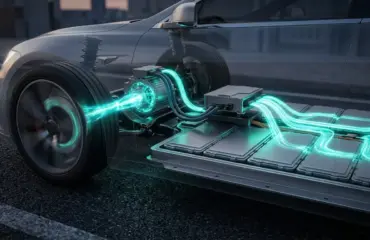
EV charging is one of the clearest examples of why diode quality matters. Charging hardware lives in an environment where high current, thermal cycling, uptime expectations, and service economics all converge.
In DC fast charging systems, the power stage is expected to deliver high throughput repeatedly under commercial duty. Weak rectifier behavior in that environment does not stay hidden for long. It shows up as higher heat load, reduced efficiency, and more pressure on the rest of the power stack.
That is also why advanced diode technologies such as fast-recovery devices and silicon carbide options attract attention in premium designs. PandaExo’s comparison of silicon carbide and traditional silicon in EV inverters is useful for teams evaluating whether the performance gains justify the specification choice.
Standard Versus Premium Diodes: A Practical Comparison
The live article tries to make this comparison, but the core point is simple: the premium device usually reduces losses, heat, and switching stress while supporting more robust long-term operation.
| Parameter | Standard Commodity Diode | Premium High-Quality Diode | Operational Meaning |
|---|---|---|---|
| Forward voltage drop | Higher | Lower | Lower drop means less heat generation and better system efficiency |
| Reverse recovery time | Slower | Faster, sometimes dramatically faster | Reduces switching losses and electrical noise |
| Thermal resistance | Higher | Lower | Improves heat transfer and reduces cooling burden |
| High-temperature stability | Lower tolerance to severe operating conditions | More stable under extended thermal stress | Improves reliability in high-load environments |
| Suitability for demanding inverter duty | Limited in high-performance applications | Better aligned with industrial, EV, and continuous-duty systems | Supports better lifecycle economics |
This comparison is especially useful during supplier review. Buyers do not need every device to be premium by default, but they do need diode performance to match the duty cycle, switching environment, and maintenance expectations of the end system.
What Buyers Should Ask Before Specifying a Diode
When evaluating inverter hardware or power-semiconductor sourcing, these questions help separate short-term price logic from long-term engineering value:
- What are the real conduction and switching losses at expected operating current?
- How does the device behave under sustained thermal stress?
- Is the recovery behavior suitable for the switching frequency of the design?
- Will this specification reduce or increase cooling-system cost?
- What are the consequences of failure in the field if this component underperforms?
These questions are particularly important for B2B buyers who are designing for uptime guarantees, network reliability, or OEM scaling.
Why PandaExo’s Semiconductor Background Matters
PandaExo’s advantage in this topic is not just that it sells end products. The company also operates from a deep power-semiconductor foundation and a 28,000-square-meter manufacturing base, which gives it stronger control over the quality of critical internal components.
That matters because inverter and charger reliability do not start at final assembly. They start with material quality, process control, thermal design discipline, and component consistency. PandaExo’s bridge rectifier portfolio is one part of that broader power-electronics capability.
For buyers building EV infrastructure, industrial power systems, or OEM programs, that background supports:
- Better control over semiconductor performance
- Stronger manufacturing consistency at volume
- More confidence in long-term reliability decisions
- Greater flexibility for custom OEM and ODM projects
Final Takeaway
Rectifier diodes may be small relative to the rest of the inverter, but their impact is outsized. They influence efficiency, thermal behavior, switching stress, maintenance cost, and overall system uptime. In high-stakes applications such as EV charging and industrial power conversion, low-quality diodes are rarely cheap once the full lifecycle is considered.
For buyers and designers, specifying high-quality rectifier diodes is a practical way to reduce wasted energy, limit heat, protect switching devices, and improve long-term ROI. If you are evaluating power-semiconductor components or charging hardware with stronger engineering foundations, contact the PandaExo team to discuss solutions built for reliable commercial performance.