
 Deutsch
  Español
  Français
  Italiano
  Português
  Svenska
  Suomi
Suomi  Dansk
Dansk  Norsk bokmål
  Nederlands
  العربية
  עברית
עברית  Polski
  Türkçe
  Русский
  Uzbek
Uzbek  Azərbaycan
  Tiếng Việt
  ไทย
ไทย  한국어
한국어  日本語
日本語  简体中文
简体中文 
The electric vehicle (EV) landscape is evolving rapidly, and one of the most common questions from new drivers and infrastructure planners alike is, “Can a Tesla charge at a non-Tesla charging station?” For Charge Point Operators (CPOs), fleet managers, and commercial real estate developers, the answer is a resounding yes—and it represents a critical revenue opportunity.
As a global leader in smart EV infrastructure, PandaExo understands that hardware interoperability is the key to a profitable, scalable charging network. In this article, we break down the technical nuances of cross-network charging, global connector standards, and how your business can deploy infrastructure that caters to every EV on the road.
The Shifting Landscape of EV Charging Standards
To understand how a Tesla connects to a third-party charger, we must first look at connector standards. By 2026, the global market has largely consolidated, but regional differences remain vital for your infrastructure planning.
- North America (NACS and CCS1): Tesla’s proprietary connector is now officially recognized as the North American Charging Standard (NACS / SAE J3400). While older non-Tesla networks were built on the Combined Charging System (CCS1), major commercial operators are actively retrofitting and deploying native NACS cables. Today, a Tesla can charge at a non-Tesla station either through an adapter or via a newly installed native NACS plug.
- Europe & Oceania (CCS2): In Europe, the standardization battle was settled years ago. Both Tesla vehicles and non-Tesla public charging stations use the CCS2 (Type 2) standard. This means a European Tesla driver can plug into any third-party DC fast charger without an adapter, making the user experience entirely seamless.
- China (GB/T): The Chinese market operates on the national GB/T standard. Teslas manufactured for this region come equipped with native GB/T ports, allowing them to utilize the country’s vast network of third-party public chargers natively.
How Teslas Connect to Non-Tesla Public Chargers
For commercial charging networks looking to capture the massive demographic of Tesla drivers, it’s important to understand the hardware mechanisms that make cross-compatibility possible.
Level 2 AC Smart Charging
For destination charging—such as at hotels, workplaces, or retail centers—Tesla drivers frequently rely on non-Tesla AC infrastructure. In North America, most non-Tesla Level 2 stations utilize the J1772 connector. Tesla provides a simple J1772-to-NACS adapter with every vehicle, allowing drivers to easily utilize third-party AC Chargers to top up their batteries while they shop or work.
DC Fast Charging (Level 3)
When it comes to rapid highway charging and quick turnarounds, Tesla drivers have multiple pathways to utilize third-party networks:
- CCS1 Adapters: Tesla offers an OEM CCS1-to-NACS adapter that supports charging speeds up to 250 kW. This enables Teslas to plug into legacy CCS1 infrastructure securely.
- Native NACS Integration: As of 2026, forward-thinking CPOs are actively deploying DC Chargers with dual-cable configurations (CCS1 and NACS) or transitioning entirely to native NACS. This eliminates the need for user-supplied adapters, reducing potential points of failure and dramatically improving the user experience.
- CHAdeMO Adapters: Though CHAdeMO is largely a legacy standard today, Tesla historically provided adapters for these stations. Modern infrastructure rollouts, however, heavily prioritize CCS and NACS.
Why Interoperability is Critical for Your Charging Business
If you operate a commercial charging network, excluding the largest segment of EV drivers is bad for business. Accommodating Teslas should be central to your deployment strategy for several key reasons:
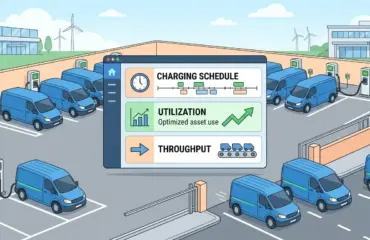
- Maximizing Station Utilization: Teslas make up a dominant share of the EVs on the road. Ensuring your EV chargers are natively compatible with or easily adaptable to Tesla vehicles directly increases your daily charging sessions and shortens your ROI timeline.
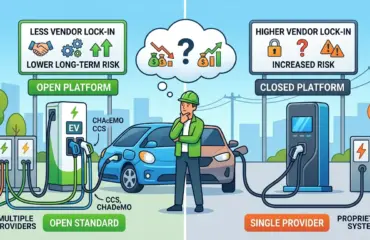
- Future-Proofing Your Investment: The industry is aggressively moving toward universal standards. Investing in flexible hardware, backed by robust software platforms, ensures your stations won’t become obsolete as automotive OEMs transition their fleet architectures.
- Superior User Experience: Integrating intelligent communication protocols like ISO 15118 (Plug and Charge) across different vehicle brands streamlines the authentication and payment process, building brand loyalty for your specific charging network.
The Power Electronics Behind Seamless Compatibility
True interoperability isn’t just about the physical plug at the end of the cable; the internal power electronics must be resilient, highly efficient, and capable of handling varying voltage requests from radically different battery architectures.
At the core of reliable power conversion are high-grade semiconductor components. Whether your station is stepping down high-voltage AC from the grid or rectifying it for high-speed DC delivery, internal components like a Bridge Rectifier play a crucial role. They ensure that the energy delivered to the vehicle is stable, safe, and efficient, regardless of whether the car is a Tesla or another brand.
PandaExo: Your Partner in Universal EV Infrastructure
At PandaExo, we bridge the gap between complex power electronics and turnkey commercial infrastructure. Operating a 28,000-square-meter advanced manufacturing base, our deep heritage in power semiconductors allows us to engineer solutions with factory-direct scale and uncompromising precision.
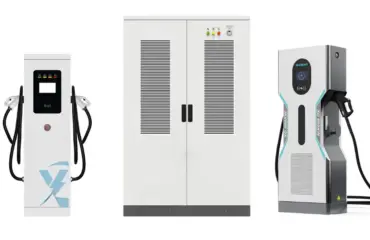
Whether you are deploying ultra-fast highway charging hubs or intelligent destination wallboxes, our hardware is designed for global interoperability and peak performance. We also provide highly customizable OEM/ODM services, ensuring your brand can offer a flawless charging experience to every driver.
Ready to Build a Future-Proof Network?
Don’t limit your target audience. Equip your commercial real estate, fleet depot, or public network with hardware built to handle the demands of modern electric mobility. Explore our full catalog of smart charging solutions, platforms, and factory-direct hardware at the PandaExo Shop.