
 Deutsch
  Español
  Français
  Italiano
  Português
  Svenska
  Suomi
Suomi  Dansk
Dansk  Norsk bokmål
  Nederlands
  العربية
  עברית
עברית  Polski
  Türkçe
  Русский
  Uzbek
Uzbek  Azərbaycan
  Tiếng Việt
  ไทย
ไทย  한국어
한국어  日本語
日本語  简体中文
简体中文 
As electric vehicle (EV) adoption accelerates globally, the demand on EV charging infrastructure has never been higher. For Charge Point Operators (CPOs), fleet managers, and facility owners, maximizing the uptime and safety of these assets is critical. While much attention is rightfully paid to the software and power electronics driving the station, the physical connection point—the EV charging cable and connector—often dictates the end-user experience and system reliability.
A compromised, dirty, or degraded charging cable can lead to increased electrical resistance, slower charging speeds, communication faults, and in severe cases, dangerous thermal events. Whether you manage a network of rapid DC chargers along a highway corridor or a bank of smart AC chargers in a corporate parking garage, regular cable maintenance is essential.
This comprehensive guide details the technical best practices for safely cleaning your EV charging cables to ensure maximum performance, safety, and longevity.
The Commercial Impact of Cable Maintenance
For commercial enterprises, an EV charging station is a revenue-generating asset and a critical piece of operational infrastructure. Neglecting the physical maintenance of charging cables has direct business consequences:
- Increased Contact Resistance: Dirt, oxidation, and debris on the connector pins create electrical resistance. This forces the charging station to compensate, potentially leading to overheating, thermal throttling (reduced charging speeds), and premature failure of internal contactors.
- Insulation Degradation: The outer jacket of an EV cable is continuously exposed to UV radiation, extreme temperature fluctuations, road salt, and petrochemicals. Without cleaning, these contaminants accelerate the breakdown of the thermoplastic polyurethane (TPU) or elastomer (TPE) jacketing, leading to micro-cracking and eventual exposure of the internal wiring.
- User Experience and Brand Perception: A public charging station with cables caked in mud or grime deters users and damages the brand reputation of the host facility and the operator.
- Safety and Liability: Accumulated conductive dust or moisture ingress due to degraded seals can lead to ground faults or arcing, presenting a severe safety hazard and significant liability.
Anatomy of the Equipment: What Are You Cleaning?
Before implementing a cleaning protocol, it is important to understand the material composition of the EV Supply Equipment (EVSE) components:
- The Outer Jacket: Typically constructed from heavy-duty, flexible polymers designed to resist abrasion and chemical exposure while maintaining flexibility in sub-zero temperatures.
- The Connector Housing: Molded from high-impact, flame-retardant plastics (such as polycarbonate blends) designed to withstand drops and mechanical stress.
- The Terminal Pins: Precision-machined conductive metals (often silver-plated or nickel-plated copper) responsible for transmitting both high-voltage power and low-voltage communication signals (such as the Control Pilot and Proximity Pilot).
Step-by-Step Guide: Safely Cleaning Your EV Charging Cable
Routine cleaning should be integrated into your preventative maintenance schedules. Follow these strict protocols to ensure safety and avoid damaging the equipment.
1. Disconnect and De-energize
Safety First: Never attempt to clean a charging cable while it is actively plugged into a vehicle or while a charging session is initiated.
- For smart charging stations, ensure the station is in an idle state.
- If performing deep maintenance on hardwired commercial stations, consider locking out/tagging out (LOTO) the breaker at the electrical panel to ensure complete isolation.
2. Dry Wiping the Outer Jacket
Begin by removing superficial, loose debris from the entire length of the cable.
- Use a clean, dry microfiber cloth to wipe down the cable from the station enclosure down to the connector head.
- This step removes abrasive sand and grit that could scratch the polymer jacket during the wet cleaning phase.
3. Deep Cleaning the Cable Sheath
To remove stubborn grime, oils, and road salt from the cable jacket:
- Prepare a solution of warm water and a mild, pH-neutral detergent (such as a highly diluted automotive soap or specialized rubber/plastic cleaner).
- Dampen a sponge or microfiber cloth with the solution. Do not soak it.
- Wipe the cable firmly but without excessive stretching or pulling.
Crucial Note: Do not let the liquid run down the cable and pool near the connector head or the station grommet. Keep the connector elevated during this process.
4. Precision Cleaning of the Connector and Pins
This is the most technically sensitive step. The interface between the EV and the charger must remain perfectly clean to ensure proper dielectric strength and minimal contact resistance.
- Inspect Visually: Use a flashlight to inspect the pin cavities. Look for dark spots (carbon buildup/arcing damage), green/white powdery residue (oxidation), or physical debris (insects, dirt).
- Remove Loose Debris: Use a can of compressed air to blow out any loose dust or moisture from the pin cavities. Hold the can upright to prevent liquid propellant from discharging into the connector.
- Chemical Cleaning: If oxidation or grease is present on the pins, use a specialized, fast-drying Electrical Contact Cleaner. Ensure the cleaner leaves zero residue and is rated safe for plastics. Give the pins a quick, targeted spray.
- Avoid Physical Abrasion: Never use metal files, sandpaper, or harsh wire brushes on the terminal pins. This strips away the microscopic silver/nickel plating, exposing bare copper which will rapidly oxidize and ruin the connector. If necessary, use a highly specialized foam swab designed for electronics.
5. Thorough Drying and Final Inspection
Moisture is the primary enemy of high-voltage electronics.
- Wipe down the outer jacket with a fresh, dry towel.
- Allow the connector to air dry completely for at least 15-20 minutes before returning it to its holster or initiating a charge. The contact cleaner should flash off and evaporate almost instantly.
What to Avoid: Common Maintenance Mistakes
When training facility maintenance staff on EVSE upkeep, explicitly prohibit the following actions:
- Pressure Washing: Commercial EV chargers generally carry an IP54 or IP55 rating, meaning they are protected against splashing water and rain, but they are not designed to withstand high-pressure water jets. Pressure washing will force water past the environmental seals and into the power electronics.
- Harsh Solvents: Never use acetone, brake cleaner, bleach, or heavy-duty industrial degreasers on the cable. These chemicals aggressively strip the plasticizers out of the TPU/TPE jacket, causing it to become brittle and crack prematurely.
- Submersion: Never drop the connector head into a bucket of water or cleaning solution.
- Silicone Sprays on Pins: Do not apply WD-40 or silicone lubricants to the electrical pins. While they displace water, they leave a dielectric (insulating) film that interferes with the flow of electricity and attracts dust, creating a highly resistive sludge.
Recognizing When to Replace Instead of Clean
Cleaning cannot fix physical damage. During your maintenance routine, inspect the equipment for signs of critical failure. If you observe any of the following, the cable or connector must be replaced immediately by a qualified technician to maintain safety compliance:
- Deep lacerations or abrasions in the outer jacket that expose the internal wire insulation or shielding.
- Bulging or melted areas on the connector housing (a clear indicator of severe overheating and thermal damage).
- Pins that are bent, heavily pitted, or loose within the housing.
- A broken locking latch, preventing the connector from securely mating with the vehicle inlet.
Elevate Your Infrastructure with PandaExo
Routine maintenance is vital, but the foundation of reliable operation begins with superior hardware. For enterprises looking to deploy infrastructure that withstands the rigors of commercial use, the quality of the internal components and external materials is non-negotiable.
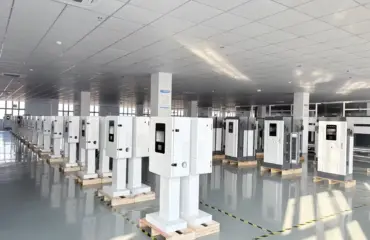
As a global leader in smart EV charging solutions, PandaExo operates a state-of-the-art 28,000-square-meter manufacturing base. Because we have a deep heritage in power semiconductors—manufacturing everything from core bridge rectifiers to complete, high-efficiency charging systems—we engineer our products for maximum durability and thermal efficiency from the ground up.
Whether you are seeking robust, high-performance EV chargers for a commercial fleet, or require customized OEM/ODM services to build your own charging network, PandaExo delivers factory-direct scale and precision engineering.
Ready to upgrade your charging network with reliable, commercially rugged solutions? Explore our full range of AC and DC systems in our factory-direct catalog, or contact our engineering team today to discuss your specific infrastructure needs.